

Reflections from Lithuanian textile artists
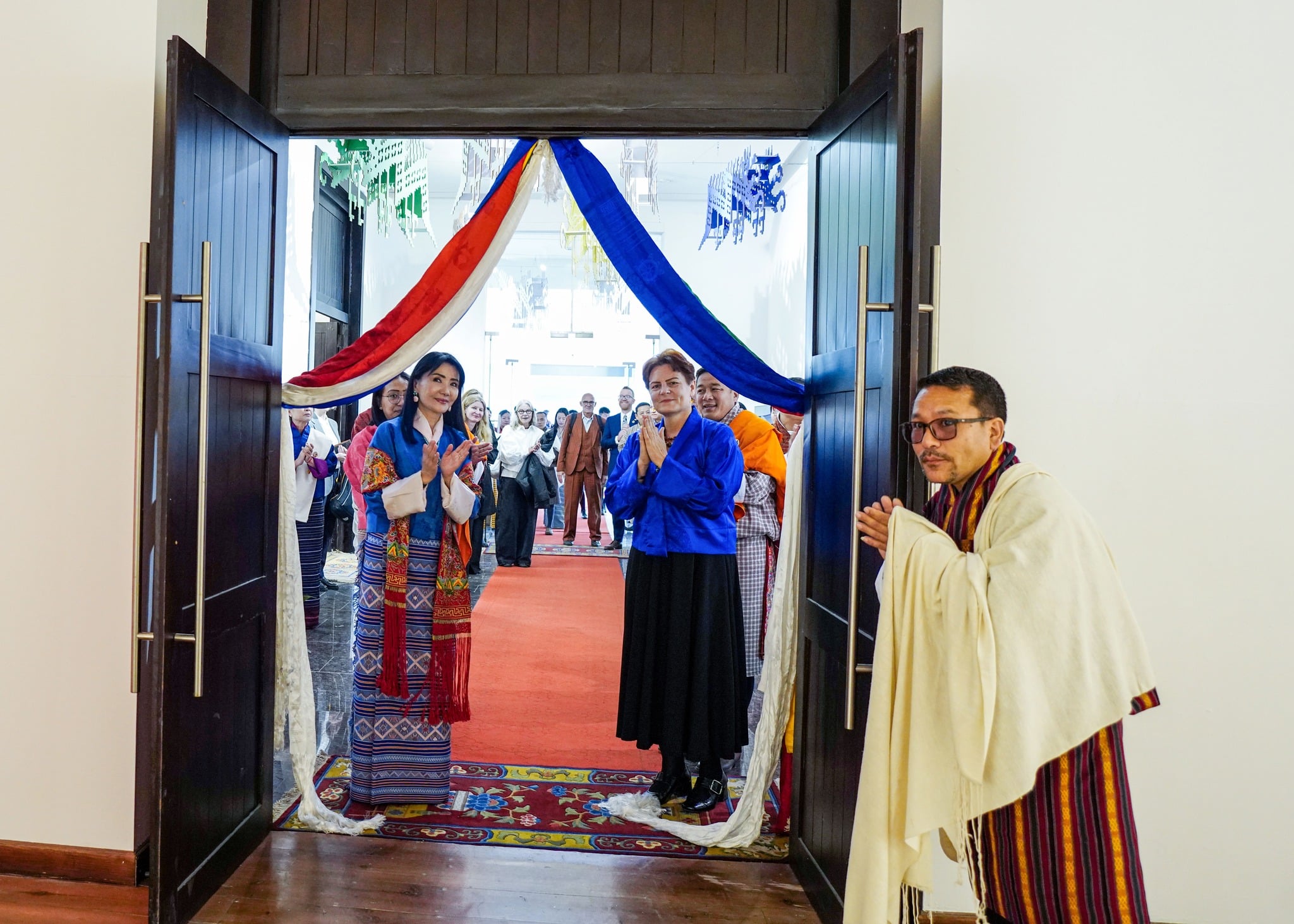
A contemporary Lithuanian textile art exhibition in Bhutan has opened new avenues for cultural dialogue, artistic exchange, and future collaboration between the two countries, according to curator Odeta Žukauskiene.
The exhibition, Textile Scripts, brought together works by four contemporary Lithuanian artists — Laima Oržekauskiene-Ore, Monika Žaltauskaite Grašiene-Žalte, Lina Jonike, and Gerda Liudvinaviciute — under the curatorial direction of Dr Žukauskiene.
Speaking about the exhibition’s reception in Bhutan, Dr Žukauskiene said the Bhutanese audience found it engaging to encounter the language of contemporary textile art, which closely reflects global developments in art while maintaining the distinct nature of contemporary artistic practice.
She said contemporary textile art today goes beyond craftsmanship, although technical mastery remains important, and increasingly embraces conceptual reflection, material exploration, and sensory experiences.
“One of the most important aspects of textile art is a sensitive awareness of materials and the stories encoded within them. This makes us more perceptive, which is especially important when considering a sustainable future,” she said.
Among the highlights of the exhibition was an interactive installation titled Embodied Wandering by Gerda Liudvinaviciute, which drew strong interest from Bhutanese audiences. The installation responds to touch by generating musical sounds, symbolizing both physical and psychological connections.
According to Dr Žukauskiene, the enthusiastic response to the installation has encouraged discussions on future collaborative art projects exploring cultural origins, social transformation, and shared visions of sustainability.
She said contemporary Lithuanian textile art is distinguished not only by its integration of photography, new technologies, and interactivity, but also by the narratives embedded in the works.
“These artworks speak about cultural roots, the interconnectedness between humans and nature, everyday experiences, and the importance of touch in an increasingly media-saturated environment,” she said.
Dr Žukauskiene noted that contemporary textile art can inspire experimentation and the integration of photography and multimedia into textile practices without undermining traditional forms. Instead, she said such approaches can nurture tradition through new expressions that reflect cultural identity and collective memory.
She cited the digital jacquard weaving works of Monika Žaltauskaite Grašiene as an example of how textile art can create innovative dialogue between traditional craftsmanship and emerging technologies.
The curator also expressed admiration for Bhutan’s textile heritage, describing Bhutanese weaving traditions as rich in history and possessing a unique language of patterns.
“The tradition of wearing Bhutanese national dress and preserving it in everyday life is especially admirable. It inspires creators not only to appreciate Bhutanese culture but also to revisit their own cultural heritage and traditions,” she said.
Dr Žukauskiene said cultural encounters often reveal unexpected similarities between distant societies. She pointed to parallels between traditional Bhutanese woven belts and Lithuanian woven sashes, both of which play important roles in traditional costume and ritual life.
“In such moments, one begins to see not only differences but also remarkable similarities between cultures,” she said.
According to her, such dialogue is particularly important for small nations seeking to preserve cultural identity and self-awareness in an increasingly globalized world.
She said the project benefits both countries. While Bhutanese audiences gain exposure to contemporary textile art and exhibition practices, Lithuanian artists gain inspiration, cultural dialogue, and renewed appreciation for tradition.
Dr Žukauskiene said the exhibition also promotes a deeper understanding of the interconnectedness between nature, culture, and creativity — what she described as “nature-based art,” an approach that is increasingly relevant in discussions about sustainable futures.
The current collaboration builds on earlier cultural exchanges, including the presentation of Bhutanese royal textiles at the Palace of the Grand Dukes of Lithuania in 2019. Although the pandemic delayed subsequent initiatives, she said the partnership has continued to grow.
Rather than presenting traditional Lithuanian textiles, Textile Scripts introduces Lithuanian textile art as an important contributor to contemporary art while remaining deeply rooted in cultural heritage.
Dr Žukauskiene also acknowledged the efforts of Laima Oržekauskiene-Ore in helping organize the exhibition and promoting the evolution of Lithuanian textile art into diverse contemporary forms.
She expressed optimism that the strong relationship established with Bhutan’s Royal Textile Academy would pave the way for future collaborations in comparative textile history, innovative artistic expression, and sustainable cultural development.
The exhibition opened on 27 April and was hosted for more than a week.
Sangay Rabten, Thimphu