

The government has initiated work on the Detailed Project Report (DPR) for the 404 megawatt (MW) Nyera Amari I and II Integrated Hydropower Project, one of the major hydropower projects identified under Bhutan’s 13th Five-Year Plan (FYP), according to the Ministry of Energy and Natural Resources (MoENR).
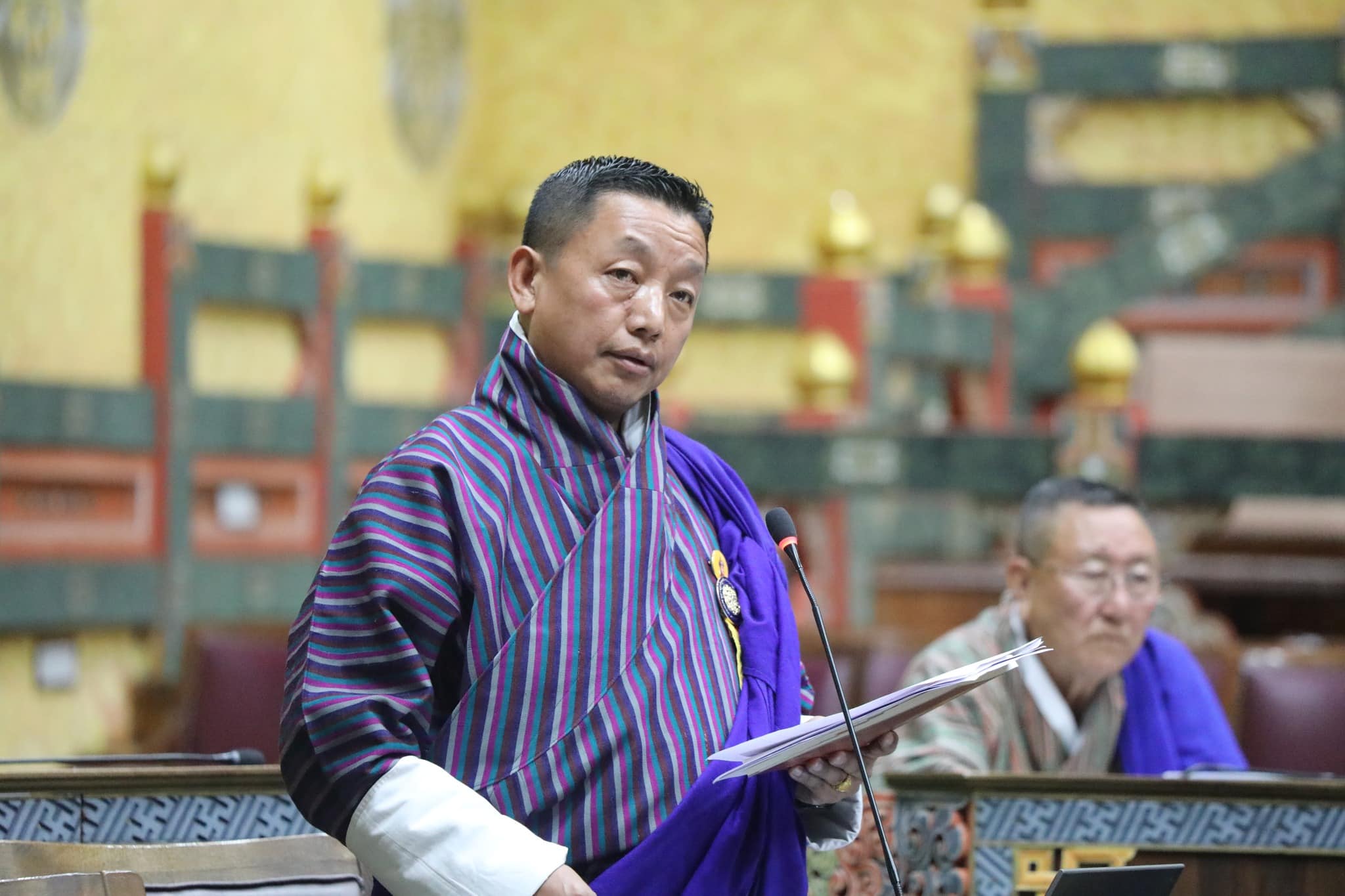
The update was shared during the question-and-answer session of the National Assembly (NA) on Thursday, where Member of Parliament (MP) for Dewathang-Gomdar constituency, Tshering Penjor, sought clarification on the project’s progress, preparatory activities and expected construction timeline.
The Nyera Amari I and II Integrated Hydropower Project is among the key energy projects prioritized by the government under the current Five-Year Plan period from 2024 to 2029, as Bhutan seeks to expand its clean energy generation capacity and strengthen long-term economic growth.
Responding to the MP’s questions, Energy and Natural Resources Minister Lyonpo Gem Tshering informed the House that the government has already handed over the Nyera Ama Chhu project to Druk Green Power Corporation (DGPC) and India’s Tata company for further development.
“The work for the Detailed Project Report (DPR) has already started,” Lyonpo Gem Tshering said.
He reiterated that the government has repeatedly emphasized that expansion of hydropower capacity will remain central to Bhutan’s long-term economic and energy security strategy.
During the session, MP Tshering Penjor informed the House that there was growing public interest and concern regarding the progress of the Nyera Amari project, particularly because limited information had been made available on the status of feasibility studies, geological investigations, environmental assessments and project implementation timelines.
“In view of the strategic importance of the project and growing public concern, I would like to seek clarification on the current status of the project preparation activities and when the construction work is expected to begin,” the MP said.
The minister responded that the government remains committed to accelerating Bhutan’s clean energy expansion over the coming decades through both hydropower and alternative renewable energy investments.
“The Ministry aims to build 25,000 megawatts of power by 2040, including 20,000 megawatts from hydropower and 5,000 megawatts from solar energy projects,” Lyonpo Gem Tshering said.
He added that the Nyera Ama Chhu project forms an important component of the government’s broader long-term energy development strategy.
However, the minister clarified that the exact timeline for commencement of physical construction works can only be determined after completion and finalization of the Detailed Project Report.
“Only after the DPR is finalized will we know when the project can officially commence,” the minister said.
The DPR process is expected to include detailed technical, geological, environmental, financial and engineering assessments necessary to determine the project’s feasibility, design specifications, construction costs and implementation schedule.
Large hydropower projects in Bhutan typically undergo extensive technical studies before receiving final approval for construction due to the complexity of terrain, environmental considerations and financing arrangements.
Lyonpo Gem Tshering also informed the House that the government has already secured support from the Asian Development Bank (ADB) for the project.
While specific financing details were not disclosed during the session, the minister said international support would play an important role in advancing Bhutan’s long-term renewable energy ambitions.
The Nyera Amari project is expected to contribute significantly to Bhutan’s future electricity generation capacity at a time when the country is seeking to diversify its energy portfolio and meet rising domestic demand while maintaining electricity exports.
Hydropower currently remains Bhutan’s largest source of export earnings and one of the main pillars of the national economy.
Meanwhile, the government has also increasingly emphasized the importance of integrating solar energy and other renewable energy sources into the country’s future power generation strategy in response to climate variability, seasonal energy shortages and growing energy demand.
The combined target of 25,000 MW by 2040 will be extremely crucial in Bhutan’s broader ambition to position itself as a major regional clean energy producer.
The minister assured the House that the government would continue strengthening Bhutan’s energy sector through strategic investments in hydropower and renewable energy infrastructure.
Sherab Dorji, Thimphu