

In diplomacy, anniversaries are often measured by treaties, state visits and official communiqués. But the story of Bhutan and Japan is different. It is not a friendship that began with signatures on paper. It is a relationship rooted in people, nurtured by service and strengthened through decades of quiet partnership.
This year, Bhutan and Japan commemorate 40 years of formal diplomatic relations, established on 28 March 1986. However, the foundation of this remarkable friendship was laid long before the exchange of diplomatic notes.
It began in 1964, when a young Japanese agricultural expert named Keiji Nishioka arrived in Bhutan, then a secluded Himalayan kingdom still largely unknown to the outside world. He came as a technical expert. He remained for 28 years, becoming one of the most admired figures in Bhutan’s modern history and a living symbol of the friendship between the two nations. His story is also the story of Bhutan and Japan.
Friendship Before Diplomacy
When Bhutan and Japan formally established diplomatic relations in 1986, their friendship had already flourished for more than two decades.
Nishioka had spent years working alongside Bhutanese farmers in the fertile Paro valley, introducing improved farming techniques, irrigation systems and new vegetable crops. Rather than prescribing solutions from afar, he worked shoulder to shoulder with farming communities, earning their trust through humility, perseverance and genuine commitment.
The results transformed rural livelihoods. Rice yields increased dramatically, farming practices modernised, and vegetables such as cabbage, carrots and radishes became part of Bhutanese agriculture and cuisine.
His contribution extended far beyond agriculture. He helped build irrigation canals, farm roads, suspension bridges and community infrastructure that improved the everyday lives of thousands of people. The relationship he cultivated was never simply between two governments. It was between people.
In recognition of his extraordinary service, The Fourth Druk Gyalpo, His Majesty King Jigme Singye Wangchuck, conferred upon him the title of Dasho in 1980.
Building More Than Infrastructure
While Dasho Nishioka became the human face of Japan’s friendship with Bhutan, the partnership soon expanded into nearly every aspect of the country’s development.
Since diplomatic relations were formalized, the Japan International Cooperation Agency (JICA) has become one of Bhutan’s most trusted development partners, supporting projects that have left a lasting imprint across the country.
Unlike assistance measured only in financial terms, Japan’s contributions are visible in the bridges that connect valleys, the roads linking remote communities, irrigation systems that support farmers, and hospitals that strengthen public health.
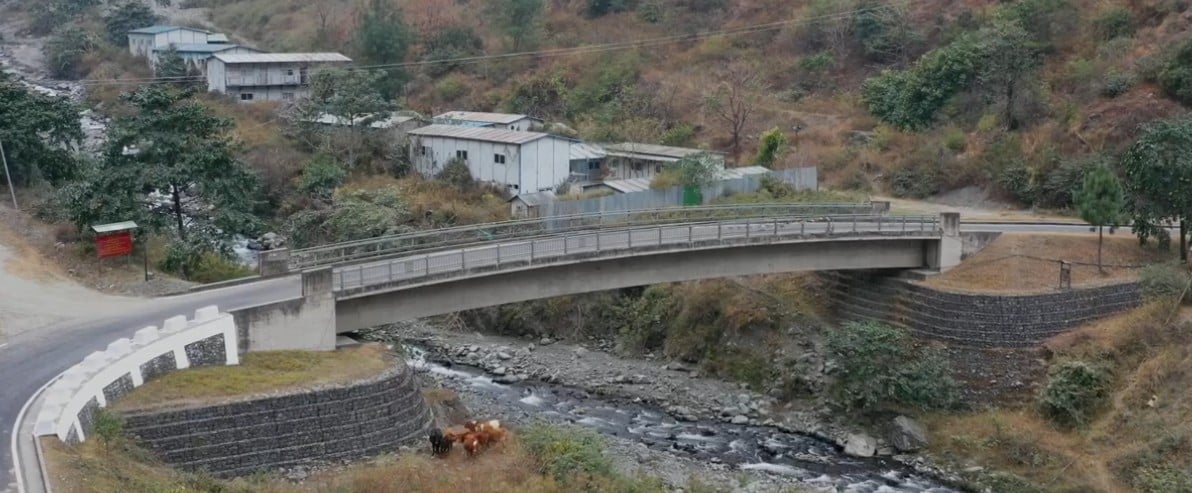
Japan has helped restore Bhutan’s historic cantilever bridges, preserving centuries-old engineering traditions while also constructing modern bridges that improve connectivity in remote regions. In 2024, Japan committed grant assistance of up to 1.634 billion yen for the reconstruction of bridges along Bhutan’s Primary National Highway in Mongar, reaffirming its long-term commitment to strengthening the country’s transport network.
Partners in Progress
The friendship has continually evolved alongside Bhutan’s development needs, expanding beyond agriculture and transport to healthcare, disaster resilience, education, governance and human resource development.
One milestone was the establishment of the Royal Centre for Infectious Diseases in Thimphu, Bhutan’s first specialized infectious disease hospital, built with Japanese grant assistance and technical expertise. The facility reflects how the partnership continues to address emerging challenges while remaining rooted in decades of mutual trust.
Thousands of Bhutanese professionals have also benefited from Japanese scholarships, technical training and knowledge exchange programmes, carrying home not only expertise but also values of discipline, innovation and service. At the same time, Japanese volunteers, researchers and development experts have become valued partners in Bhutanese schools, hospitals, farms and communities.
A Friendship of Shared Values
Although separated by geography, Bhutan and Japan share values that have made their partnership uniquely enduring.
Both nations place high importance on harmony with nature, respect for tradition, community wellbeing and sustainable development. These common ideals have allowed cooperation to grow beyond conventional diplomacy into a relationship built on mutual understanding and genuine respect.
The first Japanese tourists arrived in Bhutan in 1975. Since then, Japan has remained one of Bhutan’s most valued tourism markets, with visitors drawn not only by the country’s pristine landscapes but also by the unique historical connection between the two nations.
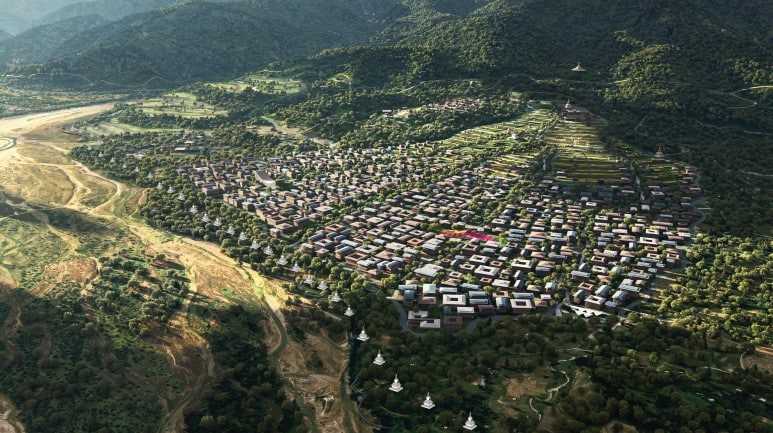
Today, as Bhutan pursues ambitious initiatives such as the Gelephu Mindfulness City while advancing sustainable development, Japan continues to stand alongside the Kingdom as a reliable and trusted partner.
More Than Forty Years
The 40th anniversary of diplomatic relations is therefore more than a celebration of official ties. It is a celebration of friendships forged in rice fields and mountain villages, of bridges spanning rivers and cultures alike, of hospitals healing communities, and of generations of Bhutanese and Japanese who have worked together with humility and purpose.
Diplomatic milestones are often marked by ceremonies. The friendship between Bhutan and Japan, however, is measured differently. It is measured in the harvests of Paro’s farmers, the bridges that connect distant valleys, the hospitals that save lives, the students who return home with new knowledge, and in the memory of one humble farmer from Osaka who became, in the hearts of the Bhutanese people, one of their own.
Forty years after formal diplomatic relations were established, and more than six decades after that first Japanese expert stepped onto Bhutanese soil, the bond between Bhutan and Japan remains a powerful example of how the strongest friendships between nations are built not merely through diplomacy, but through trust, service, compassion and a shared vision for a better future.
Tashi Namgyal, Thimphu