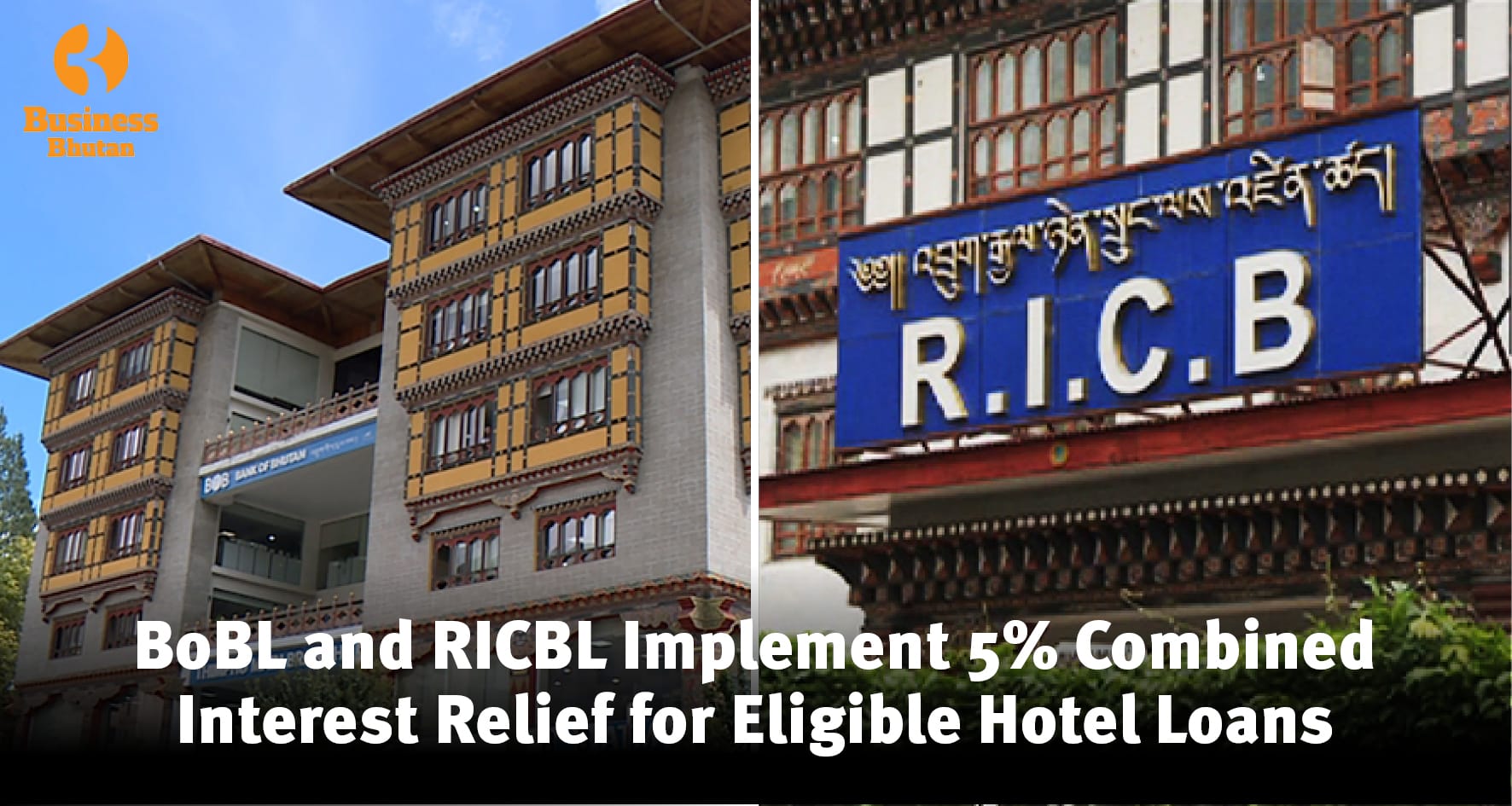
In a move aimed at easing financial pressures on the hospitality sector, Bank of Bhutan Limited (BoBL) and Royal Insurance Corporation of Bhutan Limited (RICBL) have begun implementing a 5 percent combined interest relief scheme on eligible hotel loans following a directive issued by the Royal Monetary Authority (RMA). The scheme, which took effect from May 1, 2026, applies to hotels classified as four-star and below, offering targeted relief to a segment of the industry still recovering from the prolonged tourism slowdown following the pandemic.
Under the initiative, borrowers will receive a total interest relief of 5 percent for a one-year period. This includes a 4 percent subsidy financed through the government’s Economic Stimulus Programme (ESP) Fund and an additional 1 percent interest rate reduction provided by the respective financial institution.
The support, however, is conditional. It applies only to loan accounts where repayment has already commenced, ensuring that the benefit is directed toward borrowers actively servicing their obligations. The subsidy will be available for a maximum duration of 12 months from the date of application to an eligible loan account.
In parallel, the Payment Moratorium facility introduced under the Regulations on Non-Performing Loans Management 2025 has been revoked. Financial institutions have instead been directed to restructure existing loans using alternative support measures in line with prevailing regulatory frameworks, enabling borrowers to manage their debt more sustainably.
The initiative is expected to strengthen loan servicing capacity among hotel operators while supporting broader efforts to revitalize Bhutan’s tourism-driven economy. Some industry observers say the subsidy could help stabilize cash flows, particularly for small and mid-sized establishments facing continued challenges related to demand recovery, rising operational costs, and accumulated debt burdens.
The programme has been designed not only to provide financial relief but also to reinforce compliance and accountability within the sector. By linking eligibility to repayment behaviour and regulatory requirements, the scheme seeks to ensure that support reaches businesses that are operational, transparent, and aligned with national standards.
To qualify, hotels must hold a valid license and certification issued by the Department of Tourism. In addition, they must be registered and active in the Tourist Registration System (TRS). These requirements are intended to strengthen sectoral monitoring and ensure that beneficiaries are fully integrated into Bhutan’s formal tourism framework.
Applicants are also required to submit completed application forms along with supporting documents to their respective financial institutions. Officials say the process is intended to streamline verification and promote transparency in the allocation of subsidies.
Beyond immediate relief, the initiative is also expected to encourage stronger financial discipline across the hospitality sector. By incentivizing repayment and compliance, the scheme promotes more responsible borrowing practices and improved financial management among hotel operators.
Some observers note that such conditional support mechanisms are increasingly being adopted to balance financial assistance with accountability, particularly in credit-dependent sectors. The inclusion of TRS compliance is also viewed as a strategic measure that aligns financial incentives with broader policy goals, including improved data accuracy and sector oversight.
By lowering borrowing costs, the subsidy is expected to provide immediate liquidity relief, enabling hotel operators to reinvest in operations, upgrade facilities, and enhance service quality, which in turn could contribute to tourism recovery and stronger sectoral growth in the medium term.
While the subsidy is modest in scale, some analysts suggest its impact could be strengthened if complemented by broader policy measures such as destination marketing, infrastructure development, and investment incentives across the tourism value chain.
The RMA formally announced the 4 percent interest subsidy on April 22, 2026, with implementation beginning on May 1. The measure was approved by the Royal Government of Bhutan under the ESP on April 15, following which the central bank issued operational guidelines to all financial institutions.
Tashi Namgyal, Thimphu