

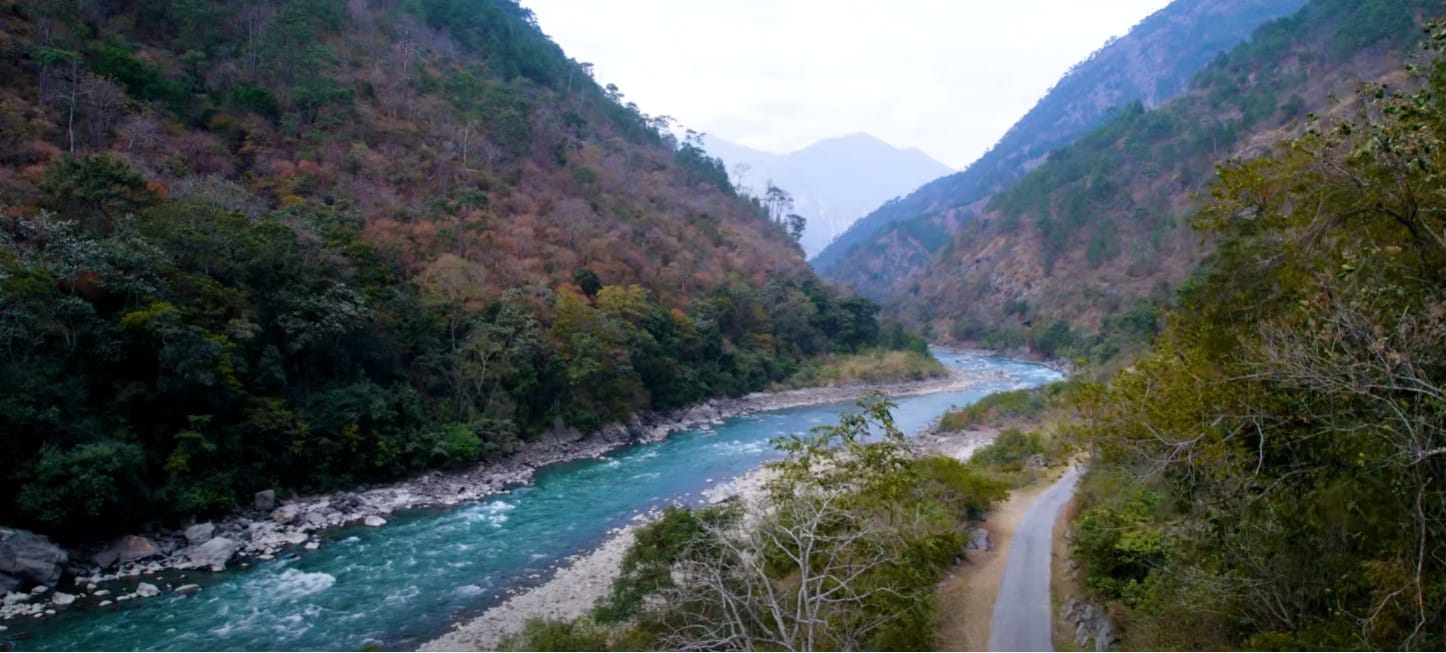
A key component of Bhutan’s 13th Five-Year Plan and one of the most consequential infrastructure investments in Bhutan’s modern history, the Dorjilung Hydroelectric Power Project (DHPP) is taking shape. Backed by a USD 515 million financing agreement signed between the Royal Government of Bhutan and the World Bank (WB), the 1,125-megawatt hydropower project is more than a conventional infrastructure project. It aspires to redefine the country’s economic future, strengthen energy security, and position Bhutan as a regional leader in clean energy innovation. Additionally, the project would be developed on a unique financing model, involving public-private partnership, which would limit pressure on Bhutan’s public finances while attracting global investment into sustainable infrastructure.
Dorjilung represents Bhutan’s push to build an economy powered by renewable energy while preserving its global identity as a carbon-negative nation.
Prime Minister, Dasho Tshering Tobgay described the project as critical to Bhutan’s sustainable development vision.
“The Dorjilung Hydroelectric Power Project is a cornerstone of our plans to develop clean energy, grow our economy, and reduce our carbon footprint,” he said. “This project reflects our strong partnership with the World Bank and our shared commitment to a prosperous Bhutan.”
Bhutan already stands apart globally as one of the few countries that absorb more carbon dioxide than it emits. The Dorjilung project is expected to reinforce that status by producing renewable electricity capable of displacing an estimated 3.3 million tons of carbon dioxide emissions annually across the region. This would abe another example of Bhutan demonstrating how economic growth can be aligned with environmental responsibility.
The project comes at a pivotal moment for Bhutan. Despite being rich in hydropower resources, the country has increasingly faced seasonal electricity shortages during winter months when river flows decline and domestic demand rises. At the same time, the country is seeking new sources of economic growth as it works to create jobs, expand industries, and reduce dependence on imports.
Dorjilung is expected to address both challenges simultaneously.
Once operational, the project will generate more than 4,500 gigawatt-hours (GWh) of clean electricity annually, significantly expanding Bhutan’s generation capacity. The additional power would improve domestic energy reliability while creating substantial export opportunities, particularly to India, where demand for renewable energy continues to rise.
The project is expected to supply nearly 80% of its electricity to India during the summer season, strengthening Bhutan’s role as a key regional supplier of clean energy. The resulting export revenues are projected to become a major driver of future economic growth.
The project would also deepen regional energy cooperation. “This project will contribute nearly one-third of Bhutan’s power generation and strengthen energy cooperation between India and Bhutan,” Tata Power’s chief executive officer (CEO), Dr. Praveer Sinha, said. “About 80% of the power will be supplied to India, helping meet rising demand and expanding clean energy exports.”
Meanwhile, the project is estimated to generate nearly USD 4 billion in revenues over the next 30 years through electricity sales, taxes, and dividends — funds expected to support investments in infrastructure, healthcare, education, and employment generation.
The project’s financing model is also attracting attention internationally. With an estimated total cost of USD 1.7 billion, Dorjilung is being developed through a public-private partnership designed to limit pressure on Bhutan’s public finances while attracting global investment into sustainable infrastructure.
The financing package combines support from the International Development Association (IDA), the International Bank for Reconstruction and Development (IBRD), the International Finance Corporation (IFC), and private sector participation through Tata Power of India.
Johannes Zutt, the WB Vice President for South Asia, said the project could set a new benchmark for green infrastructure financing in developing economies.
“This project combines public and private funding to set a new standard for sustainable infrastructure in Bhutan,” he said. “It will support economic growth, create jobs, and help Bhutan reduce energy import costs while increasing export revenues.”
The project is also carefully structured to support growth without creating unsustainable debt. According to Finance Minister Lekey Dorji, “The financing structure ensures we won’t burden public finances, allowing us to keep investing in our people’s future.”
The same was highlighted by Xavier Furtado, the WB’s Country Manager for Bhutan. “The partnership between International Development Association (IDA), International Bank for Reconstruction and Development (IBRD), the International Finance Corporation (IFC) demonstrates a strong commitment to helping Bhutan develop clean energy while maintaining debt sustainability.”
Thus, the project also signals a broader shift in Bhutan’s development approach — from relying primarily on traditional hydropower expansion to pursuing smarter, more innovative infrastructure partnerships that combine sustainability, private investment, and regional energy integration.
Earlier this year, the WB approved additional funds to support the project. This included USD $300 million from the IDA, with half of that as a grant, USD 215 million from the IBRD, and up to USD 300 million from the IFC. The project company, DHPL, is owned mainly by Bhutan’s Druk Green Power Corporation (60%) and Tata Power of India (40%).
The total estimated cost of the project is around USD 1.7 billion. It is structured as a public-private partnership to limit Bhutan’s borrowing and attract private sector investments. The financing plan aims to attract an additional USD 900 million from private investors.
Sherab Dorji, Thimphu