As Bhutan accelerates its ambitious drive to generate at least 5,000 megawatts (MW) of clean energy, the country is increasingly recognizing that building dams and power plants alone will not be enough. Equally critical is building a highly skilled workforce capable of driving and sustaining Bhutan’s renewable energy future.
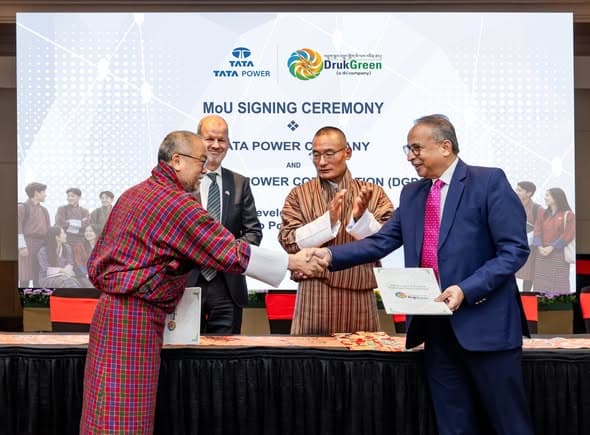
In a major step toward that goal, Druk Green Power Corporation (DGPC) and Tata Power have signed a Memorandum of Understanding (MoU) to jointly roll out a comprehensive three-phased skill development program aimed at preparing Bhutanese youth for the rapidly expanding clean energy sector.
The MoU, signed in the presence of Prime Minister Dasho Tshering Tobgay, marks a significant milestone in Bhutan’s transition toward becoming a regional clean energy powerhouse. The program will be implemented in three strategic phases designed to gradually strengthen workforce readiness across the energy sector.
The first phase will focus on mandatory safety and foundational training, ensuring workers are fully equipped with critical workplace safety standards and operational protocols before entering project sites.
The second phase will concentrate on core technical competencies, including modern construction techniques, material handling, and the operation of heavy machinery essential for large-scale hydropower development. This phase aims to build a technically competent workforce capable of supporting Bhutan’s expanding infrastructure needs.
The final phase will develop advanced specialized skills required for the long-term operation, maintenance, and management of power plants — a crucial component in ensuring the sustainability, efficiency, and reliability of Bhutan’s future energy systems.
To deliver the program, Tata Power will leverage the expertise of its renowned Tata Power Skill Development Institute (TPSDI), which will provide industry-aligned curriculum, certification programs, technical trainers, and modern training facilities. DGPC, meanwhile, will oversee local coordination, workforce mobilization, and regulatory clearances within Bhutan.
Together, the two companies aim to establish a structured and scalable talent development ecosystem that can steadily produce skilled professionals for Bhutan’s growing energy sector.
DGPC Managing Director Dasho Chhewang Rinzin described the initiative as a strategic investment in Bhutan’s long-term economic and energy security.
He emphasized that developing a strong domestic workforce is essential for reducing dependence on external expertise while enabling Bhutan to manage its energy assets more independently and efficiently. He added that the initiative would also create meaningful employment opportunities for Bhutanese youth at a time when the country is seeking sustainable avenues for economic growth.
Dr. Praveer Sinha, chief executive officer (CEO) and Managing Director of Tata Power, reaffirmed Tata Power’s commitment to strengthening Bhutan’s human capital and renewable energy capabilities.
He said the partnership reflects a shared commitment to building a sustainable and energy-secure future while empowering Bhutanese youth with industry-relevant skills that can open pathways to long-term employment and professional growth.
Beyond workforce development, the collaboration is also expected to reinforce Bhutan’s emergence as a regional leader in clean energy and sustainable development. By nurturing a skilled local workforce, Bhutan will be better positioned to manage its expanding energy infrastructure while contributing to regional energy security and cross-border clean energy cooperation.
The initiative aligns closely with Bhutan’s broader national priorities of environmental sustainability, economic resilience, and youth empowerment. It also highlights the growing depth of Bhutan-India cooperation in the renewable energy sector — a partnership increasingly central to South Asia’s clean energy transition.
The MoU will pave the way for a detailed implementation framework, which will be finalized following due diligence and regulatory approvals in both Bhutan and India.
Sherab Dorji, Thimphu