

As Gelephu Mindfulness City (GMC) moves from plans and strategies towards roads, housing and other physical infrastructure, one of the region’s most critical public facilities is now being lined up for a major overhaul.
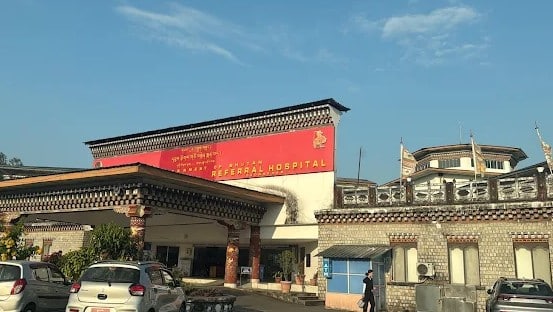
The Gelephu General Hospital (GGH), the principal hospital serving southern Bhutan, is set for a comprehensive assessment and upgrading, with the Gelephu Mindfulness City Authority (GMCA) seeking a multidisciplinary consultant to identify deficiencies and prepare detailed, tender-ready designs for renovation.
The proposed intervention comes at a critical time. A 150-bed facility inaugurated in 2018 to serve six southern districts, GGH is now operating in a region poised for significant economic, infrastructural and population growth as GMC takes shape.
The consultancy is expected to go far beyond conventional building repairs. It will cover mechanical, electrical and plumbing systems, healthcare engineering, architecture, civil and structural works, as well as the hospital’s functional and operational requirements.
GMCA’s City Development Office issued an expression of interest for comprehensive gap assessment, detailed design, drawings and a tender-ready bill of quantities, signalling the beginning of what could become a substantial transformation of the hospital.
The move follows a technical assessment conducted jointly by the GMCA City Development Office and the hospital’s technical team from April 6 to 10, 2026. The assessment identified a range of deficiencies affecting the building’s reliability, functionality and healthcare environment.
Among the most persistent problems are water infiltration, deterioration of building components and weaknesses in essential mechanical, electrical and plumbing systems.
Water, plumbing and building deterioration
Water damage has emerged as one of the hospital’s recurring problems. Failed waterproofing, inadequate toilet-floor slopes, slab leakage and water entering through the open terrace have contributed to repeated deterioration. Poorly sealed expansion joints have also allowed water to penetrate slabs, resulting in cracked tiles and repeated repair failures.
The plumbing and sewerage systems have also deteriorated. The existing cast-iron sewerage network contains numerous joints and bends, increasing the risk of leakage and failure.
Siphon flushing systems, improper use and recurring blockages have contributed to failures in toilet P-traps. The technical assessment also identified ageing galvanised iron pipes and widespread pinhole leaks, which have contributed to water damage to ceilings.
These problems may appear to be routine maintenance issues, but in a healthcare facility they have wider implications. Persistent moisture can damage building materials, create conditions conducive to mould growth and undermine hygiene and infection-control measures.
The proposed renovation therefore provides an opportunity to address the underlying causes rather than continuing with isolated repairs.
Critical systems under pressure
The hospital’s heating, ventilation and air-conditioning systems present another significant challenge. Inadequate ventilation has been identified in critical areas, including the Neonatal Intensive Care Unit and emergency units. Deteriorated duct insulation has contributed to condensation and mould growth, while restrictions on central cooling after working hours have placed additional pressure on decentralised cooling systems.
For a hospital, these are not simply comfort-related concerns.Ventilation, temperature and humidity control, water supply and drainage are closely linked to the quality and safety of the healthcare environment. In specialised areas such as neonatal and emergency care, the reliability of these systems becomes even more important.
The proposed multidisciplinary assessment will therefore need to examine the hospital as an integrated healthcare facility rather than as a collection of separate systems.
Space and storage constraints
Space is another concern.
The existing medical store is considered undersized, with medicines and consumables being stored without adequate temperature and humidity control. This raises concerns about storage conditions, drug quality, patient safety and regulatory compliance.
The traditional medicine unit, which provides about 35 therapies, is also operating under considerable constraints, including inadequate treatment areas and insufficient electrical capacity. The assessment has further identified shortcomings in pharmacy and medical-store arrangements in relation to Bhutan Food and Drug Authority requirements.
For a regional hospital, the issue is not simply whether space exists, but whether that space is designed and managed according to the requirements of a modern healthcare facility. The upgrade could therefore provide an opportunity to reorganise critical clinical and support functions, improve storage conditions and make better use of available space.
Emergency access and hospital operations
Emergency access has also emerged as an operational concern. The narrow, one-way emergency access road can restrict ambulance movement and potentially delay emergency response. As GGH serves as a regional referral facility, efficient movement of ambulances, patients and emergency personnel is particularly important.
The hospital’s role is likely to become even more significant as Gelephu develops. A growing population, increased economic activity and improved connectivity could generate greater demand not only for emergency care but also for outpatient services, diagnostics, specialised treatment and other healthcare services.
This makes the current assessment an opportunity to consider how the hospital can operate more effectively in the future rather than simply restoring its present condition.
Waste management
Waste management is another area requiring fundamental improvement. The assessment found that hospital waste is not adequately segregated and is being disposed of together with municipal solid waste at common landfill sites.
The proposed upgrade is expected to introduce a more comprehensive biomedical-waste management system, including segregation at source using colour-coded bins, safer internal collection and transportation, and appropriate treatment facilities such as autoclaving or hydroclaving.
This is particularly important because healthcare waste requires different handling from ordinary municipal waste. Effective segregation at source can reduce the risk of exposure, improve infection control and ensure safer disposal.
More than a renovation
The objective of the proposed consultancy is therefore broader than repairing an ageing building.
It is intended to establish what the hospital needs to function safely, efficiently and sustainably, and then translate those requirements into coordinated designs that can be taken to tender and implementation.
That distinction is important.
The hospital is only eight years old, yet the technical assessment has identified extensive deficiencies across several systems. The proposed exercise could therefore provide an opportunity to understand not only what needs to be replaced, but why some systems have deteriorated and how future works can avoid repeating the same problems.
The success of the upgrade will ultimately depend on whether it produces a hospital that is more resilient, easier to maintain and capable of meeting modern healthcare standards.
Healthcare in a rapidly changing Gelephu
The timing of the hospital upgrade becomes even more significant as GMC development accelerates.
One of the immediate projects is a proposed 256-unit residential development, for which GMCA has invited proposals under a Design-Build-Operate concession model.
The project will occupy about 13.7 acres of GMCA-leased land and is intended primarily to accommodate households relocated as part of GMC development.
Under the proposed arrangement, the selected private developer would finance, design, construct, operate and maintain the complex for 30 years, while GMCA provides the land.
As housing and other infrastructure expand, healthcare demand will become an increasingly important consideration.
Connectivity is also undergoing a major transformation.
The proposed Gelephu–Tareythang Road and Bridges Project comprises about 14 kilometres of road and five major bridges, including the approximately 1,005-metre Mau River bridge. The project has an estimated cost of US$190 million and is being developed under the World Bank-supported ACCESS Phase II project.
The Mau River crossing is designed with a dedicated wildlife corridor to facilitate elephant movement, while the road is intended to strengthen access to planned GMC infrastructure.
The project has progressed into detailed design and procurement preparation, with construction tentatively expected to begin in 2027. The government has already awarded the consultancy contract for detailed design and construction supervision.
The road and bridge project, together with planned housing and other GMC infrastructure, points to the scale of change taking place in Gelephu.
Preparing for what Gelephu is becoming
Housing will expand. Roads and bridges will accommodate greater movement. Businesses and institutions will emerge. Population patterns will change, and public services will have to respond.
Healthcare will be central to that transition.
GGH was designed for the needs of the region when it opened in 2018. GMC is creating a very different set of expectations for Gelephu.
The proposed renovation therefore comes at a critical juncture. It offers an opportunity not simply to fix leaks, replace ageing pipes or improve ventilation, but to rethink the hospital as essential infrastructure for a rapidly developing regional centre.
That means considering future patient volumes, emergency response, infection control, clinical workflows, medical storage, specialised services, waste management, energy efficiency, maintenance and resilience as part of one integrated design.
The hospital should not have to wait for GMC’s transformation to be complete before its own infrastructure catches up.
Instead, the two developments need to progress together.
For Gelephu, the question is no longer simply how to repair an existing hospital. It is how to ensure that the region has a healthcare facility capable of supporting the people, workforce and communities that a transformed Gelephu will bring.
The consultancy now being initiated could be the first step towards answering that question.
If implemented effectively, the upgrade could turn GGH from a facility struggling with ageing systems and persistent maintenance problems into a safer, more efficient and future-ready regional hospital.
As GMC rises around it, Gelephu General Hospital will need to rise with it—not merely in size or appearance, but in reliability, functionality, safety and its capacity to serve a region entering a fundamentally new phase of development.
Tashi Namgyal, Thimphu