

Non-food prices rise 6.34 percent year-on-year, while the capital records the highest regional inflation at 6.21 percent.
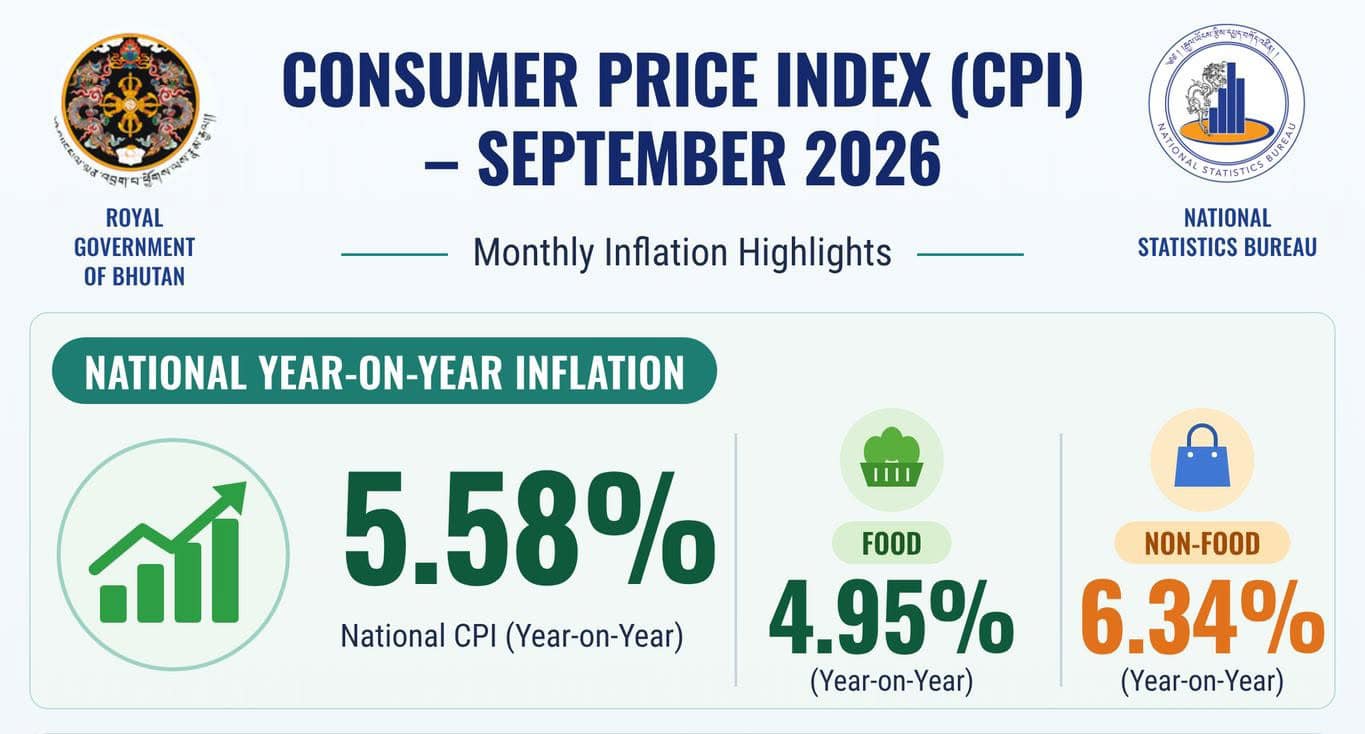
The country’s annual consumer inflation reached 5.58 percent in September 2026, driven by increases in both food and non-food prices, with non-food items recording a significantly higher inflation rate, according to the National Statistics Bureau (NSB).
The Consumer Price Index (CPI) report for September shows that national inflation rose by 5.58 percent compared with the same month last year. Non-food prices increased by 6.34 percent year-on-year, while food prices rose by 4.95 percent.
On a month-on-month basis, however, inflation stood at 0.20 percent, indicating a relatively modest increase in consumer prices between August and September. During the month, food prices increased by 0.07 percent, while non-food prices rose by 0.33 percent.
The figures highlight the continuing pressure on household purchasing power, particularly from non-food items, which recorded the highest annual and monthly inflation rates.
Inflation measures the rate at which the general price level of goods and services increases over time. When prices rise, households must spend more to maintain the same level of consumption, reducing the purchasing power of their income.
For consumers, the difference between annual and monthly inflation is important. The annual rate reflects price changes over 12 months, while the monthly rate measures changes between two consecutive months. Although monthly inflation remained relatively low in September, the annual figure indicates that consumer prices were considerably higher than a year earlier.
Non-food prices remain the main source of pressure
Non-food inflation stood at 6.34 percent in September, exceeding food inflation by 1.39 percentage points. The figures indicate that price increases outside the food category contributed substantially to the overall rise in the cost of living.
Food inflation, at 4.95 percent, also remained significant, reflecting higher food prices compared with September 2025.
The monthly figures, however, show a smaller increase in food prices. Food inflation rose by just 0.07 percent between August and September, compared with a 0.33 percent increase in non-food prices.
The national CPI increased by 0.20 percent during the month, suggesting that the overall rise in consumer prices was relatively limited over the short term, despite the higher annual inflation rate.
The difference between food and non-food inflation is important for households because expenditure patterns vary according to income, family size and consumption needs. While food is a regular and essential expense, non-food expenditure includes other goods and services that households require in their daily lives.
Sustained price increases across both categories can place pressure on household budgets, particularly when income growth does not keep pace with inflation.
Thimphu records highest regional inflation
Regional figures show that annual inflation varied across the country, with the capital city recording the highest rate and the eastern region the lowest.
The capital city recorded inflation of 6.21 percent, followed by the central region at 5.86 percent and the western region at 5.75 percent. The eastern region recorded the lowest inflation rate at 4.87 percent. The difference between the highest and lowest regional rates was 1.34 percentage points.
The figures indicate that consumers in the capital experienced a higher annual increase in consumer prices than those in the eastern region. However, regional inflation rates alone do not establish the reasons for these differences, which may be influenced by variations in prices, consumption patterns and the composition of goods and services across regions.
The regional variation also highlights the importance of examining inflation beyond the national average. While the national CPI provides an overall picture of price movements, households may experience different levels of cost-of-living pressure depending on where they live and what they spend their income on.
Implications for households and the economy
Inflation remains an important indicator of economic conditions because it affects household consumption, business costs and the value of money.
When prices rise faster than household incomes, consumers may have less money available for savings and discretionary spending. Businesses can also face higher operating costs, potentially affecting their pricing decisions and profitability.
The September figures show that the annual increase in consumer prices remains considerably higher than the month-on-month change. Although the monthly increase was limited, the annual rate indicates that the cumulative effect of price movements over the past year continues to influence the cost of living.
The September 2026 CPI report provides a snapshot of the changing cost of living across Bhutan. With national annual inflation at 5.58 percent, non-food inflation at 6.34 percent and regional rates ranging from 4.87 to 6.21 percent, the figures show that price movements continue to affect households differently across the country.
While the relatively modest monthly increase offers a measure of short-term stability, the annual figures underline the continuing importance of price developments for household purchasing power and the broader economy.
Tashi Namgyal, Thimphu