

PM highlights major economic turnaround in his State of the Nation Report
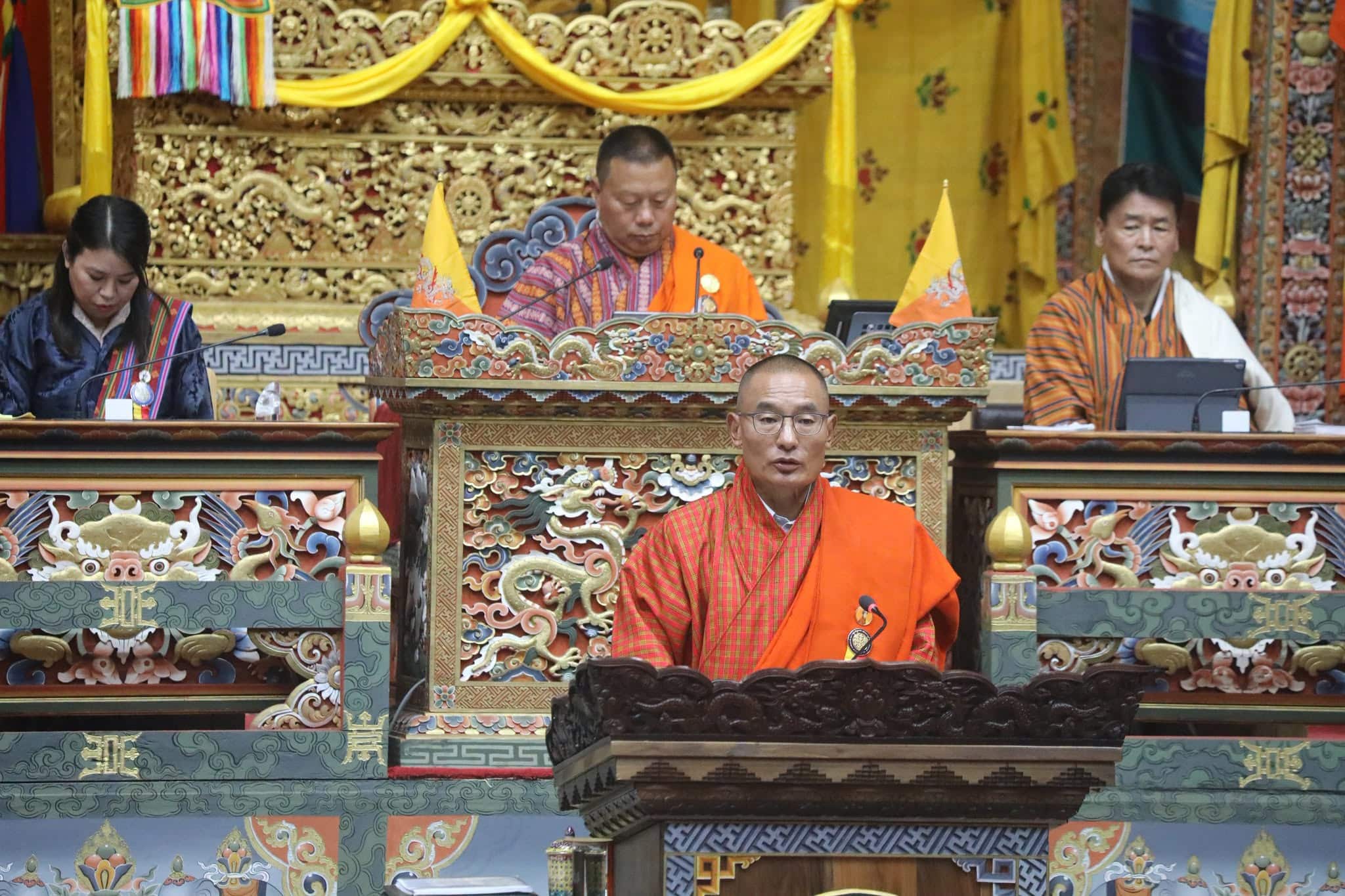
The government has reversed a projected fiscal deficit of Nu 56 billion into an anticipated surplus of Nu 20 billion within just two years of implementing the 13th Five-Year Plan (FYP), marking one of the most significant fiscal turnarounds in recent years. Presenting the Annual Report on the State of the Nation (SoTN) to Parliament on June 16, Prime Minister (PM) Dasho Tshering Tobgay described the turnaround as evidence of stronger public finances, improved revenue performance and the country’s broader economic recovery under the 13th FYP.
The fiscal reversal represents an improvement of more than Nu 76 billion from the position projected at the start of the Plan period, when concerns were raised about the government’s ability to finance its ambitious development agenda.
Complementing the improved fiscal outlook, Bhutan’s Gross Domestic Product (GDP) has expanded by 30 percent during the first two years of the Plan, rising from Nu 280 billion at the start of the 13th FYP to Nu 364 billion today.
According to the PM, the twin achievements of stronger economic growth and healthier public finances reflect the government’s efforts to rebuild economic momentum following the challenges of recent years.
“This achievement reflects our commitment to economic resilience, fiscal responsibility and the effective management of public resources,” he asserted.
The PM noted that 2026 marks the completion of two years of implementation of the 13th FYP, Bhutan’s principal development framework for the period 2024–2029. Although the Midterm Review was originally scheduled for December this year, the government decided to undertake the exercise ahead of schedule to assess progress, identify challenges and refine priorities for the remaining years of the Plan.
According to the PM, the early review was intended to ensure that government programmes, investments and policies remain aligned with emerging national priorities, including the Diamond Strategy, the 10X Economic Roadmap and the Gelephu Mindfulness City (GMC) initiative.
“The review allows us to evaluate progress, address emerging challenges and better position the country to seize new economic opportunities,” he noted.
The findings of the review are expected to guide policy adjustments and strengthen implementation over the remaining three years of the Plan period.
The 13th FYP was launched with an ambitious development agenda focused on economic transformation, job creation, private-sector growth and improved public service delivery. It also seeks to address longstanding structural challenges such as youth unemployment, economic diversification and regional development disparities.
To support these objectives, the government allocated Nu 512 billion for the implementation of the Plan, approximately 65 percent higher than the allocation under the 12th FYP.
At the outset, however, financing the Plan posed a major challenge. The government projected a fiscal deficit of Nu 56 billion, raising concerns about funding gaps and the sustainability of planned investments.
Over the past two years, stronger domestic revenue collection, prudent fiscal management and strategic resource mobilization have enabled the government to eliminate the projected deficit entirely and move into a surplus position.
Dasho Tshering Tobgay informed that the improved fiscal position comes accompanied by encouraging performance across several key sectors of the economy.
“Tourism has rebounded strongly following the pandemic, with visitor arrivals increasing steadily and generating higher foreign exchange earnings. Remittance inflows from Bhutanese working overseas have also reached record levels, providing an important source of income and foreign currency for the economy,” he mentioned.
At the same time, the government has accelerated investments in infrastructure, digital transformation, skills development and public service delivery as part of its broader economic modernization agenda.
He added that major national initiatives such as the GMC are also expected to play a transformative role in the country’s future growth trajectory. The government views the project as a long-term catalyst for investment, innovation and job creation, capable of attracting international capital, technology and expertise while remaining aligned with Bhutan’s development philosophy and environmental commitments.
While highlighting the progress achieved so far, the PM cautioned that significant work remains during the remainder of the Plan period. He said the government will continue focusing on sustaining economic growth, creating quality employment opportunities, attracting investment, improving public-sector efficiency and enhancing the wellbeing of citizens.
With GDP expanding by nearly one-third in just two years and public finances shifting from a substantial projected deficit to a surplus position, the government says Bhutan is laying the foundations for a stronger, more resilient and future-ready economy capable of delivering sustainable and inclusive growth for its people.
Tashi Namgyal, Thimphu