

𝑴𝒐𝒗𝒆 𝒔𝒊𝒈𝒏𝒂𝒍𝒔 𝒏𝒆𝒘 𝒎𝒐𝒎𝒆𝒏𝒕𝒖𝒎 𝒊𝒏 𝑩𝒉𝒖𝒕𝒂𝒏’𝒔 𝒃𝒊𝒅 𝒕𝒐 𝒋𝒐𝒊𝒏 𝒈𝒍𝒐𝒃𝒂𝒍 𝒕𝒓𝒂𝒅𝒊𝒏𝒈 𝒔𝒚𝒔𝒕𝒆𝒎
Bhutan’s long-delayed journey toward membership in the World Trade Organization (WTO) has entered a decisive new phase, with the government completing and validating 17 critical accession documents, for onward submission to the WTO upon approval of the Cabinet. Among the most significant documents are the Draft Working Party Report and Bhutan’s Offer on Specific Commitments in Services and Goods, considered two of the most important and closely negotiated components of the WTO accession process.
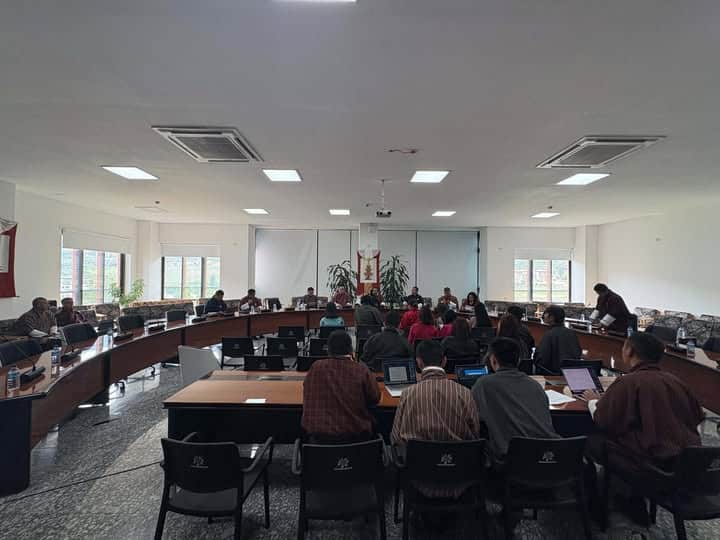
Speaking during the monthly interaction with Bhutanese media on May 7, 2026, the Minister for the Ministry of Industry, Commerce and Employment (MoICE), Namgyal Dorji, said the government is committed to ensuring that Bhutan’s WTO accession remains transparent, development-oriented, and aligned with national interests.
“We are committed to ensuring that Bhutan’s WTO accession process is transparent, development-oriented and aligned with our national interests,” Lyonpo (Minister) Namgyal Dorji said.
“We have worked closely with all relevant agencies to ensure that the documents submitted reflect Bhutan’s policies, laws and development priorities.”
The Draft Working Party Report is regarded as one of the most crucial documents in the accession process. It provides a comprehensive assessment of Bhutan’s economy, trade policies, legal systems, institutions, and regulatory framework while outlining how the country plans to align itself with WTO rules and international trade standards.
In Bhutan’s case, the report would reflect not only trade and economic reforms but also the country’s environmental priorities, cultural preservation goals, and sustainable development philosophy. Completion of the report is often viewed as a major milestone indicating that negotiations are entering an advanced stage.
Equally important are the documents on Specific Commitments in Services and Goods, which define the level of market access Bhutan is prepared to offer foreign products, investors, companies, and service providers once it becomes a WTO member. These commitments become legally binding obligations after accession.
The negotiations are considered highly sensitive because they affect sectors such as tourism, agriculture, telecommunications, transport, financial services, and domestic industries.
Minister Namgyal Dorji emphasized that Bhutan’s approach has been cautious and balanced.
“They form the foundation for our negotiations with WTO members,” he said. “They demonstrate Bhutan’s commitment to fair and predictable trade practices, while also safeguarding our development objectives.”
According to the Minister, the government adopted a whole-of-government approach involving ministries, technical agencies, and regulatory institutions to ensure the documents accurately represent Bhutan’s position and long-term priorities.
In addition to the core accession documents, Bhutan has also prepared supporting legal and technical frameworks aimed at demonstrating readiness to comply with international trade rules. These include a Legislation Inventory and Legislative Action Plan outlining Bhutan’s legal framework governing trade, customs, investment, and commercial regulation.
The government has also developed implementation plans related to major WTO agreements on Sanitary and Phytosanitary Measures (SPS), Technical Barriers to Trade (TBT), and Trade-Related Aspects of Intellectual Property Rights (TRIPS). Additional documents related to customs valuation, import licensing, state trading enterprises, and agricultural subsidies have also been prepared.
A Trade Facilitation Action Plan has also been drafted to modernize Bhutan’s trade procedures, simplify border processes, and improve the efficiency and predictability of cross-border commerce.
“These documents are not just formalities; they are a reflection of Bhutan’s readiness to participate actively and responsibly in the global trading system,” Lyonpo Namgyal Dorji said.
“Our approach is cautious yet progressive, aiming to protect our development interests while opening new opportunities for our economy.”
Once approved by the Cabinet, the documents will be submitted to the WTO Secretariat and member states for review, after which Bhutan will enter the next phase of negotiations involving detailed discussions on market access and final commitments.
“Joining the WTO will strengthen our economic resilience, improve trade predictability and support our long-term development goals,” the Minister said.
“It is a strategic move to integrate Bhutan more fully into the global economy, benefiting our people and future generations.”
Bhutan first applied for WTO membership in 1999 but moved cautiously amid concerns about protecting vulnerable sectors, preserving policy flexibility, and safeguarding the country’s unique Gross National Happiness (GNH) development philosophy. The latest progress now signals renewed momentum in a process that could significantly shape Bhutan’s economic future.
Sherab Dorji, Thimphu