

The agriculture sector of the country last year (2023) exhibited a mixed performance, with notable increases in certain crops contrasted by declines in paddy production and other areas. According to the Integrated Agriculture and Livestock Census 2023 released by the National Statistics Bureau (NSB), potato and fruit production increased while paddy, maize, vegetables and cardamom reported slight reduction. Similarly, livestock reported an increase in dairy, meat and honey production while egg production declined by about 15 % in 2023.
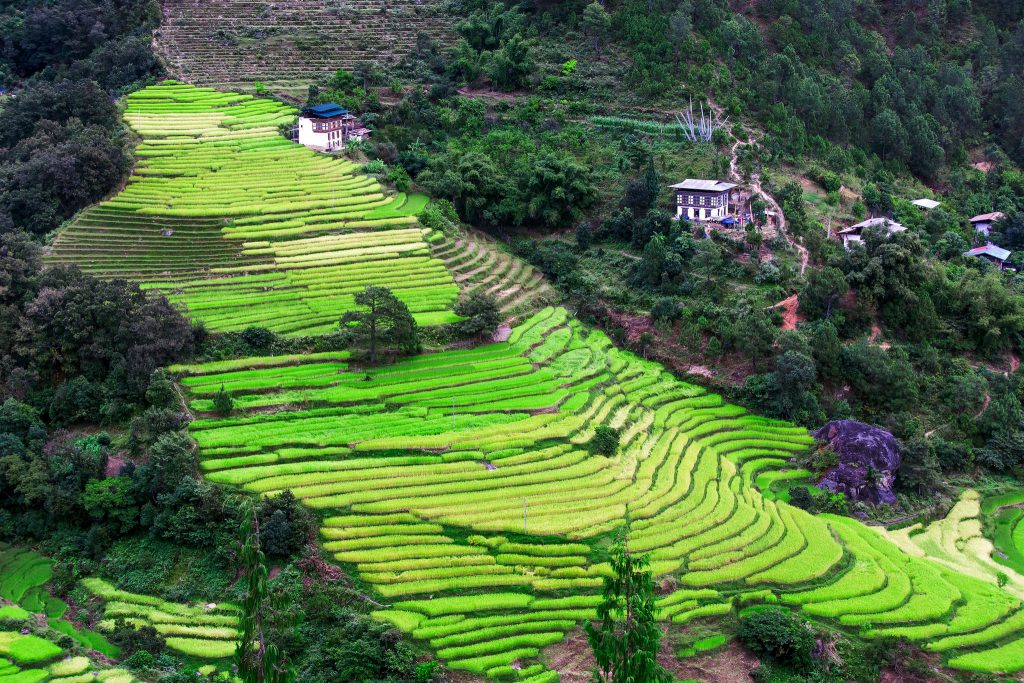
Paddy production declined by 0.6% in 2023 with a total harvest of 40,804 MT from 23,289.6 acres of agricultural land. The slight decrease in paddy production was attributed to the prevalence of dry spell and heat waves during the critical paddy growing season, which delayed the transplantation and later affected the critical growth stages.
Additionally, pest and disease infestations in several Dzongkhags further exacerbated the decline in production.
However, the agriculture sector is optimistic about future prospects, with various interventions implemented during 2022-23 fiscal year, aimed at improving paddy production. This includes the construction of 35 irrigation schemes covering 6,785 acres of land, sustainable land development and reversion of 91 acres of fallow land. In addition, about 1071 acres of paddy field were provided with chain-link to protect the fields and improve production.
Maize production also saw a decline of 3% in 2023, with major maize growing Dzongkhags such as Dagana, Pemagatshel, Monggar, and Zhemgang producing less compared to 2022. The reduction is mainly attributed to a decrease in cultivated area and invasion of fall armyworm, which was reported in 15 Dzongkhags.
The production of minor cereals also show a decline of 10-20% reduction as compared to 2022, except for wheat which increased by 9%. The decrease in the number of growers and cultivated areas have impacted the production of these crops due to challenges such as limited market demand, and low economic viability as compared to other lucrative crops.
On the other hand, potato production increased by 21%, with a total production of 37,749.00 MT in 2023. This increase is attributed to seed replacement interventions, chain-link fencing and timely facilitation of agro-chemicals, resulting in an increase of productivity from 3.9 MT/acre to 4.7 MT/acre.
However, most vegetables showed a decline in production as compared to 2022 except for tomatoes and carrots.
Fruits production during the year also saw a significant growth, with apple production increasing by 4.2%, reaching 2317 MT. Similarly, mandarin production also increased by 15%, reaching 21,170 MT in 2023. This trend of growth was also observed in other fruits like arecanut, kiwi, and dragon fruit.
According to officials from the agriculture ministry, the increase in fruit production can be attributed to the Million Fruit Tree Plantation (MFTP) program initiated across the country in 2022.
However, cardamom production has been continuously declining over the past four years. In 2023, production dropped by 35%. This decrease is attributed to aging and declining cardamom orchards, senescence, and reduced vigor. Additionally, market price fluctuations have also discouraged farmers from planting more cardamom.
Despite encountering various challenges particularly due to outbreaks of animal diseases such as African Swine Fever (ASF) in pigs, Lumpy Skin Disease (LSD) in cattle, and Infectious Bursal Disease (IBD) in poultry, the livestock sector has achieved notable progress in livestock production through strategic interventions and new initiatives.
Dairy products such as milk, butter production, and chugo production witnessed an increasing trend by 4%, 15%, and 2% respectively. This growth can be attributed to the ongoing interventions such as dairy breed intensification programs, improved management practices, enhanced nutrition and animal health services and strengthening of farmers’ institutions in the dairy sector.
However, cheese production showed a slightly downward trajectory by 2% due to increased chugo production and higher demand for buttermilk in the market, which is sold after extracting butter without further processing into cheese.
Egg production declined by almost 15%, to 85.69 million eggs. This decline was primarily due to the transition from BV380 to Hy-line brown layer bird breeds during the early months of the 2023-24 fiscal years. Farmers preferred Hy-line brown due to issues with lower production and smaller egg sizes associated with BV-380, which had been introduced as an interim measure during the COVID-19 pandemic when imports of Hy-line brown Parent Stocks (PS) were disrupted.
Additionally, the National Poultry Development Centre in Sarpang faced an unexpected outbreak of Infectious Bursal Disease (IBD) early in the 2022-23 fiscal year, necessitating disposal of PS, extensive disease containment and disinfection efforts which further impacted table egg production.
Meat production has also increased. Pork production, chicken production and fish production has surged by 29%, 17%, and 13% respectively. Similarly, chevon production has also increased by 33% and mutton production increased by 17%.
The selective breeding, better nutrition, improved management practices, effective clinical veterinary services and disease management has contributed to increase in the overall meat production.
The country made significant progress in pork production and piggery development last year, overcoming challenges. Government nucleus farms distributed 2,065 breeding piglets to piggery farmers, improving their economic prospects and fostering sustainable livelihoods. Over 400 Contract Pig Breeders (CPBs) were established to increase private sector participation in piglet production.
Additionally, 1,654,527 fingerlings were produced and supplied to farmers for table fish production, resulting in a 13% increase in fish production.
Meanwhile, the amount of honey produced in 2023 also increased by 12%. This increase in overall honey production is mainly because of help from a special project called JSB-UNDP Project IV. During the year, with the project support, the Department has implemented key activities such as procurement and supply of 187 full-fledged honeybee colonies (Apis mellifera), promotion of 250 numbers of Langstroth design flow hives technology (Australian flow hive), procurement and supply of bee feeds, essential beekeeping equipment and gears, capacity building of beekeepers on improved bee farming practices to enhance honey production in the country.
By Nidup Lhamo, Thimphu