


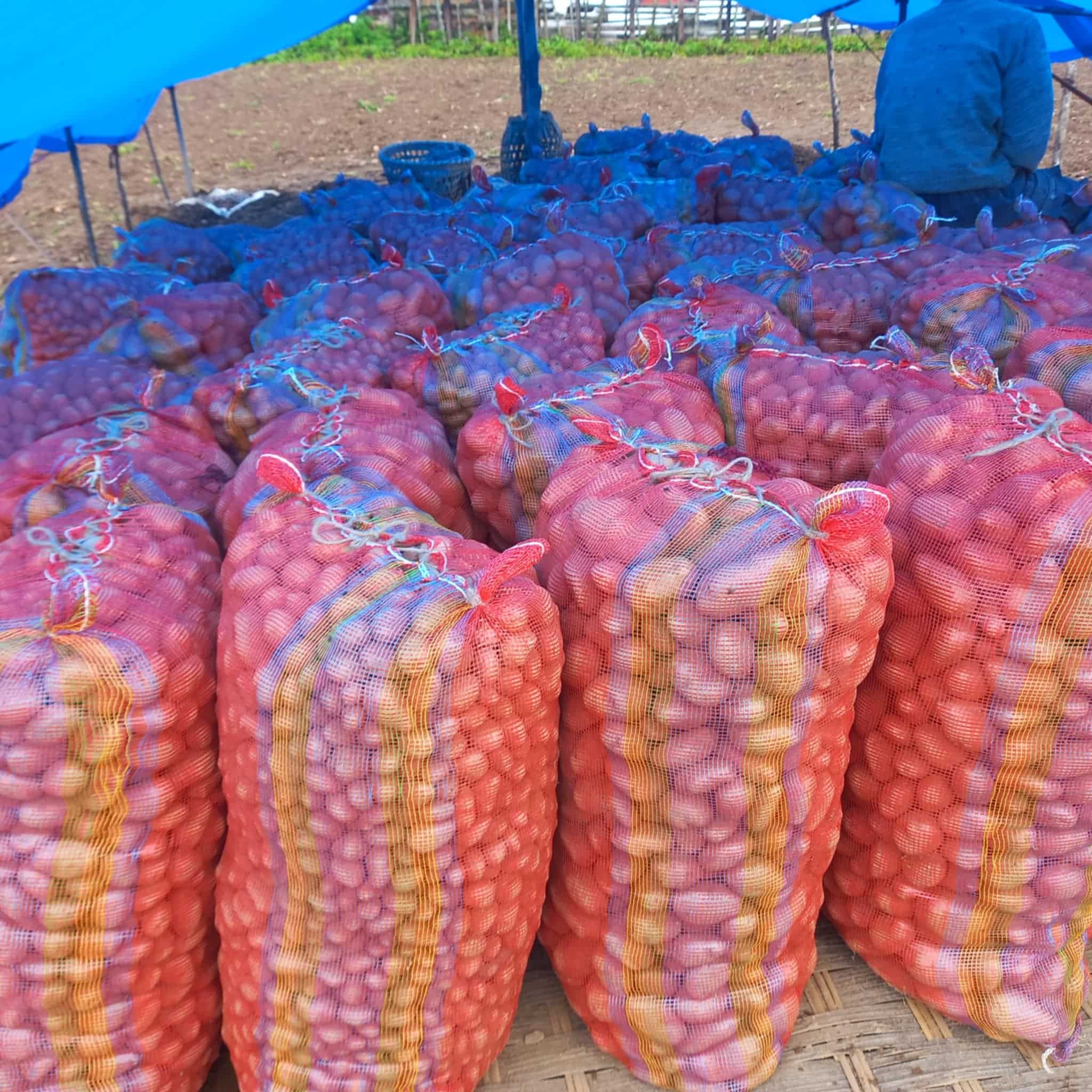
The Government of India (GoI) has given extension on exemption of potato export of potatoes from Bhutan to India. The Royal Government of Bhutan (RGoB) has secured the potato export approval from the GoI from the first week of July.
The extension is until 30th June, 2027. According to the Foreign Affairs and External Trade Minister, the request was done bilaterally on various occasions both from the Ministry of Foreign Affairs and External Trade (MoFAET) and the Ministry of Industry, Commerce and Employment (MoICE). The earlier notification allowed export of potatoes till 30th June, 2024. The current notification dated 5th July, 2024 allows Bhutan to export till 30th June, 2027.
The GoI has granted a one-year extension to the exemption on the export of potatoes from Bhutan to India. As per the notification issued by India’s Ministry of Commerce and Industry on July 4, 2022, the import of potatoes from Bhutan was allowed freely, without the need for a license, until June 30, 2023.
The MoICE minister, Namgyal Dorji told Business Bhutan that the RGoB has secured potato export approval of GoI last week. Unlike in the past years wherein approvals are valid only for one year, the GoI has extended the period upto three years starting this time.
The export of potatoes from Bhutan was initially halted in 2020. To address the situation, GoI granted temporary exemptions for potato exports from Bhutan in 2020 and again in 2021, as reported to the government by the potato export facilitating entity, the Food Corporation of Bhutan Limited (FCBL).
Potatoes from Bhutan are exported to India via Samtse, Phuentshogling, Gelephu, and Samdrup Jongkhar. However, the MoICE minister during the recent parliament session acknowledged that problems started surfacing after the pandemic when the border gates were reopened. He said that only 17000MT were only allowed to be exported to India through Phuentsholing. Economists said that it was because the Indian economy was trying to revive by placing importance on their own farmers and traders.
Then it was recent allowed to be exported via Chamurchi near Samtse but Bhutanese farmers faced huge losses having to take it to Samtse all the way via Thimphu. The RGoB then requested the GoI for export routes through Gelephu, Samdrup Jongkhar, Lhamoizingkha and Samtse too.
In the meantime, farmers in Nobding are expecting a good return from the export of their potatoes. “Our yield and quality this season is very good. Thats why it is giving us a glimmer of hope to make a good income this year,” Phub Om, a farmer said.
Even though a free trade agreement exists between the two countries, there were certain things which needed to be sorted out between the governments. One main reason, according to MoICE, was due to the general elections in India this year.
Records indicate that Bhutan exported 21MT of potatoes to India in 2021, the highest ever. It then came down to 11MT in 2022 and again 11MT in 2018. “On an average, we export only 7.8MT of potatoes to India annually,” an official from MoIC said.
Potatoes are a primary agricultural commodity, and thousands of farmers in Bhutan rely on this crop as their primary source of income. Similarly, numerous traders, entrepreneurs, and consumers in India depend on Bhutanese potatoes for their livelihood. The trade of potatoes has been a long-standing tradition between the two countries, fostering strong people-to-people connections and mutual benefits.
On average, Bhutan exports around 20,000 metric tonnes of potatoes annually, which accounts for approximately 0.04 percent of India’s domestic potato production. Bhutanese potatoes are transported to India through various border points, including Samtse, Phuentsholing, Gelephu, and SamdrupJongkhar.
Since the signing of the treaty between the GoI and the RGoB in 1949, there has been a long-standing history of free trade and commerce between the two nations. The first formal agreement on trade and commerce was signed in 1972, and it has since undergone five revisions (in 1983, 1990, 1995, 2006, and 2016). The current Agreement on Trade, Commerce, and Transit between the Royal Government of Bhutan and the Government of the Republic of India remains valid until 2026.
Since the inception of Bhutan’s planned development, which began with the launch of the first five-year plan in 1961, the Government of India has played a significant role as Bhutan’s primary development partner. The mutually beneficial economic ties between the two nations have been at the heart of their relationship. Today, India not only remains Bhutan’s primary development partner but also its leading trading partner.
India imports potatoes from Bhutan primarily for consumption purposes. Potatoes are a staple food in India, and Bhutan is known for producing high-quality potatoes. Therefore, India imports Bhutan’s potatoes to meet domestic demand, ensuring a steady supply of this essential food item.
By Sangay Rabten, Thimphu











