

Space technology is emerging as a practical development tool for Bhutan, with satellite-based systems and geospatial intelligence expected to strengthen disaster response, support key economic sectors, and create new opportunities for youth employment.
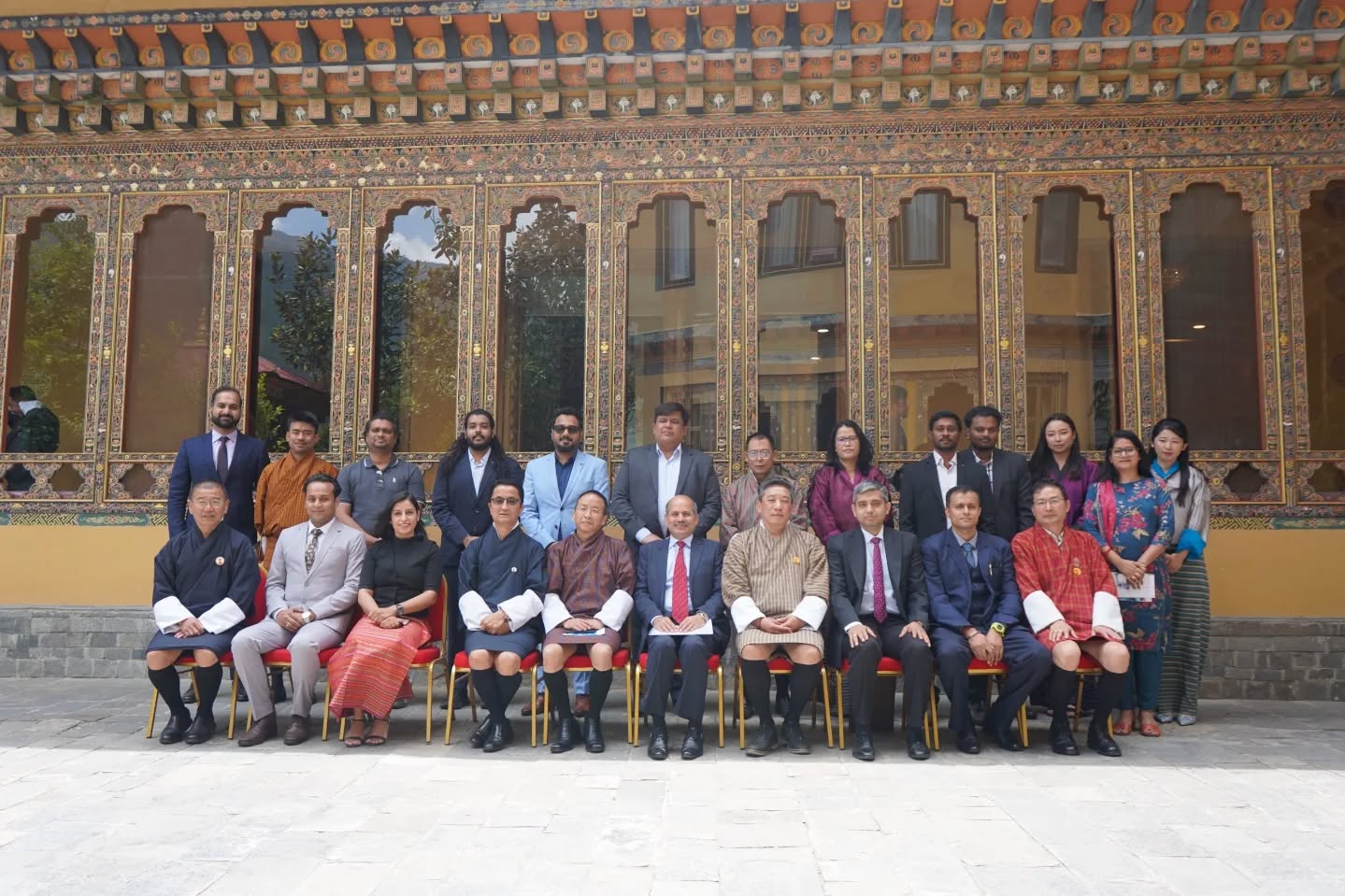
The direction was highlighted during an event held earlier this week in Thimphu, organised by the Embassy of India, Thimphu, in partnership with the GovTech Agency, and in collaboration with the Indian National Space Promotion and Authorization Centre (IN-SPACe), Government of India.
GovTech Secretary Jigme Tenzing said space technology is becoming increasingly central to evidence-based policymaking as Bhutan deepens its digital transformation agenda.
He pointed to India’s rapidly expanding commercial space ecosystem, now home to hundreds of startups, as an example of how private sector participation can transform a traditionally state-led sector.
Indian Ambassador to Bhutan Sandeep Arya said the global space sector is undergoing rapid change, driven by lower satellite costs, improved computing power, and the expanding use of geospatial data.
He said India’s experience over the past six years shows that opening the sector to private participation can accelerate innovation, reduce costs, and expand applications.
“This model can support Bhutan as well through concrete applications aligned with its national priorities,” he said, adding that space-based services, combined with local digital talent, could emerge as a new pillar of economic growth.
The ambassador also highlighted earlier cooperation initiatives such as the South Asia Satellite and India–Bhutan satellite collaborations, which have already supported communication and imaging services in Bhutan.
He said future cooperation could expand into hydropower risk monitoring, flash flood prediction, agricultural insurance, infrastructure planning, and road safety in mountainous terrain.
Kiran Pradhan, Chief Programme Officer in the Division of Telecom and Space under GovTech, said Bhutan is moving from exploratory engagement to structured national capacity-building in the space sector.
He said Bhutan’s space journey began with STEM-based initiatives and has gradually expanded into satellite development experiments, joint missions, and the establishment of ground stations in educational institutions.
Bhutan is already using satellite data for weather forecasting, remote sensing, disaster communication, and broadcasting services through international partnerships.
“We are now moving toward building in-house capability, not just using external systems,” he said, adding that a 10-year strategy is being developed to build a sustainable space ecosystem that contributes to GDP growth and skilled job creation.
He said the national objective is to create opportunities for Bhutanese youth both domestically and internationally.
At the event, Indian space technology companies presented a range of solutions tailored to Bhutan’s geography and development needs, particularly in climate resilience and geospatial intelligence.
One company proposed an AI-powered system to monitor glacial lakes and terrain deformation to strengthen early warning systems in flood-prone mountain regions. The platform uses satellite imagery, InSAR analysis, and exposure modelling to track climate risks in real time.
Spatial Logics proposed a similar AI-based glacial lake monitoring framework aimed at strengthening climate resilience and protecting downstream communities and infrastructure from glacial lake outburst floods (GLOFs).
Another firm presented a geo-AI platform using satellite data and conversational analytics to support environmental management, climate-resilient agriculture, and faster decision-making for government agencies.
Additional proposals included space-based data platforms and satellite-enabled systems aligned with Bhutan’s Space Strategy 2034 and the National Digital Infrastructure (NDI), with applications in natural resource monitoring, hydropower catchment management, and infrastructure resilience.
Other solutions featured integrated satellite, drone, and field-based monitoring systems for disaster management, forestry, water resources, hydropower assets, and cultural heritage preservation, alongside capacity-building and joint development with Bhutanese partners.
Companies also highlighted the potential of integrating Bhutan’s local datasets into AI-driven platforms to improve resource planning and climate adaptation.
Kiran Pradhan said future engagement will focus on business-to-business partnerships, pilot projects, and integration of satellite-based solutions into government systems.
The Indian Ambassador emphasized that space cooperation should now move toward long-term implementation supported by stronger policy alignment and institutional coordination, rather than standalone initiatives.
Nidup Lhamo, Thimphu