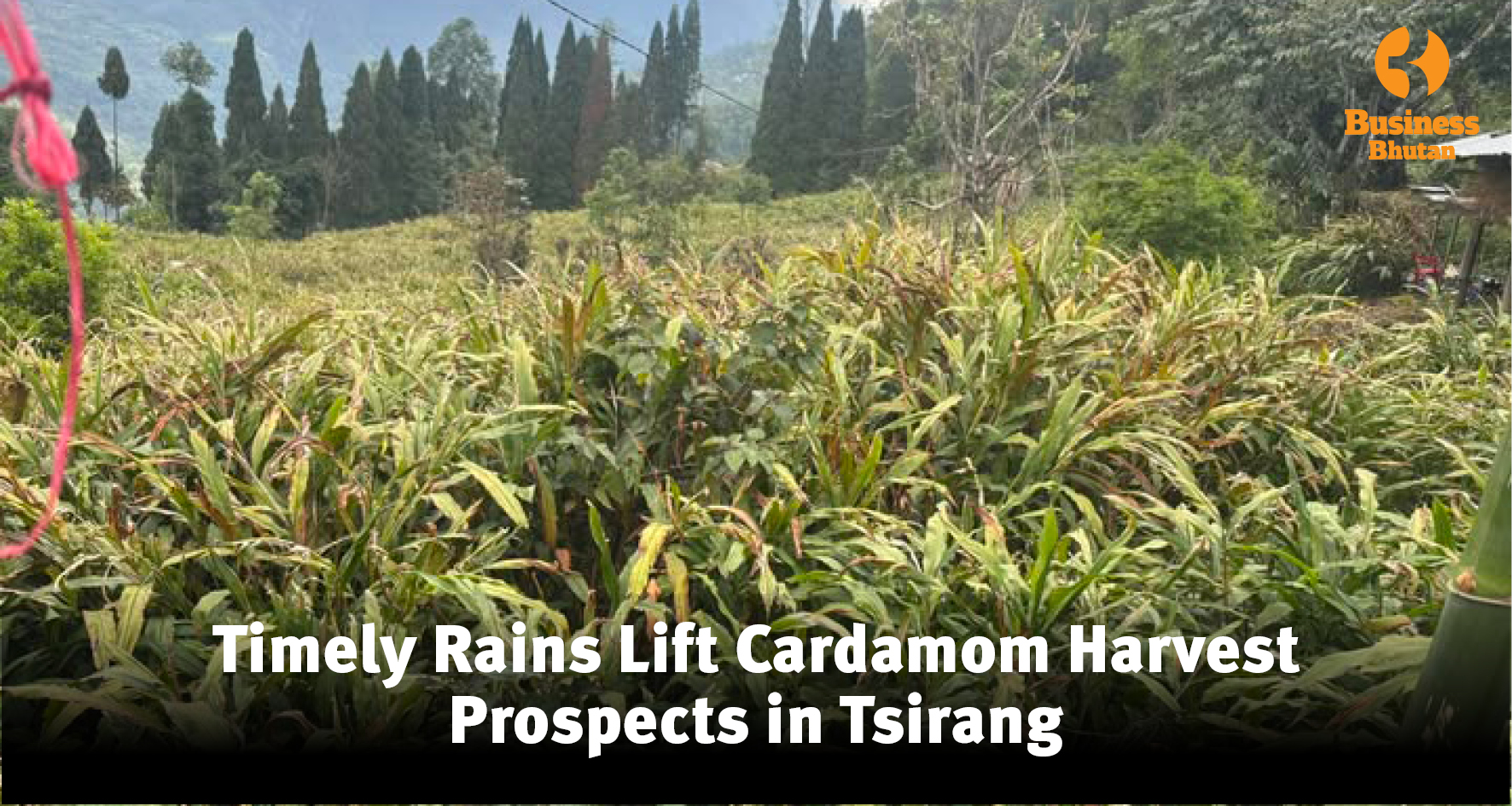
Timely and well-distributed rainfall this season has brought renewed optimism to cardamom growers in Tsirang, raising hopes for a strong harvest after years of uncertainty driven by erratic weather and declining yields.
Cardamom, one of Bhutan’s most important cash crops, plays a vital role in sustaining rural livelihoods, particularly in districts like Tsirang where a large number of households depend on it as a primary source of income. Farmers say this year’s rainfall pattern—neither too heavy nor too sparse—have created favourable conditions for plant growth, flowering, and fruit development.
“In the past few years, we have struggled with either too much rain or prolonged dry spells,” said Naren Gurung, a farmer from Rangthangling gewog. “But this year, the rain has come at the right time. The plants are healthier, and we are seeing better flowering compared to last year.”
Farmers across the district report similar observations. Many note that the steady showers in recent weeks have helped rejuvenate plantations that had shown signs of stress due to inconsistent weather patterns in previous seasons.
“Last year, the yield was quite low because the rains were irregular,” said Kinzang Lhamo, a cardamom grower from Mendrelgang. “This time, the moisture in the soil is just right. If the weather continues like this, we are expecting a much better harvest.”
Agriculture officials in Tsirang also acknowledge the improved outlook, noting that weather conditions so far have been conducive for cardamom cultivation. The crop is highly sensitive to changes in rainfall and temperature, making it particularly vulnerable to climate variability.
“Cardamom requires a delicate balance of rainfall and shade,” said an agriculture extension officer in the district. “This year, the rainfall distribution has been more even, which is crucial during the flowering and early fruiting stages.”
Despite the positive signs, farmers remain cautiously optimistic. Memories of past seasons—when promising early conditions were disrupted by sudden weather changes—continue to temper expectations.
“We have seen good starts before, but unexpected heavy rains or pests can still damage the crop,” said Sonam Tobgay, a farmer from Kilkhorthang. “So we are hopeful, but also careful not to expect too much too soon.”
In addition to weather-related challenges, cardamom farmers in Tsirang have faced issues such as disease outbreaks, ageing plantations, and fluctuating market prices in recent years. These factors have contributed to a gradual decline in productivity, prompting some farmers to diversify their crops.
However, this year’s favourable conditions are encouraging many to invest more effort in managing their plantations.
“We are cleaning the fields more regularly and making sure the plants are well maintained,” said Dawa Tshering, another farmer. “When the weather supports us, it motivates us to work harder because we know the results can be better.”
Farmers also highlight the importance of consistent rainfall in reducing the risk of pests and diseases, which tend to thrive under extreme conditions.
“When the weather is balanced, the plants are stronger and less vulnerable,” explained Kinzang Lhamo. “Too much rain can cause rot, and too little can weaken the plants. This year, it seems more stable.”
Beyond individual households, a strong cardamom harvest has broader economic implications for the district. Increased production can boost local incomes, support trade, and contribute to the national economy through exports.
“Cardamom is one of the main sources of cash income for many families here,” said Naren Gurung. “A good harvest means we can pay for our children’s education, meet household expenses, and even save a little.”
Local traders are also watching the developments closely, as higher yields could influence market supply and prices in the coming months. While increased production is generally positive, farmers note that price stability is equally important to ensure fair returns.
“In some years, even when we have good production, prices fall,” said Sonam Tobgay. “We hope that this time both yield and price will be favourable.”
Agriculture experts emphasize that while favourable rainfall is a positive sign, sustained support in terms of extension services, disease management, and market access will be essential to ensure long-term growth in the sector.
“There is a need to continue supporting farmers with improved practices and timely information,” the extension officer said. “Weather alone cannot guarantee success. It must be complemented by good farm management.”
As the growing season progresses, all eyes remain on the skies. For now, however, the steady rhythm of rain has brought a sense of hope back to Tsirang’s hillsides.
“For us, everything depends on the weather,” said Dawa Tshering, looking over his plantation. “This year, it feels like nature is on our side. We just hope it stays that way until harvest.”
If current conditions persist, Tsirang’s cardamom farmers may finally see a season that rewards their patience and perseverance—turning timely rains into a harvest of renewed promise.
Tashi Namgyal, Thimphu