The future of Bhutan’s 50 percent concession on the USD 100 Sustainable Development Fee (SDF) is now moving closer to a decision, with the Ministry of Industry, Commerce and Employment (MoICE) set to submit its recommendation to the Cabinet (Lhengye Zhungtshog) next week.
Its review comes at a critical juncture for Bhutan’s tourism industry, as the government weighs the need to attract more visitors against the need to protect the value and purpose of the SDF.
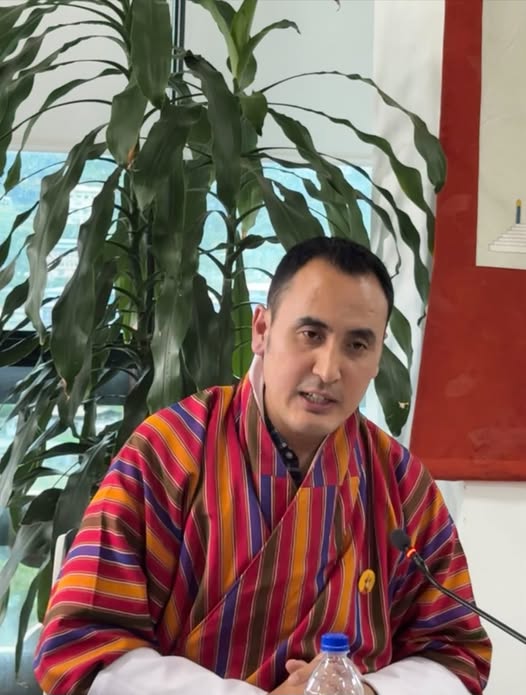
MoICE Minister Namgyal Dorji said the ministry had completed a comprehensive review of the concession and was finalising its recommendation for submission to the Cabinet.
“The Ministry has completed a comprehensive review of the 50 percent SDF concession of USD 100, which is due to expire in August 2027. Our recommendation is being prepared for submission to the Lhengye Zhungtshog in the coming week,” Lyonpo Namgyal Dorji said.
The recommendation will therefore provide the basis for the government’s next decision on one of the most closely watched tourism policies since the reopening of Bhutan after the Covid pandemic.
The clarification was made during the 31st Meet-the-Press, on September 11, 2026, where questions also focused on the SDF rate for Indian tourists, the expansion of SDF waiver areas and the government’s efforts to increase tourist movement into local communities and business centres.
For Indian nationals, the government has already decided to maintain the existing preferential SDF rate of INR 1,200.
The rate was due for review this month, but the Lhengye Zhungtshog has decided to retain it until 21 September 2028, providing greater certainty for the regional tourism market.
“For Indian nationals, the SDF of INR 1,200 was due for review this month. The Lhengye Zhungtshog has decided to maintain the existing rate until 21 September 2028,” the minister said.
The government is also taking a more measured approach to requests for expanding the geographical areas where tourists can travel without paying the SDF for short visits.
Lyonpo Namgyal clarified that the existing 24-hour SDF waiver boundary in Phuentsholing has not been expanded. Instead, the government has introduced a one-year regulatory sandbox under the Managed Tourism Framework to test a specific arrangement.
Under the arrangement, tourists can visit Milarepa Lhakhang and the Paachu community during the Paachu Harvest Festival, subject to specified conditions.
“This allows tourists to visit Milarepa Lhakhang and the Paachu community during the Paachu Harvest Festival under specified conditions, including travelling on a packaged tour through a registered Bhutanese tour operator with a licensed guide. Necessary documentation must be processed after crossing the first designated checkpoints,” the minister said.
The distinction is important because the arrangement does not amount to a permanent expansion of the waiver area. Rather, the government is using the regulatory sandbox to assess whether controlled access can increase tourist movement and economic activity without undermining the wider tourism policy.
A similar proposal has emerged in Samdrup Jongkhar, where businesses have been seeking an extension of the existing waiver beyond the Pinchhina check point.
At present, tourists can travel only up to the Pinchhina checkpoint, approximately four kilometres from Samdrup Jongkhar. Businesses in Dewathang, about 18 kilometres away, have called for the waiver area to be extended to the town, arguing that greater tourist movement could generate additional footfall and business opportunities.
However, the government is not yet ready to extend the arrangement.
Lyonpo Namgyal Dorji said the ministry would first assess the results of the Phuentsholing experiment before considering similar measures elsewhere.
“Regarding Samdrup Jongkhar and the proposal to extend access towards Dewathang, the Ministry will review the experience and effectiveness of the Phuentsholing experiment. Based on the outcome, we may consider proposing similar arrangements in Samdrup Jongkhar and other appropriate locations,” he said.
The approach signals a shift towards testing tourism policy through evidence before expanding it nationwide.
For the tourism industry, however, the most consequential decision remains the future of the USD 50 concession. The government’s recommendation next week will be closely watched by tourism operators and businesses, particularly as Bhutan continues to balance two competing priorities: making the country sufficiently attractive and competitive to sustain visitor numbers while ensuring tourism contributes meaningfully to the country’s broader development objectives.
The decision will also have implications for the government’s tourism strategy beyond 2027.
While the SDF remains central to Bhutan’s high-value, low-volume tourism policy, the concession was introduced to stimulate recovery and improve competitiveness following the pandemic-era reopening. Whether the same rationale continues to justify the concession will now be at the heart of the government’s review.
With the recommendation moving to Cabinet next week, the debate over the SDF is entering its next and potentially decisive phase.
Sherab Dorji, Thimphu