

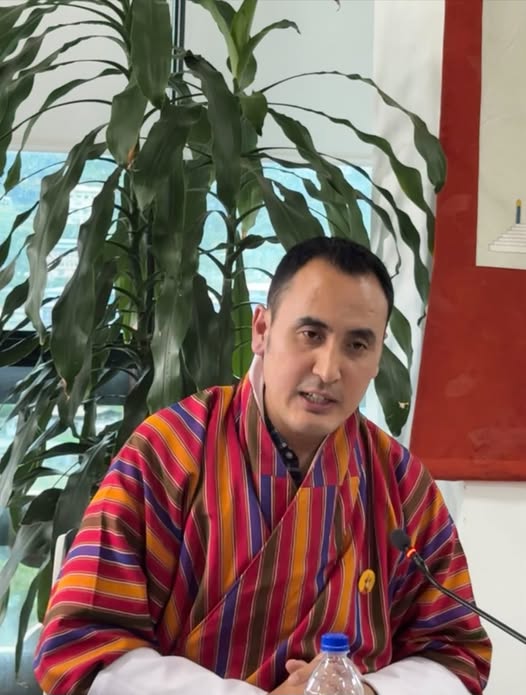
The government’s target of creating more than 65,000 new industrial jobs by 2035 will depend on how successfully 10 priority sectors are developed and scaled over the next decade, the Minister of Industry, Commerce and Employment (MoICE), Namgyal Dorji says.
Responding to queries from the media at the 31st Meet the Press on Friday, the Minister said the target is based on the anticipated growth and employment potential of the 10 sectors, taking into account existing employment patterns, their contribution to GDP, historical growth, the current industrial structure and opportunities for future expansion and diversification.
The target includes around 15,000 jobs each from creative industries and renewable energy and about 11,500 jobs from tourism, with additional employment expected from agro-industries, ICT, forestry, mineral-based industries, data centres and other priority sectors.
The Minister said implementation is still at an early stage but pointed to the approval and licensing of 1,287 industrial projects in 2025, with an estimated employment potential of about 8,072 jobs once the projects become operational.
However, the ministry stressed that the 8,072 figure represents potential jobs, not jobs already created or filled. Its immediate priority, therefore, is to translate approved investments into operational and expanding businesses.
At the same time, the Minister shared that creating jobs and finding workers to fill and retain those jobs present different challenges, citing about industries already reporting difficulties in recruiting and retaining workers, citing skills mismatch, wage competitiveness, working conditions and the nature of some industrial jobs.
The Minister said labour market data also shows that vacancies and unemployment can coexist, as available workers and available jobs do not always match. This workforce challenge comes as the government seeks to significantly expand industrial employment over the next decade.
To address the skills gap, the Industrial Development Roadmap targets 100 percent alignment of TVET programmes with industry requirements and aims to ensure that at least 40 percent of new employment opportunities are accessible to youth, women and rural workers.
The ministry is also implementing skilling and reskilling programmes, employment preparation and placement programmes, along with more direct engagement between employers and jobseekers. However, the Minister said workforce availability alone will not determine whether the 65,000-job target is achieved.
Industries also need affordable finance and working capital, improved productivity, technology, infrastructure and a conducive regulatory environment. These measures are being addressed through broader financing, investment and business regulatory reforms, the ministry said, as industries need to remain financially viable and competitive to offer sustainable wages and retain workers.
The Minister said its confidence in the 65,000-job target is tied to the successful development and scaling of the 10 priority sectors over the next decade.
He reiterated that the eventual measure of success will not simply be whether 65,000 vacancies are generated, but whether the priority sectors grow as envisaged, industries become operational and competitive, and the resulting opportunities translate into productive, decent and sustainable jobs that Bhutanese workers are willing and equipped to take up.
Nidup Lhamo, Thimphu