

Druk Wang Alloys Limited (DWAL) has staged a significant financial turnaround, moving from a net loss of Nu 11.20 million to a net profit of Nu 78.10 million for the year ended June 30, 2026, as revenue surged by 28.4 percent.
The strong reversal marks a substantial improvement in the company’s financial performance, with higher revenue growth outpacing the increase in total expenditure. At the same time, the financial statements show that several major cost components rose sharply during the year, underscoring the pressures facing the company even as profitability improved.
DWAL’s total revenue increased to Nu 1.624 billion from Nu 1.265 billion in the previous financial year, an increase of Nu 358.74 million.
The 28.4 percent growth represents a significant expansion in the company’s top line. However, the financial statements do not provide a detailed breakdown of revenue by product or business segment, making it difficult to establish which specific activities drove the increase.
Total expenditure, meanwhile, rose 19.3 percent to Nu 1.523 billion from Nu 1.276 billion a year earlier. Although expenses increased by Nu 246.67 million, the rate of increase remained below revenue growth, helping the company return to profitability.
Operating expenses rose to Nu 803.54 million from Nu 727.35 million, while direct expenses increased to Nu 473.08 million from Nu 395.06 million.
Employee benefit expenses also increased, reaching Nu 65.81 million compared with Nu 53.88 million in the previous year. Finance expenses rose to Nu 20.04 million from Nu 15.79 million.
One of the most notable movements was in selling and distribution expenses, which jumped to Nu 63.81 million from just Nu 11.45 million. This represents an increase of approximately 457 percent.
The sharp rise in selling and distribution costs warrants attention, particularly as the company seeks to sustain revenue growth. While the financial statements record the increase, they do not provide sufficient detail in the available figures to establish what specifically drove the substantial rise.
Indirect expenses more than doubled to Nu 45.20 million from Nu 22.03 million, while depreciation increased marginally to Nu 51.82 million from Nu 50.80 million.
Despite these cost increases, the stronger revenue performance translated into a significant improvement in the bottom line.
DWAL reported a profit before tax of Nu 100.61 million for the year, compared with a loss before tax of Nu 11.20 million in the previous year. This represents a turnaround of Nu 111.81 million at the pre-tax level.
After accounting for tax expenses of Nu 22.51 million, the company recorded a net profit of Nu 78.10 million.
The return to profitability also strengthened retained earnings. Retained earnings increased to Nu 713.77 million from Nu 452.42 million, an increase of Nu 261.35 million, or about 57.8 percent.
The balance sheet also expanded during the year. Total assets stood at Nu 2.050 billion as of June 30, 2026, compared with Nu 1.796 billion a year earlier, representing an increase of Nu 254.56 million, or 14.2 percent.
The growth was largely reflected in current assets, which increased to Nu 1.232 billion from Nu 926.64 million, an increase of about 33 percent.
Non-current assets, however, declined to Nu 818.24 million from Nu 869.11 million.
On the liabilities side, the company remained relatively stable. Non-current liabilities stood at Nu 421.60 million, compared with Nu 421.71 million in the previous year, while current liabilities declined slightly to Nu 457.79 million from Nu 464.47 million.
Share capital remained unchanged at Nu 457.14 million.
The combination of higher assets, substantially stronger retained earnings and broadly stable liabilities indicates a stronger balance sheet position compared with the previous year. The improvement in retained earnings is particularly significant following the loss recorded in the preceding financial year.
The latest results therefore point to a year of recovery for DWAL, although the sustainability of the turnaround will depend on whether the company can maintain revenue growth while controlling the sharp increases recorded in several expenditure categories.
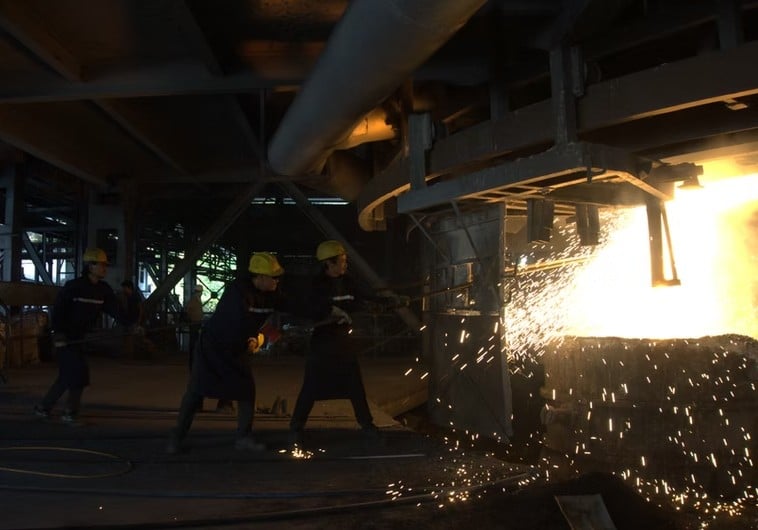
Established in 2005, DWAL is a public limited company and the second-largest producer of ferrosilicon in Bhutan. It operates a major industrial manufacturing facility at the Pasakha Industrial Estate and is listed on the Royal Securities Exchange of Bhutan.
The company’s latest financial performance comes against the backdrop of Bhutan’s continued efforts to strengthen its industrial and export base. For DWAL, the return to profitability provides a stronger financial platform, but the significant movement in selling, distribution and other operating costs will remain important areas to watch as the company moves into the next financial year.
The immediate numbers are clear: revenue rose by more than Nu 358 million, expenditure grew at a slower pace, and a Nu 11.20 million loss was transformed into a Nu 78.10 million profit. The challenge now is to convert that one-year turnaround into sustained and efficient growth.
Tashi Namgyal, Thimphu