Nu 3M concept design marks first step towards Nu 150M project
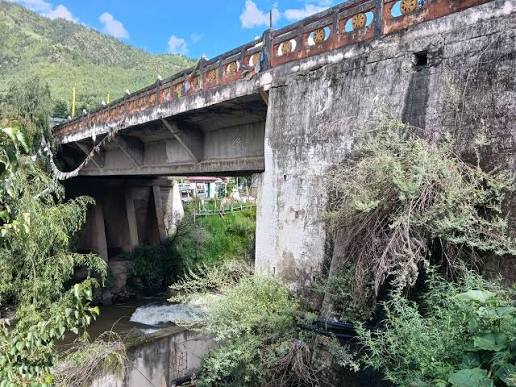
One of Thimphu’s most iconic and historic landmarks is set for a transformation, with the government allocating Nu 3 million in the 2026–27 financial year for the concept design of the proposed Lungtenzampa Bridge. The allocation marks the first step towards a project with a total budget of Nu 150 million, potentially signalling a new chapter for one of the capital’s most recognisable landmarks.
The allocation is part of Nu 1.789 billion earmarked for infrastructure and urban development projects in Thimphu during the financial year, with the bulk of funding directed towards transport connectivity, roads, urban expansion, public spaces and drainage.
The Lungtenzampa Bridge project is among the initiatives still at the planning and design stage. Of its total budget of Nu 150 million, Nu 3 million is scheduled for expenditure in the current financial year for concept design.
The relatively small annual allocation reflects the stage of the project rather than its overall financial significance, with larger expenditures expected as the project progresses into detailed design, procurement and construction.
Among the major projects in Thimphu, the Changlam Public Transport Key Corridor has received the largest allocation of Nu 264.50 million for 2026–27, followed by Nu 253 million for the design and implementation of Norzin Lam.
The extension of Ka-Ja Throm construction has been allocated Nu 250 million, while Kabesa infrastructure development will receive Nu 196 million. Another Nu 100 million has been allocated for internal roads within Thimphu Thromde.
Together, these five projects account for Nu 1.0635 billion, or about 59.4 percent of the total Nu 1.789 billion annual allocation for Thimphu. The concentration of funding highlights the emphasis being placed on transport systems, road infrastructure and planned urban development.
The Changlam corridor and Norzin Lam are particularly significant for the capital as the city seeks to improve movement, public spaces and the organisation of urban activity. Meanwhile, Ka-Ja Throm and Kabesa infrastructure development are linked to the continuing expansion and upgrading of urban areas.
The budget also provides substantial funding for public spaces and neighbourhood infrastructure. Tshalumarphay Park has been allocated Nu 75 million, while Debsi infrastructure development will receive Nu 70 million.
The Clock Tower Square redevelopment has an allocation of Nu 57.97 million, while Debsi Bridge construction has been allocated Nu 55 million. Another Nu 50 million each has been earmarked for Tshalumarphay Bridge and the One Thimphu Bhutan’s Heart Project.
The government has also allocated Nu 30 million for stormwater drainage in Thimphu, alongside Nu 61.50 million for the preparation of Local Area Plans.
The implementation of the Local Area Plan in Paro has a separate allocation of Nu 50 million.
The Wangchhu River Corridor Enhancement Project has been allocated Nu 16.25 million, supporting planned improvements to the river corridor and associated public spaces.
Other allocations include Nu 120 million for City Centre Park and Zangdopelri reconstruction and Nu 33 million for Olakha Park. The latter is reported to be about 99 percent complete, while the Thimphu Ecological Park, with a total budget of Nu 47 million, has been completed.
Smaller allocations include Nu 4.50 million for Babena Neighbourhood Park and Nu 10 million for the Thimphu main road from Babesa along the Living Sculpture route to the CSI Junction in Changzamtog.
The budget also illustrates the difference between a project’s total approved budget and its annual allocation.
The Government Office Complex, for example, has a total budget allocation of Nu 1.63 billion, while only Nu 122.606 million is planned for expenditure during 2026–27. Similarly, the Lungtenzampa Bridge has a total budget of Nu 150 million, but only Nu 3 million is allocated this year because the project is at the concept-design stage.
The range of allocations indicates that Thimphu’s 2026–27 programme consists of projects at different stages—from conceptualisation and design to procurement, construction and completion.
The spending programme comes as the government continues implementation of the Thimphu Structure Plan, with investments directed towards transport infrastructure, urban roads, drainage, neighbourhood facilities and public spaces.
For Lungtenzampa, therefore, the Nu 3 million allocation represents less the construction of a bridge than the beginning of a process that could eventually translate into a major piece of urban infrastructure.
The effectiveness of the project will ultimately depend on the quality of its design, subsequent implementation and how well it responds to Thimphu’s evolving transport and urban-development needs.
Sherab Dorji, Thimphu