From roads to resilience: a partnership that has evolved with the passage of time
The relation between Bhutan and India, especially the ties bound by development has its nucleus in the Five Year Plan (FYP). Since Bhutan launched its first FYP in 1961, India has been a constant partner in Bhutan’s journey of transformation. What began as support for roads, schools, health centres, and basic infrastructure has evolved into a comprehensive partnership encompassing hydropower, economic development, human resource development, digital transformation, climate resilience, and new economic opportunities.
The Beginning: Building the Foundations of Modern Bhutan
When Bhutan launched its First Five Year Plan (1961–1966), the country stood at a historic turning point. With limited infrastructure, difficult mountainous terrain, and a predominantly agrarian economy, Bhutan faced the enormous challenge of building the foundations of a modern state.
India became Bhutan’s first and most important development partner. The First FYP, with an outlay of approximately Nu. 107.2 million, was fully supported by India through financial assistance, technical expertise, and manpower.
The priorities were fundamental – building roads, improving agriculture, expanding education, establishing health services, and strengthening government institutions.
One of the most transformative achievements was the construction of the Phuentsholing–Thimphu highway, which connected Bhutan’s capital with the outside world and opened new possibilities for trade, mobility, and economic growth. For a country separated by some of the world’s most challenging terrain, roads were not merely infrastructure; they were bridges to opportunity.
India’s support during this period laid the foundation for Bhutan’s planned development journey.
Expanding Foundations: The Second to Fourth Five Year Plans
As Bhutan entered the Second (1966–1971), Third (1971–1976), and Fourth (1976–1981) FYPs, India’s assistance expanded alongside Bhutan’s growing development priorities.
During these decades, India continued to support road construction, agriculture, education, health facilities, power development, and institutional strengthening.
The Second FYP had an outlay of around Nu. 200 million, while the Third Plan increased to approximately Nu. 475 million. The Fourth Plan further expanded development activities with greater emphasis on infrastructure and economic foundations.
The nature of India’s support also began evolving. It was no longer limited to building physical assets. It increasingly focused on developing Bhutan’s human resources through education, training, and institutional cooperation.
Indian institutions became important partners in preparing Bhutanese professionals, administrators, engineers, teachers, and technical experts who would later drive the country’s development.
The partnership was gradually shifting from building infrastructure to building capacity.
Hydropower: Transforming Partnership into Shared Prosperity
The most defining transformation in India–Bhutan development cooperation came through hydropower.
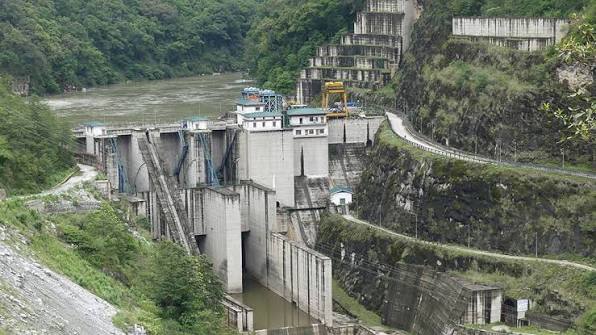
The commissioning of the 336 MW Chukha Hydropower Project in 1986 marked a historic milestone. Developed with Indian support, Chukha changed Bhutan’s economic trajectory by providing a reliable source of revenue through electricity exports to India.
The project represented a new model of cooperation, one where assistance created long-term economic self-reliance.
The success of Chukha paved the way for larger projects. The 1,020 MW Tala Hydroelectric Project, commissioned in 2007, became another landmark achievement. Later, the 720 MW Mangdechhu Hydroelectric Project, commissioned in 2019, further strengthened Bhutan’s energy partnership with India.
Hydropower revenues helped Bhutan invest in education, healthcare, poverty reduction, and social development, demonstrating how strategic cooperation could translate into national transformation.
Growing Partnership Through the Fifth to Tenth Plans
From the Fifth FYP (1981–1987) onwards, Bhutan’s development priorities expanded significantly. The focus moved beyond basic infrastructure towards economic diversification, industrial development, environmental conservation, and improving living standards.
India continued to provide substantial grant assistance. During this period, India’s support increasingly covered roads, telecommunications, power infrastructure, agriculture, education, health, and institutional development.
The Ninth (2002–2007) and Tenth (2008–2013) Plans represented a period of accelerated economic transformation. Bhutan’s priorities included poverty reduction, decentralisation, private sector development, and strengthening democratic institutions.
India supported these efforts through development assistance, capacity building, and major infrastructure projects.
By this stage, the partnership had matured from a donor-recipient relationship into a development partnership based on mutual benefit.
Investing in Human Potential and Sustainable Development
The Eleventh (2013–2018) and Twelfth FYP (2018–2023) reflected Bhutan’s changing aspirations. The emphasis increasingly shifted towards building a resilient, knowledge-based, and sustainable economy.
India’s assistance during this period supported a wide range of sectors, including education, health, agriculture, entrepreneurship, digital connectivity, economic development, and climate resilience.
India also remained a key partner in Bhutan’s energy sector, with the successful completion of Mangdechhu strengthening bilateral cooperation.
The evolution of assistance reflected a deeper understanding that the greatest resource of any country is its people. Development was no longer measured only by roads built or power generated, but by opportunities created and human potential unlocked.
A New Era: The 13th Five Year Plan and Beyond
Bhutan’s 13th FYP (2024–2029) marks a new phase in the partnership. Bhutan’s priorities now include economic transformation, innovation, entrepreneurship, digitalisation, youth empowerment, and creating a future-ready economy.
India has committed Nu. 100 billion in support for this Plan period, reflecting continued commitment to Bhutan’s development journey.
The focus of cooperation is expanding into new frontiers, including economic transformation, connectivity, energy security, technology, and emerging initiatives such as the Gelephu Mindfulness City (GMC).
This represents a remarkable evolution, from building roads in the early years to building a knowledge economy for the future.
A Friendship Beyond Numbers
The history of India’s support to Bhutan’s FYPs cannot be understood only through figures. The true measure lies in the transformation it has enabled.
In the beginning, the partnership built roads that connected communities. Then it built hydropower projects that transformed the economy. Later, it strengthened institutions, developed skills, and expanded opportunities.
Today, it is helping Bhutan prepare for a future defined by innovation, sustainability, and human wellbeing.
The uniqueness of India–Bhutan relations lies not only in the scale of assistance but in the spirit behind it. It is a partnership founded on trust, respect, and a shared belief that development is strongest when nations grow together.
From the first roads of the First FYP to the visionary possibilities of the 13th FYP, India has remained a steadfast partner in Bhutan’s remarkable journey.
The story of India and Bhutan is therefore more than a story of development cooperation. It is a story of friendship transformed into progress, trust transformed into partnership, and shared dreams transformed into a shared future.
Contributed by: Tandin Wangchuk, Chamgang, Thimphu