

For the first time in its history, Bhutan is preparing to take its music beyond its borders and onto one of the world’s most recognised international cultural platforms.
Five emerging artists are now competing for a once-in-a-generation opportunity—to become Bhutan’s first representative at the inaugural Eurovision Song Contest Asia 2026, where the country’s music, language, creativity and cultural identity will meet audiences from across Asia and beyond.
The winner of Bhutan’s National Selection Show (NSS) will earn the honour of representing the Kingdom at the Eurovision Song Contest Asia Grand Final, scheduled to be held on 14 November 2026 in Bangkok, Thailand.
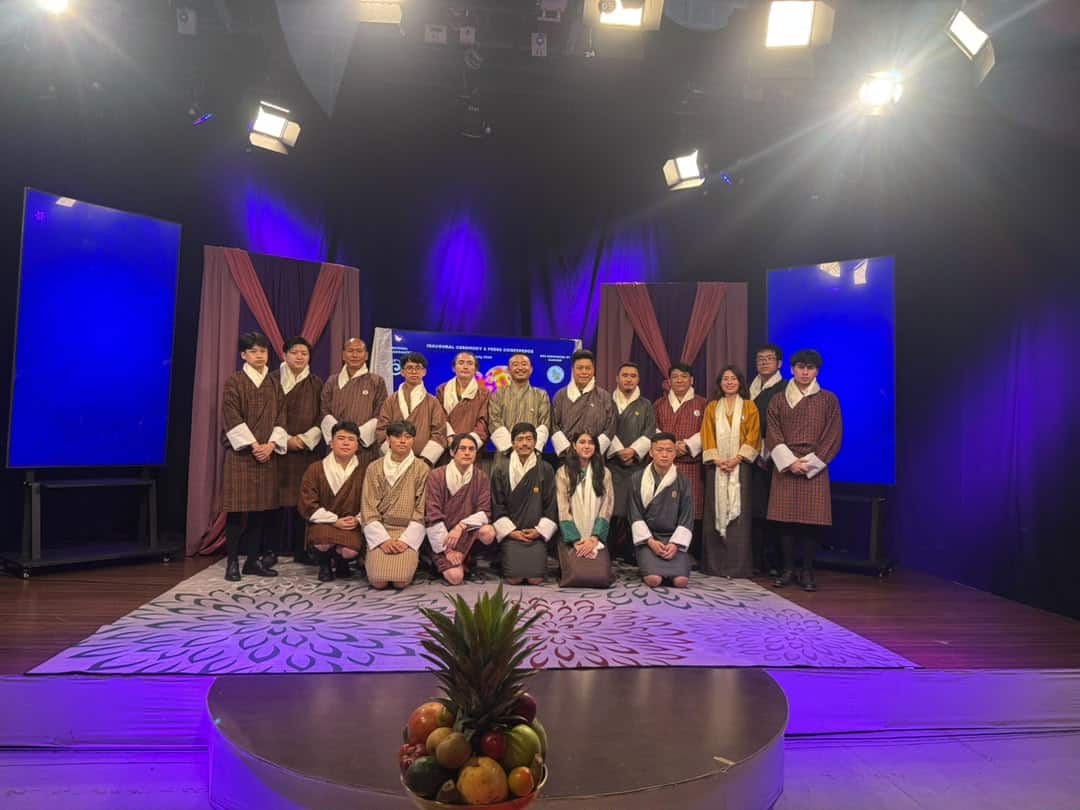
Organised by the Bhutan Broadcasting Service Corporation Limited (BBSCL), Bhutan’s official participating broadcaster for the competition, the National Selection Show began with a nationwide search for talented singers and songwriters. Following auditions, evaluations and several rounds of live performances, five finalists have emerged to compete in the Grand Finale on 11 August.
The finalists will perform original songs, each hoping to convince the judges and audiences that they possess not only the musical ability but also the creativity and presence required to represent Bhutan on an international stage.
However, the competition represents much more than selecting a singer. It marks a significant moment for Bhutan’s growing creative industry and offers a platform to introduce the country’s unique musical identity to the world.
Music has always been an important part of Bhutanese life. From traditional melodies passed down through generations to contemporary compositions by young artists, songs have carried stories, emotions, values and cultural memories. Eurovision Asia offers an opportunity to bring that artistic heritage into a global conversation.
For the finalists, the journey itself has already become a valuable experience.
Finalist Palden Wangchuk said the competition provides an important example for future generations by demonstrating the value of music and creativity.
Another finalist, Sangay Lhaden, said the National Selection Show has opened new possibilities for Bhutanese artists by providing exposure and creating pathways for young people interested in pursuing music professionally.
Finalist Karma Drupcho said the opportunity has encouraged artists to continue improving their skills and contribute to the growth of Bhutan’s creative sector.
While recognising the opportunities created by the platform, Tshering Tobgyel Jamtsho from Baeyul301 said artists also carry a responsibility to use such opportunities wisely.
“It is in the hands of the artists to determine how we represent our songs and music. If we do not make good use of this platform, we will not be able to guide our future generations towards creativity,” he said.
He believes creativity can become an important form of cultural influence for Bhutan, similar to the role music has played in shaping the global image of South Korea.
“Just as K-pop has become Korea’s soft power, I think our soft power lies in using our creativity and showcasing it to the world,” he said.
The finalists will be assessed on several criteria, including vocal ability, stage performance, originality, songwriting quality and their ability to connect with audiences. The selection process aims to identify an artist who can effectively represent Bhutan while presenting a song that resonates with international audiences.
Unlike competitions based on a specific musical style, the National Selection Show allows artists to express their own creativity. Participants are free to explore different genres, provided that their songs are original and meet Eurovision requirements, including the requirement that each song must be exactly three minutes long.
Public participation will also play an important role, with audiences able to support their preferred contestants through voting platforms. Organisers said audience connection and the ability of a song to engage listeners will be key elements in determining the final selection.
Tshering Dorji, Deputy Chairperson of the Internal Organising Committee for Eurovision Song Contest Asia, said Bhutan’s participation provides an opportunity to share the country’s distinct identity with the international community.
“Bhutan is unique in its music, songs, traditional attire and rich culture. Today, our artists are also bringing fresh creativity that can stand alongside the rest of the world. This platform allows us to showcase Bhutanese music, our language and our cultural identity to an international audience,” he said.
Bhutan’s participation is being supported by the Department of Media, Creative Industry and Intellectual Property, which has provided financial assistance of around Nu. 1.3 million for the National Selection Show.
BBSCL said the initiative reflects Bhutan’s growing engagement with the international creative industry and provides young artists with opportunities to explore possibilities beyond national boundaries.
Bhutan is among the 10 countries confirmed to participate in the inaugural Eurovision Song Contest Asia 2026, a regional adaptation of the Eurovision format that will bring together artists and broadcasters from across Asia. Each participating country will select its representative through national selection processes before competing in the Grand Final in Bangkok.
The Eurovision Song Contest itself, launched in 1956 by the European Broadcasting Union (EBU), has grown into one of the world’s longest-running and most recognised music competitions. Beyond entertainment, it has become a cultural platform where countries showcase their languages, traditions and creative expressions.
Over decades, Eurovision has helped artists gain international recognition while allowing nations to strengthen cultural diplomacy through music.
For Bhutan, Eurovision Asia represents more than a music competition. It is an opportunity to introduce the world to Bhutanese creativity, share its cultural stories and allow a new generation of artists to become ambassadors of the country’s identity.
As five finalists prepare for the historic selection, the question is no longer whether Bhutan has a voice to share with the world.
The question is: who will carry that voice onto the international stage?
Nidup Lhamo, Thimphu