


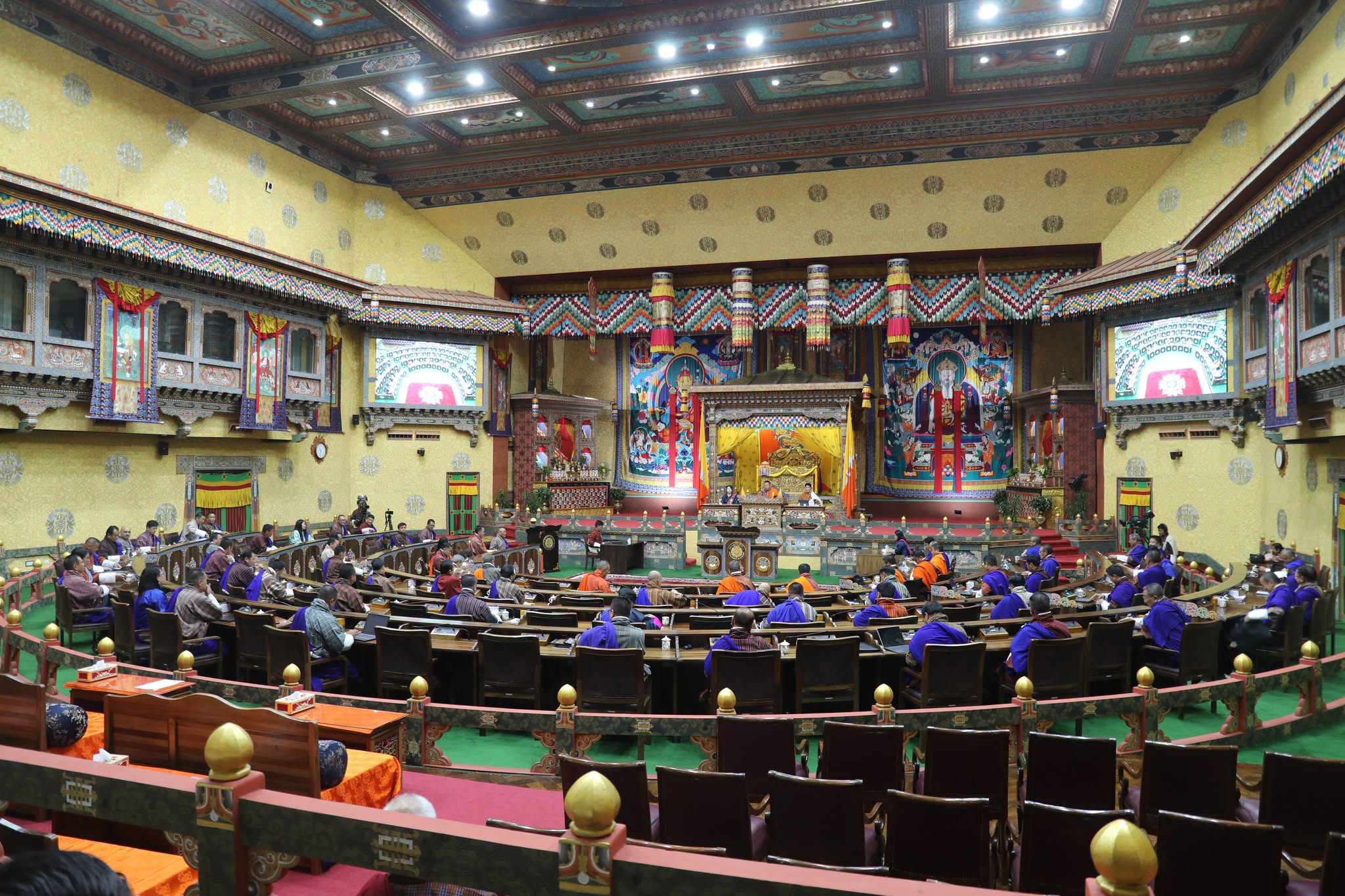
The Parliament has adopted the bilateral Double Taxation Avoidance Agreement (DTAA) with Singapore, completing its legislative passage through both houses to drive national economic growth and provide a major boost for incoming Gelephu Mindfulness City (GMC) investors.
The legislative process concluded following final adoption by the National Council on June 8, 2026, after the bill was initially introduced and passed unanimously by the National Assembly on June 2, 2026, with all 46 members present voting in favor.
Moving forward, the treaty will enter into force following Royal Assent and the completion of standard diplomatic notifications between the two nations. It marks Bhutan’s third bilateral tax agreement, establishing a clear framework for cross-border taxation on income, corporate profits, and assets while embedding international mechanisms to prevent evasion.
Kuenga Kuenga, Member of Parliament from Nyishog-Saephu constituency and Chairperson of the Legislative Committee shared that the agreement serves as a direct and vital mechanism to attract high-quality investors to the GMC Special Administrative Region (SAR).
He said that Singapore is a developed country. “Partnering with them will significantly elevate Bhutan’s international recognition.” This partnership, he said, not only aims to enhance economic ties but also to foster knowledge transfer and best practices in governance.
Moreover, he said the treaty provides crucial institutional credibility, which will build immediate trust among foreign corporations, financial entities, and family offices looking to safely deploy capital into the GMC.
To balance mainland interests with the GMC’s vision, the treaty implements differentiated Permanent Establishment (PE) thresholds. This structure retains protective tax regulations for the mainland economy while allowing maximum fiscal flexibility within the GMC. Additionally, tax-sparing provisions ensure that tax holidays granted by Bhutan to foreign entities are preserved and not canceled out by subsequent taxes in Singapore.
While targeting long-term foreign direct investment (FDI), the chairperson also shared that the framework is engineered to deliver immediate economic relief on the ground. He said that the agreement will specifically support the country’s aviation sector and other businesses.
Under the adopted terms, Bhutanese national air carriers, including Druk Air, are explicitly exempted from paying corporate income tax in Singapore on revenues generated from international passenger and cargo transport.
For the wider business community, the DTAA removes administrative overhead and reduces legal ambiguities. By standardizing rules for cross-border salaries, technical services, and corporate earnings, the agreement simplifies compliance for incoming technology, finance, and logistics firms.
On the other hand, while the agreement removes dual-tax burdens on corporate profits and personal income, it does not alter the existing tariff structures for physical trade. Because Bhutan does not share a Free Trade Agreement (FTA) with Singapore, standard third-country import taxes remain fully in effect for goods shipped between the two nations.
Under Bhutan’s current tax regime, all physical imports from Singapore are subject to a flat 5% Goods and Services Tax (GST), applied across a zero-dollar de minimis threshold.
Additionally, standard customs duties continue to apply based on the item’s Harmonized System (HS) code, calculated on the total Cost, Insurance, and Freight (CIF) value. These customs rates range from 0% to 10% for essential electronics and IT equipment, up to 30% for general consumer goods, and up to 100% for restricted luxury items and vehicles.
The treaty also incorporates strict legal safeguards to secure Bhutan’s sovereign interests and prevent domestic tax leakage. Investments made by sovereign wealth funds, the central bank, and public sector entities are fully protected from foreign withholding taxes.
Additionally, to combat illicit financial flows, the agreement authorizes the Department of Revenue and Customs (DRC) under the Ministry of Finance to securely exchange transaction data with Singaporean tax authorities.
It also introduces the international Principal Purpose Test (PPT), an anti-abuse rule designed to stop multinational shell companies from setting up nominal operations solely to exploit lower treaty tax rates.
Nidup Lhamo, Thimphu











