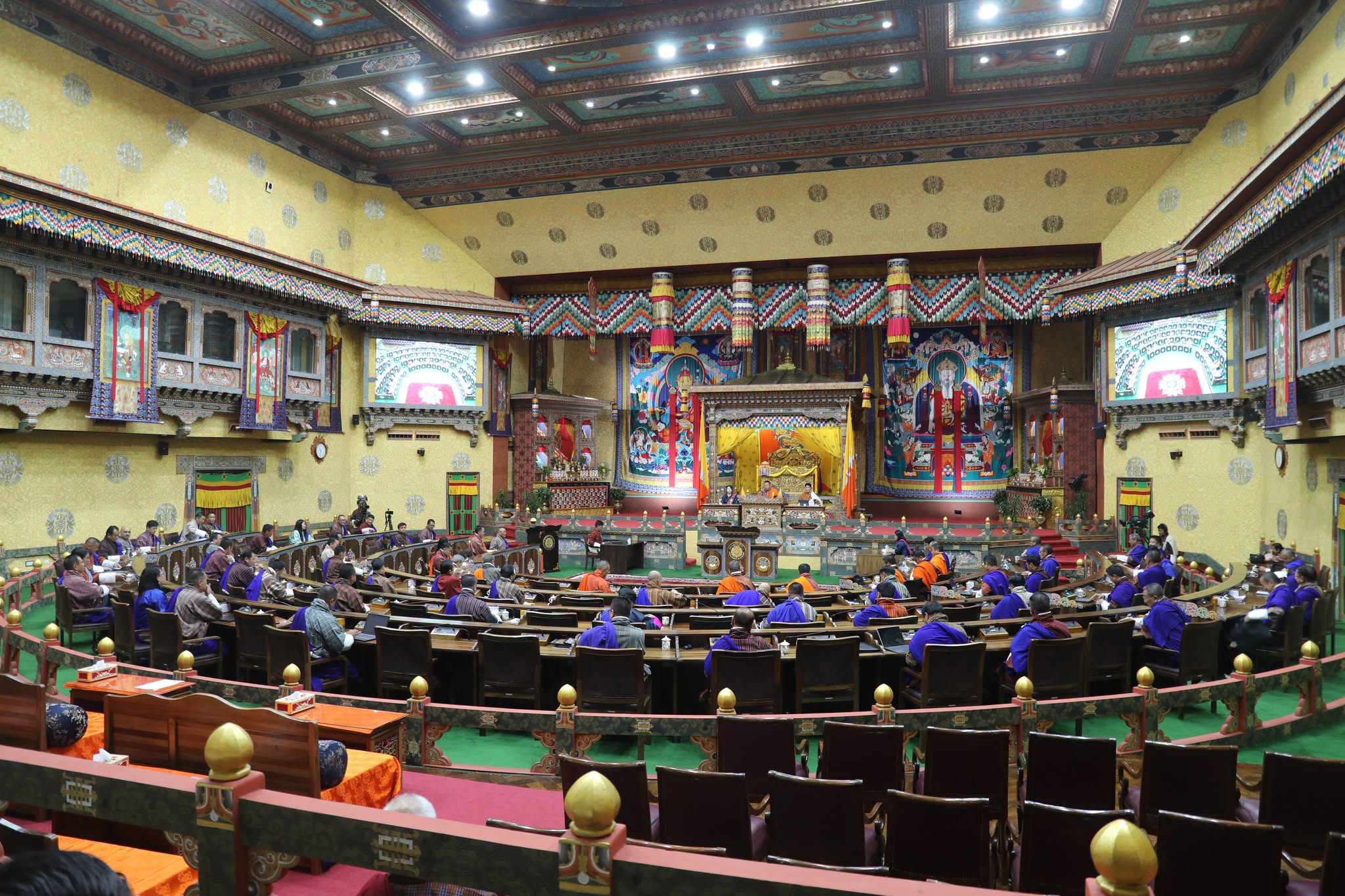
Bhutan’s Parliament continues to enjoy a strong reputation for integrity and ethical conduct, with the latest National Integrity Assessment (NIA) 2025 placing it firmly in the “satisfactory” category. However, the assessment also reveals a growing disconnect between how parliamentarians evaluate their own performance and how citizens perceive their effectiveness, particularly in oversight, transparency and legislative performance.
The NIA 2025 recorded a Parliamentarian Integrity Index (PII) score of 7.15 out of 10, an improvement from 6.90 in the 2022 assessment. While the findings point to stronger institutional integrity and low levels of corruption, they also underscore persistent concerns about Parliament’s ability to effectively scrutinize the executive, engage citizens and translate legislation into meaningful outcomes.
The PII evaluates Parliament from the perspectives of both elected representatives and voters across seven core functions: representativeness, oversight, legislative performance, transparency, accountability, integrity and corruption.
The strongest performance came in the corruption component, which scored 9.38, placing it in the “outstanding” category.
According to the assessment, 95 percent of respondents said they had neither witnessed nor heard of parliamentarians engaging in the exchange of favors, extortion or other improper conduct while carrying out their official duties. Similarly, 97 percent reported no knowledge of parliamentarians misusing privileged information for personal benefit.
However, the report cautions that a high standard of ethical conduct alone does not necessarily translate into a stronger and more effective Parliament.
One of the weakest areas identified was Parliament’s oversight role, which received a score of 6.58, placing it in the “needs improvement” category. Although parliamentarians were recognized for regularly questioning the government on national policies and public issues, the assessment found limited use of stronger oversight instruments such as parliamentary motions, systematic follow-up actions and other accountability mechanisms.
“The high integrity score in financial conduct does not necessarily translate into institutional effectiveness,” the assessment states, highlighting the need to strengthen Parliament’s capacity to monitor government performance and hold the executive accountable.
Despite these concerns, oversight has shown improvement since the previous assessment, increasing from 5.86 in 2022 to 6.58 this year. The legislative function also recorded progress, rising from 6.35 to 6.89.
Nevertheless, the assessment found that translating legislation into practical and implementable outcomes remains a challenge. The indicator measuring whether enacted laws are realistic and effectively implemented scored only 6.48.
The most striking finding of the assessment is the wide perception gap between parliamentarians and the electorate. Parliamentarians rated their overall performance at 7.95, considerably higher than the overall integrity index. By comparison, voters across different education groups rated Parliament between 6.34 and 6.41.
The gap was even more pronounced in Parliament’s oversight function. While parliamentarians gave themselves a score of 7.70, voters rated oversight between 5.47 and 5.74.
A similar pattern emerged in legislative performance. Parliamentarians assessed their work at 7.99, whereas voter ratings ranged from 5.62 to 5.86.
Representativeness received a score of 6.88, indicating satisfactory performance in reflecting public concerns. The assessment found that representing citizens’ interests scored 7.05, while participation in parliamentary debates and speaking frequency recorded slightly lower scores, pointing to opportunities for more active engagement during parliamentary proceedings.
Transparency recorded a score of 6.95. While 62.3 percent of respondents said parliamentarians regularly updated constituents on the progress of their election pledges, 37.7 percent believed such communication was lacking.
Although nearly 69 percent of respondents expressed satisfaction with the updates they received, the report recommends more regular and consistent public communication to strengthen trust and improve citizens’ understanding of parliamentary work.
Accountability scored 6.97, with compliance with Parliament’s code of conduct receiving a strong score of 7.41. However, monitoring development activities within constituencies received a lower score of 6.52.
The integrity component registered 6.89, with parliamentarians receiving high recognition for serving as law-abiding role models. At the same time, performing public duties impartially and without fear or favour recorded comparatively lower scores.
Although corruption levels remain low, the assessment identified lingering public concerns over electoral integrity. Perceptions relating to the provision of cash, goods or services to influence voters scored 6.51.
The assessment concludes that narrowing the perception gap between parliamentarians and citizens, strengthening oversight of the executive, improving communication with constituents and ensuring legislation delivers practical results will be essential to sustaining public confidence in democratic institutions.
Nidup Lhamo, Thimphu