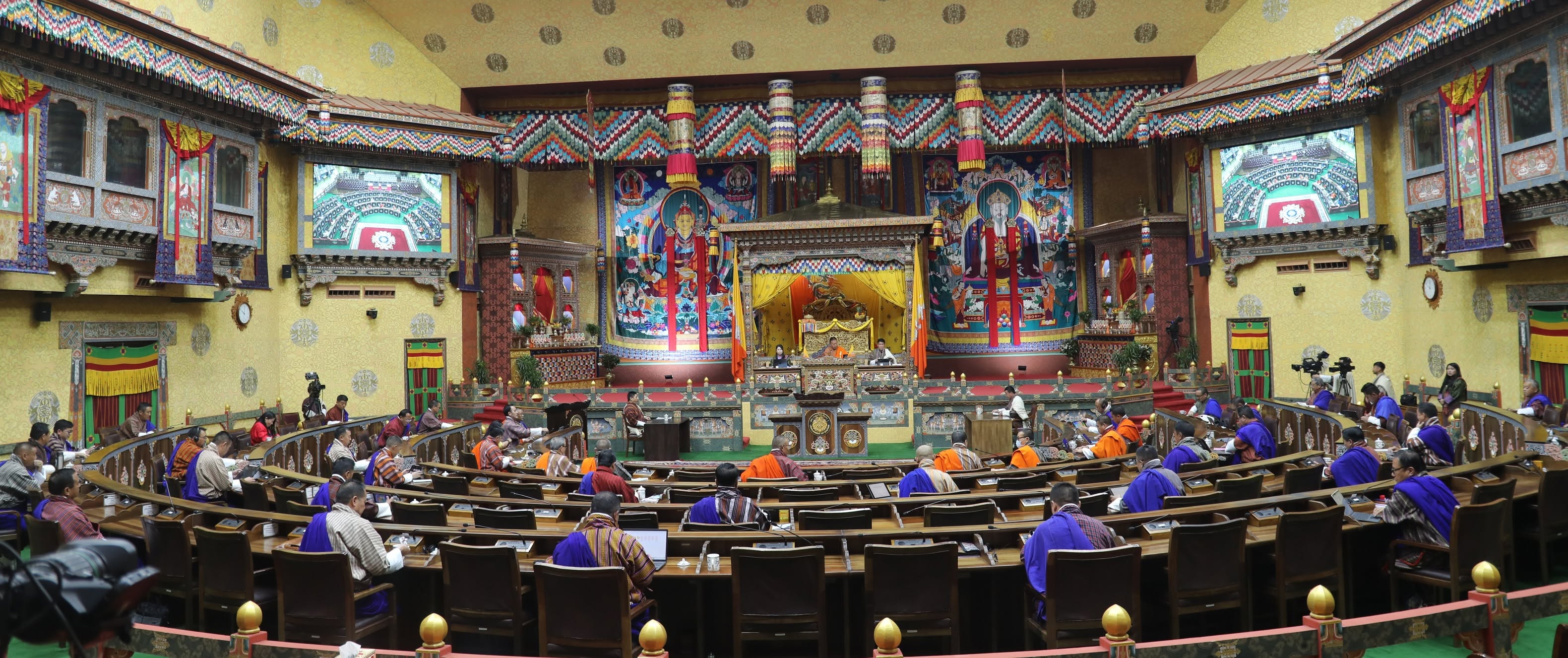
The National Assembly on June 4 adopted the recommendations of the Economic and Finance Committee (EFC) on the Renewable Energy Tax Exemption Bill of Bhutan 2026 during its Third Reading, moving the legislation a significant step closer to becoming law.
The Bill is aimed at accelerating investment in Bhutan’s renewable energy sector through targeted, time-bound tax incentives designed to reduce project costs, improve tariff competitiveness, expand energy infrastructure, and strengthen the country’s long-term energy security.
Presenting the Bill to the House, the Deputy Chairperson of the Economic and Finance Committee and Member of Parliament for Gangzur-Minjey Constituency, Loday Tsheten, said the proposed legislation seeks to create a more attractive investment environment for renewable energy development while ensuring accountability and transparency in the administration of incentives.
Under the Bill, approved renewable energy projects will be eligible for exemptions from indirect taxes on direct inputs used in the construction, installation, and establishment of renewable energy facilities. The legislation also provides for exemptions from Property Ownership Transfer Tax where applicable.
The proposed law covers a wide range of renewable energy technologies, including hydropower, solar, wind, biomass, geothermal energy, biofuels, green hydrogen, and other renewable energy sources that may be approved by the relevant ministry in the future.
During deliberations, Members of Parliament examined the Bill’s objectives, scope, eligibility criteria, and implementation mechanisms, with particular attention given to ensuring that tax incentives are granted transparently and deliver tangible economic and environmental benefits.
Lawmakers emphasized the need for clear approval procedures, robust monitoring systems, and strong accountability measures to ensure that exemptions are directed toward genuine renewable energy investments and do not result in unintended revenue losses.
“The Bill is intended to create a supportive environment for renewable energy development while ensuring that incentives are administered responsibly and fairly,” the Committee stated during its presentation.
A key area of discussion focused on the roles and responsibilities of ministries and agencies tasked with implementing the proposed exemptions. Members stressed the importance of effective inter-agency coordination to ensure proper oversight, compliance, and monitoring of projects receiving tax benefits.
Recognizing the need to balance investment promotion with fiscal prudence, the Bill incorporates safeguards aimed at preventing abuse of incentives and protecting public resources. Members noted that while tax exemptions can stimulate investment, innovation, and economic activity, they must be accompanied by strong governance mechanisms.
Following its review, the Economic and Finance Committee recommended several amendments, including refinements to eligibility provisions, clarification of approval procedures, and stronger oversight measures governing the administration of tax exemptions.
The Committee also proposed revisions to the Dzongkha text of the Bill to improve legal clarity, consistency, and alignment with the English version. These recommendations were endorsed by the House during the Third Reading.
The legislation forms part of Bhutan’s broader strategy to diversify its renewable energy portfolio beyond conventional hydropower. While hydropower remains the backbone of the country’s energy sector, policymakers have increasingly highlighted the importance of expanding into complementary renewable energy sources such as solar, wind, biomass, and emerging technologies including green hydrogen.
Members observed that a more diversified renewable energy sector would enhance energy security, attract private investment, create employment opportunities, and support Bhutan’s long-term sustainability and climate goals.
The Bill is also expected to strengthen private sector participation in renewable energy development by providing a clearer and more predictable policy framework for investors.
Several Members underscored the importance of ensuring that any tax concessions granted under the law generate meaningful national returns through increased investment, job creation, technological innovation, and environmental benefits.
Following detailed deliberations, the National Assembly endorsed the Committee’s recommendations and adopted the Bill.
Once enacted, the Renewable Energy Tax Exemption Bill of Bhutan 2026 is expected to provide the country’s first dedicated legal framework for renewable energy tax incentives, supporting Bhutan’s transition toward a more diversified, resilient, and sustainable energy future.
Sherab Dorji, Thimphu