

Bhutan’s largest-ever earthquake simulation exercise has revealed that while the country has made significant progress in emergency preparedness, critical shortcomings in coordination, communication, manpower, and equipment continue to pose major challenges to an effective disaster response.
The findings emerged during the After-Action Review of the comprehensive multi-agency earthquake simulation conducted in Thimphu earlier this week, involving national agencies, international experts, and observers.
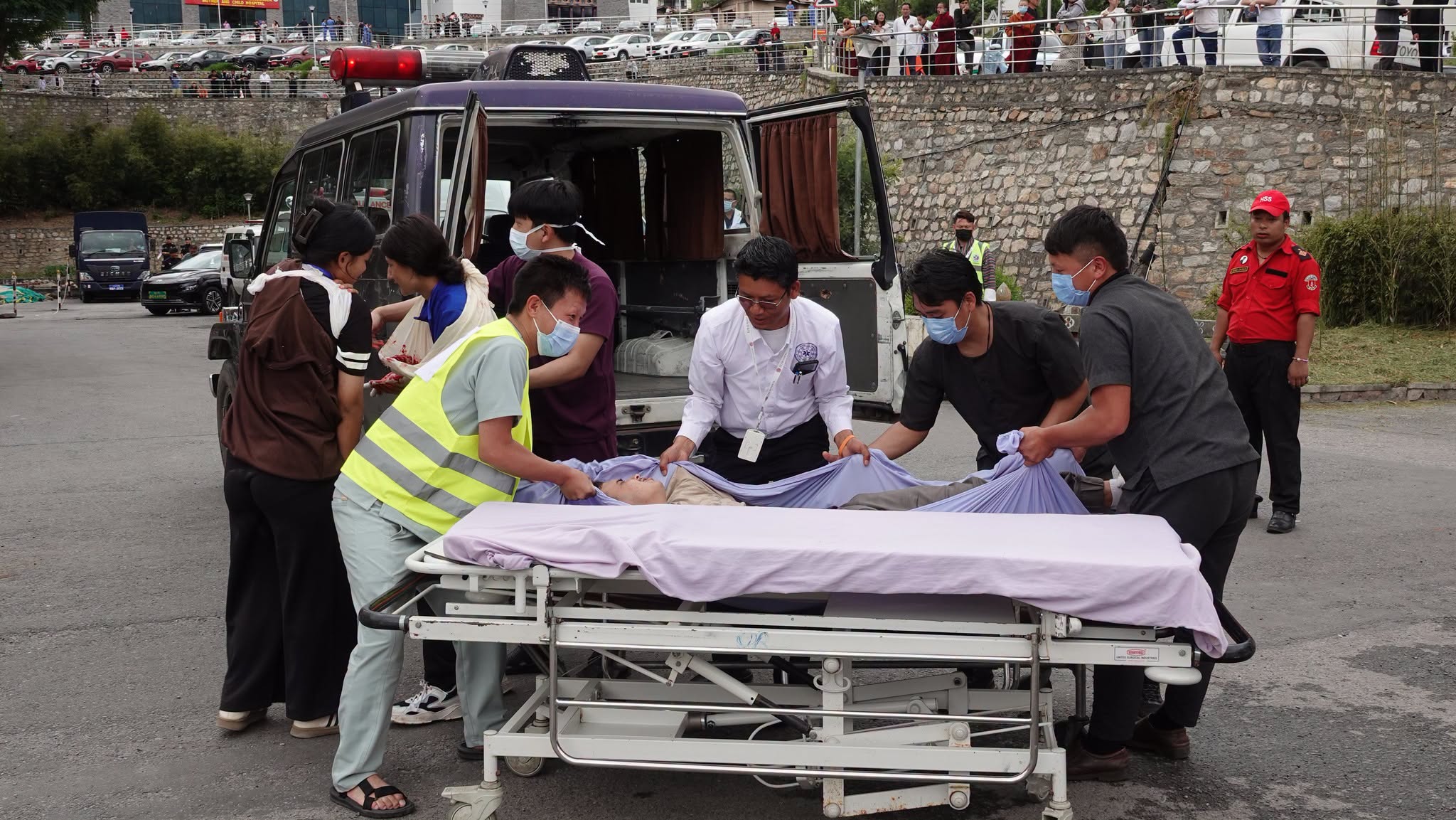
The exercise tested Bhutan’s emergency response system under a simulated major earthquake scenario, assessing the readiness of first responders, hospitals, rescue teams, traffic management, logistics units, and international coordination mechanisms.
Coordination and Communication Gaps
Although emergency responders demonstrated commitment and professionalism, several operational weaknesses became evident.
At the field level, teams experienced delays in activating emergency response protocols, communication breakdowns, and weak coordination among agencies. Responders also reported unclear reporting lines, limited manpower, shortages of rescue equipment, and delays in delivering some emergency services.
Search and rescue personnel noted that information sharing was often delayed and inconsistent, affecting operational decisions. They also highlighted the need for regular training in the use of radio communication and handsets, as well as dedicated media personnel to ensure timely dissemination of verified information during emergencies.
Another concern raised was the shortage of personal protective equipment for rescue personnel operating in hazardous environments.
Hospital Preparedness Faces Resource Constraints
The simulation at the National Referral Hospital successfully tested patient evacuation procedures and emergency medical management systems. However, the exercise exposed significant vulnerabilities within the health sector.
Medical responders cited limited capacity to conduct rapid structural safety assessments of hospital buildings following an earthquake, inadequate ambulance resources, unreliable backup communication systems, and insufficient personnel to sustain emergency operations over an extended period.
The medical team also acknowledged the absence of trained specialists capable of carrying out rapid building assessments after a disaster, alongside shortages of critical emergency resources.
Rescue Operations Need Modern Equipment
The Royal Bhutan Police’s rescue team reported that while Bhutan has adequate capacity to manage transportation and traffic movement during emergencies, the country lacks sufficient rescue vehicles.
The team also observed that large numbers of curious onlookers and unauthorized individuals entered simulated disaster sites, complicating rescue operations.
Responders stressed the importance of continuous disaster response training across all agencies, modernization of rescue equipment and tools, and the establishment of clearer communication channels.
Traffic and Logistics Challenges
Traffic management teams reported that the central control room was not fully aware of field deployments, leading to coordination issues. Although traffic personnel were deployed quickly and alternative routes established, students and the public were not adequately informed of diversions.
Identifying injured victims also proved difficult when multiple buildings were assumed to have collapsed simultaneously.
Meanwhile, the logistics, essential services, and restoration team reported confusion over shelter management due to inconsistent information. While food and drinking water were successfully delivered, sanitation remained a significant concern.
International Assistance Coordination
The International Assistance Desk identified challenges in rapidly activating coordination mechanisms and engaging international partners during the critical early hours following a disaster.
Officials recommended conducting rapid needs assessments immediately after an earthquake and establishing alternative focal points for requesting international assistance, including clear specifications of urgently required medicines and relief supplies.
Observers also noted that managing demolished structures and debris would become a major challenge during a real disaster, emphasizing the need for detailed planning and resource requirements.
Learning Before Disaster Strikes
Around 35 international experts and observers participated in designing, monitoring, and evaluating the simulation exercise.
Speaking during the review, UN Resident Coordinator Gaurav Ray said Bhutan’s geographical location demands a high level of disaster preparedness.
“Bhutan is situated in a seismic zone, and we must be prepared and agile. This exercise has brought us to a point where we need to analyze the lessons learned. Several feedback points need to be addressed, and we must develop short-term, medium-term, and long-term preparedness plans that will inform our contingency strategy,” he said.
He added that sharing experiences among responders is equally important, particularly as many personnel participating in such exercises are new.
Earthquake simulation expert Surya N. Shrestha acknowledged Bhutan’s strong human resource base in search and rescue, medical response, and emergency communications.
“Bhutan possesses many trained personnel for search and rescue, medical response, and communications. However, a key observation was the need to improve the availability of equipment and tools used by rescue and medical teams,” he said.
Officials from Department of Local Governance and Disaster Management (DLGDM), said the review was intended to capture both successes and shortcomings.
Roadmap for National Preparedness
The review recommended strengthening emergency coordination mechanisms, updating emergency contact databases, conducting regular responder training, and increasing the frequency of simulation exercises.
According to the DLGDM, the Coalition for Disaster Resilient Infrastructure (CDRI), based in India, together with Nepal’s National Society for Earthquake Technology, will prepare a comprehensive report documenting the findings and recommendations.
Once the Thimphu Earthquake Contingency Plan is revised, the DLGDM plans to submit it to the Prime Minister’s Office for adoption and replication in other districts across Bhutan.
The exercise ultimately demonstrated that Bhutan has developed a solid foundation of trained responders and emergency systems. However, it also underscored that strengthening coordination, expanding resources, modernizing equipment, and improving communication will be essential if the country is to respond effectively when a major earthquake strikes.
Sangay Rabten, Thimphu