

The country is on the cusp of a historic transportation revolution as a technical team from India’s Northeast Frontier Railway (NFR) conducts a critical field survey in Gelephu, setting the stage for the country’s first-ever railway connection. The team is meticulously verifying and adjusting the centerline for the proposed Gelephu-Kokrajhar rail link, following the initial installation of precast RCC pillars in October 2025.
The project, hailed as a transformative milestone in Bhutan-India relations, promises to reshape trade, commerce, and mobility across southern Bhutan. While recent Indian media reports suggested an inauguration by Prime Minister Narendra Modi in Assam in February 2026, the Minister of Foreign Affairs and External Trade, D.N. Dhungyel, clarified that Bhutan has not yet received any official communication regarding such an event. “However, it would be a great honor if this project could be inaugurated by the Prime Minister,” the Minister stated, underscoring the diplomatic significance of the initiative. Physical construction, he added, is expected to commence by the first quarter of 2027, once detailed designs and groundwork are completed.
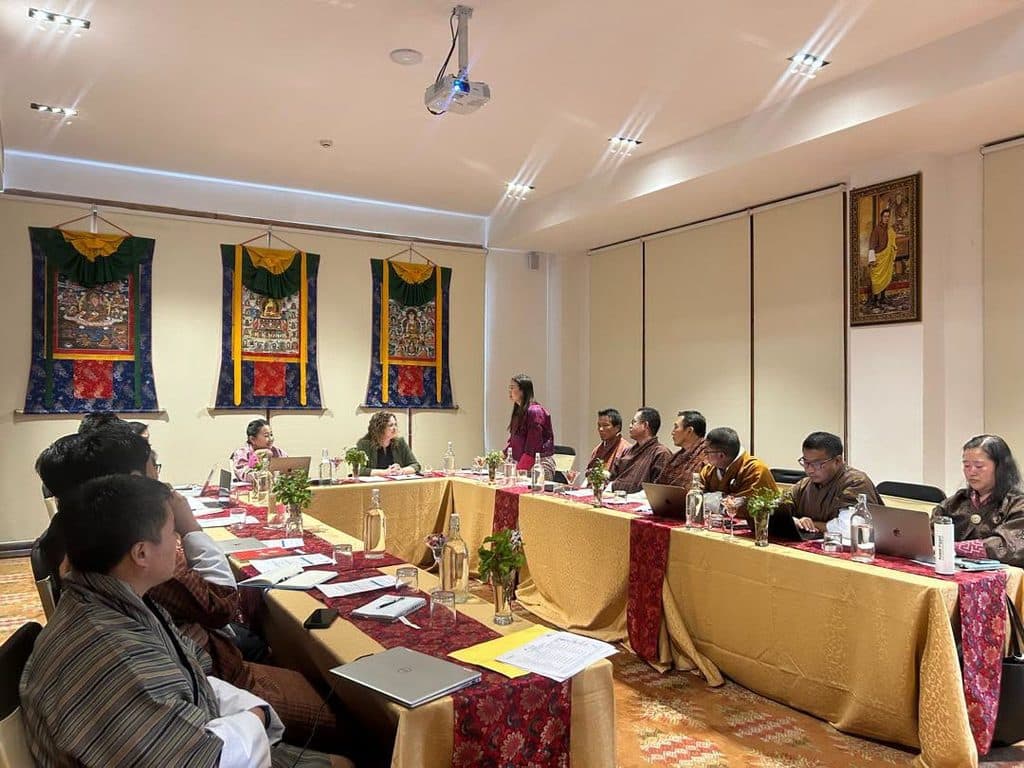
The momentum for this project accelerated following the landmark Memorandum of Understanding (MoU) and the first Railway Project Steering Committee (PSC) meeting on November 20, 2025. Co-chaired by the Secretary of Bhutan’s Ministry of Infrastructure and Transport (MoIT) and India’s Additional Secretary (North) from the Ministry of External Affairs (MEA), the committee clarified roles, addressed site-specific bottlenecks, and laid down a roadmap for timely execution.
With an estimated cost of Nu 34.56 billion, fully funded by the Government of India, the Gelephu–Kokrajhar railway is not only a major infrastructure project but also a historic testament to the enduring partnership between Bhutan and India. India will manage procurement and contractor selection, further ensuring world-class standards in execution. Gelephu, strategically located to serve districts like Zhemgang and Tsirang, has been recognized as a point of entry, making this rail link pivotal for regional development and connectivity.
The benefits of this railway extend far beyond convenience. Bhutan currently depends on India’s rail network for much of its trade with Bangladesh. The Kokrajhar-Gelephu line will streamline the transport of goods, especially sandstone and boulders, directly from Bhutan to Bangladesh, eliminating intermediate handling in Indian ports. This enhanced connectivity is poised to increase trade efficiency, reduce costs, and expand Bhutan’s international market reach.
Progress is also moving ahead on the Samtse-Banarhat railway link. Following Bhutan’s request for a minor terminal redesign to avoid a newly constructed quarantine center in Samtse, the NFR team has successfully pegged the centerline for the revised alignment. Like the Gelephu-Kokrajhar link, this railway has been designated a Special Railway Project, allowing for expedited land acquisition and streamlined regulatory approvals to meet ambitious construction timelines.
Historically, Bhutan and India have long recognized the value of rail connectivity. On January 25, 2005, both nations signed a landmark accord to establish rail links between bordering towns, while also agreeing to intensify cooperation in agriculture and energy. The MoU, inked in the presence of His Majesty the Fourth Druk Gyalpo and Indian Prime Minister Manmohan Singh, laid the foundation for feasibility studies to extend India’s railway network from West Bengal and Assam to Bhutan’s nearest border towns. Today, two decades later, that vision is finally taking concrete shape.
The introduction of rail connectivity will transform mobility for both people and commerce. Residents of southern Bhutan, who previously relied on long and often unpredictable road travel, will have faster, safer, and more reliable options. The railways will facilitate the transport of construction materials, agricultural products, and consumer goods, while opening avenues for tourism and regional business hubs.
Moreover, the railway is expected to catalyze broader economic growth in the region. With Gelephu as a strategic hub, surrounding districts such as Zhemgang and Tsirang will gain improved access to markets, services, and employment opportunities. The railway will also strengthen Bhutan’s trade corridors with India and Bangladesh, promoting integration within South Asia’s growing economic ecosystem.
For Bhutanese citizens, the rail project represents hope and opportunity. Beyond trade and logistics, it promises enhanced social and cultural connectivity, making cross-border travel more accessible for education, health, and family visits. For India, the project reinforces its “Neighbourhood First” policy and showcases its commitment to Bhutan’s sustainable development.
The Gelephu-Kokrajhar and Samtse-Banarhat rail links symbolize more than infrastructure; they embody a shared vision for prosperity, cooperation, and regional integration. By facilitating seamless movement of goods and people, they affirm the enduring friendship between the two nations and underline the strategic importance of Bhutan as a partner in regional trade.
As the NFR team continues its survey, marking every curve and pivot of the track, Bhutan stands on the threshold of a new era. The railway promises to revolutionize logistics, energize economic activity, and weave southern Bhutan more tightly into the regional fabric of South Asia. For a country that has long relied on roads and river routes, the sound of wheels on steel may soon echo a promise fulfilled: that Bhutan is ready to take its historic leap onto the railway map of the region.
Nidup Lhamo
From Thimphu