

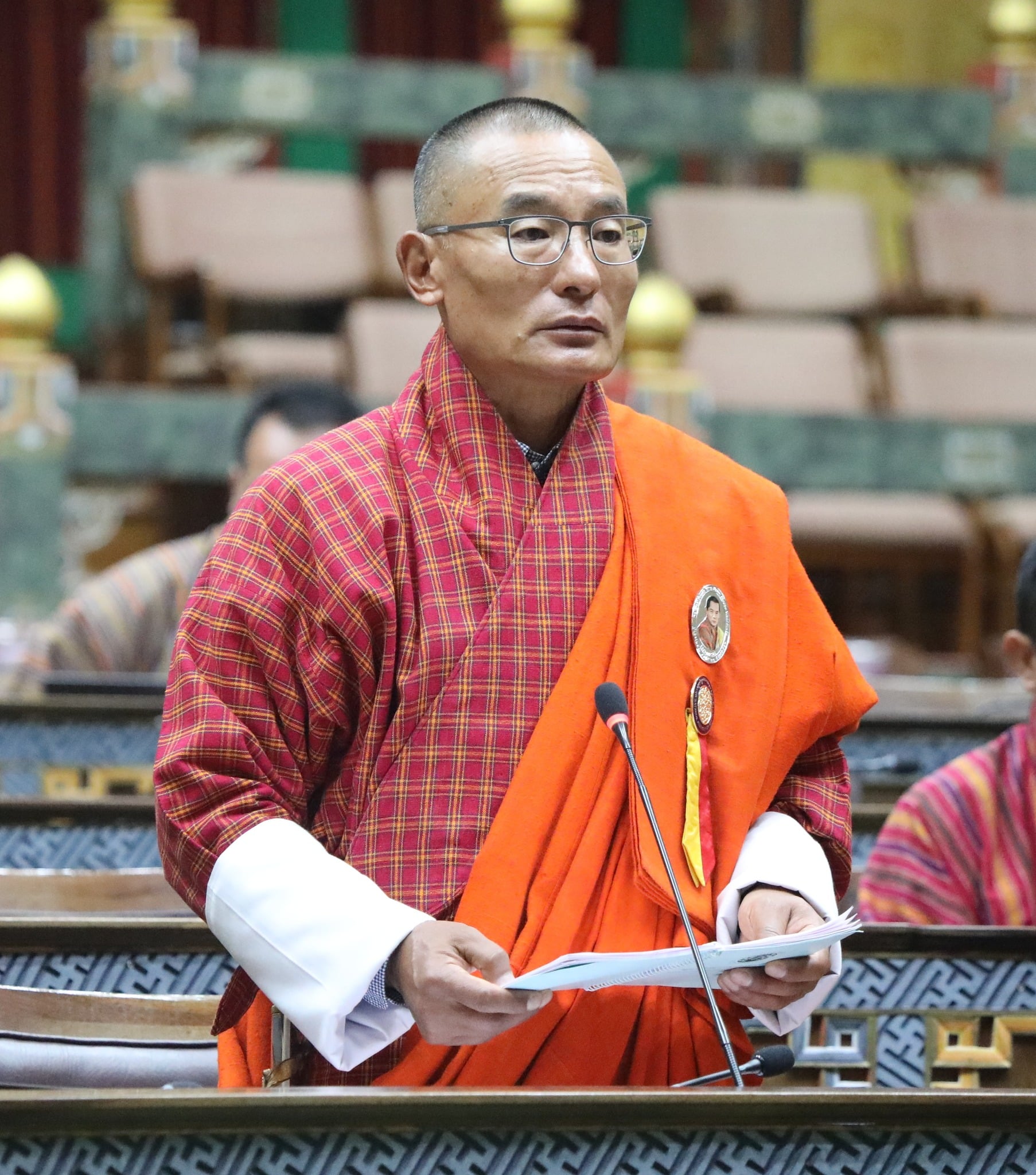
The government will roll out the Third Child Incentive Programme by June 2026, Prime Minister (PM) Dasho Tshering Tobgay announced during the Question Hour session of the National Assembly’s fifth session of the fourth Parliament on May 22, 2026.
Under the scheme, eligible mothers will receive Nu 10,000 per month for their third child and any subsequent children until the child reaches three years of age.
The announcement came after Kenkhar-Weringla Constituency Member of Parliament Dorji Wangmo raised the issue concerning Bhutan’s falling birth rate. She said births have reportedly declined by 62.9 percent over 35 years, from 15,580 in 1990 to only 5,784 in 2025 and is happening alongside youth and skilled-worker outmigration and an ageing population, creating serious pressure on Bhutan’s future workforce, tax base, care economy, and the 10X National Economic Vision. At the same time, the Government’s pledged Third Child Incentive Programme of Nu 10,000 per month has reportedly been put on hold pending a comprehensive demographic study.
She asked what concrete, time-bound, and funded strategy is being implemented to address this demographic crisis and if the Third Child Policy would be implemented.
Meanwhile, the PM said Bhutan’s falling birth rate should be treated as a national crisis, and said the country could face serious long-term demographic and economic challenges if the trend continues.
“There are many countries, especially developed countries such as South Korea, Japan, and several European nations, that are facing severe declines in birth rates,” the PM said. He added that Bhutan is also beginning to face similar concerns, particularly as the country has a small population.
However, the PM said that smaller families are a good sign of economic and social progress.
“During the 1990s, most Bhutanese families were larger in size, and government policies and public awareness campaigns promoted family planning due to concerns over rapid population growth and pressure on national resources.”
In 1992, Bhutan’s total fertility rate stood at around 6.4 children per woman. Recent data from the World Bank shows that the fertility rate has now fallen to around 1.4 children per woman in 2025, well below the replacement level of 2.1.
The PM shared that while the fertility rate is concerning, projections from the National Statistics Bureau (NSB) estimate that Bhutan’s population could still increase to around 816,000 by 2030 and 883,000 by 2047.
He attributed the decline partly to the migration of young and economically active Bhutanese to other countries for higher education and employment opportunities.
To address the issue, the PM shared that alongside the cash incentive programme, the government plans to introduce additional measures aimed at making larger families more financially sustainable.
These include possible flexible timing for employees who are mothers, enhanced parental leave, and paid childcare support. The Office of Cabinet Affairs and Strategic Coordination (OCASC) is working on a Sustainable Strategy Policy and National Social Protection Strategy, especially as Bhutan is expected to become an ageing society by 2027.
The government is also planning to expand Early Childhood Care and Development (ECCD) services. Currently, Bhutan has around 713 ECCD centres nationwide. An additional ECCD centre is expected to open at the Prime Minister’s Office with support from external funding sources.
The PM said the government is also reviewing birth registration processes at hospitals, the Department of Civil Registration and Census, and the NSB to improve coordination and demographic monitoring.
In addition, the Ministry of Health plans to introduce in-vitro fertilization (IVF) services at national referral hospitals during the 2026–2027 financial year as part of broader reproductive healthcare expansion.
Meanwhile, the country’s demographic transition has been gradual but significant over the last three decades. In 1992, the country’s total fertility rate stood at 5.27 children per woman during a period marked by a largely rural and agrarian economy. Throughout the 1990s and early 2000s, the expansion of healthcare services, rising literacy rates, urbanization, and increasing access to education contributed to a steady decline in fertility rates.
By 1998, smaller families increasingly became associated with economic progress and improved living standards. Rapid urban migration to areas such as Thimphu and Phuentsholing, rising education costs, and changing lifestyles further accelerated the shift toward smaller family sizes.
In 2011, Bhutan’s fertility rate fell to 2.10 children per woman, reaching the demographic replacement baseline. By 2012, the country entered sub-replacement fertility territory, marking the beginning of long-term concerns over population aging and workforce sustainability.
According to recent data from the World Bank and United Nations demographic projections, Bhutan’s fertility rate has now fallen to around 1.44 children per woman in 2025 and is projected to remain at the same level in 2026.
Nidup Lhamo, Thimphu