

A business empire can begin with a simple idea. But turning that idea into a viable enterprise has traditionally required market intelligence, technical expertise, financial resources and access to professional advice.
For aspiring entrepreneurs in Bhutan, these barriers have often stood between an idea and a business. Conducting market research, developing products, preparing business plans and reaching potential customers can be expensive and time-consuming, particularly for individuals and small enterprises with limited resources.
Artificial intelligence (AI) is beginning to change that equation.
Today, an entrepreneur can use AI to research markets, identify customer preferences, develop business plans, design product prototypes, prepare marketing campaigns and analyse financial information, often without employing a large team or engaging expensive consultants. What once required several specialists and considerable investment can increasingly be accomplished with a computer, an internet connection and the ability to ask the right questions.
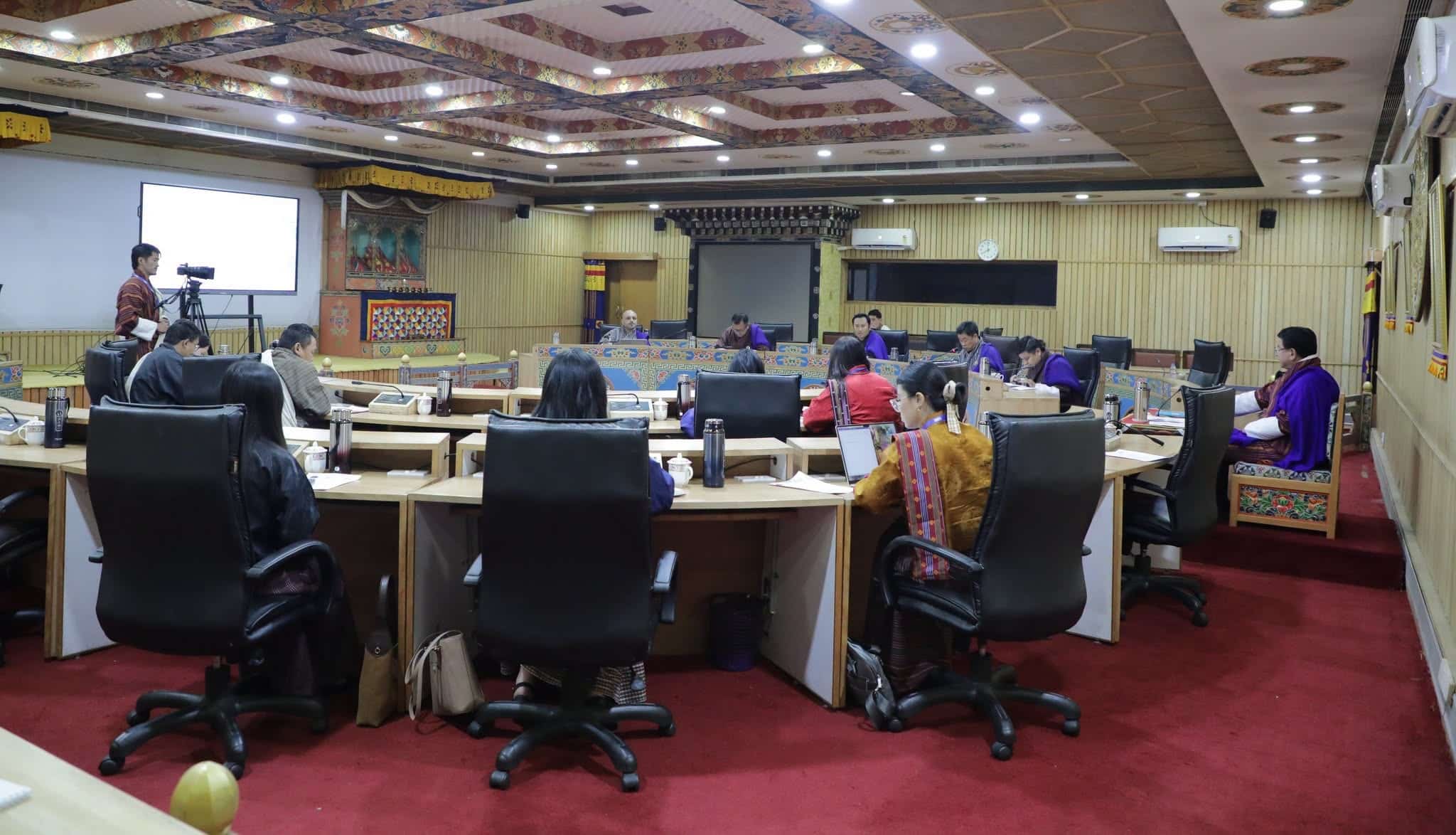
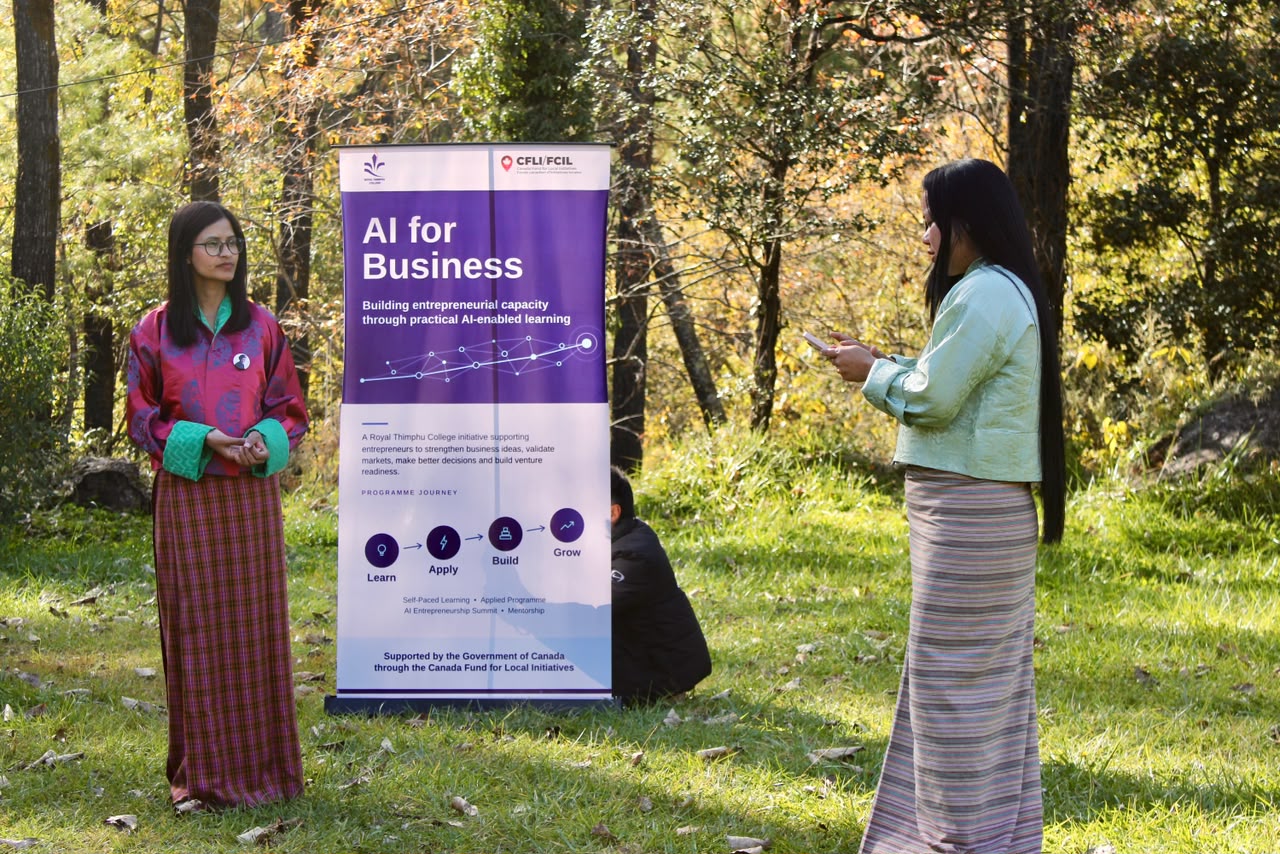
These possibilities were explored at the AI for Business Programme held at Royal Thimphu College (RTC), where resource persons and participants examined how AI could become a practical instrument for starting, managing and expanding businesses.
Madhav Verma, Associate Professor of Business at RTC, described AI as an intelligent personal assistant that entrepreneurs could access to transform ideas into action.
“For me, AI for business is about having an intelligent assistant that assists you in turning ideas into action, improving productivity and making better business decisions,” he said.
From brainstorming and market research to product development, financial analysis, marketing and customer engagement, AI can support businesses at almost every stage of their development. For small businesses, this means accessing capabilities previously available mainly to companies with dedicated research, marketing, design and technical teams.
A tourism entrepreneur, for instance, could use AI to examine travel trends, identify customer segments and develop promotional strategies. An agricultural entrepreneur could explore market demand and opportunities for value-added products. A young person with a business idea could develop an initial digital prototype before investing in full-scale production.
The advantage lies in being able to test assumptions, compare alternatives and refine products before committing substantial resources. AI does not guarantee commercial success, but it can make the journey from an idea to a market-ready product faster, more informed and less expensive.
A business assistant within everyone’s reach
Verma identified applications such as ChatGPT, Gemini, Microsoft Copilot and Canva AI as useful tools for entrepreneurs. He also highlighted emerging Google tools, including Pomelli, Antigravity, Stitch and Opal, which can support different aspects of business development and digital creation.
A small retailer can use AI to develop product descriptions and social media campaigns, while a tourism operator can prepare promotional content for international markets. Startups can use it to organise information, prepare presentations and explore potential investment opportunities.
However, Verma cautioned entrepreneurs against becoming overwhelmed by the growing number of applications or spending money on tools they may not need. His advice was to begin with the business problem rather than the technology. Entrepreneurs should identify what they want to improve and select tools that address those needs.
AI should complement human judgement, not replace it. Its responses can be inaccurate or misleading, and important outputs must be checked. Responsibility for business decisions, product quality and customer commitments must remain with the entrepreneur.
Turning Bhutanese challenges into business opportunities
The potential applications in Bhutan extend across tourism, agriculture, manufacturing, retail, education and services.
Tourism businesses could personalise travel experiences and reach international customers. Agricultural enterprises could analyse demand, improve supply-chain planning and identify opportunities for processing and value addition. Manufacturers could improve production planning and quality control, while retailers could better understand customer behaviour. There is also an opportunity for Bhutanese entrepreneurs to develop digital solutions for local challenges and offer their services internationally.
Verma cited emerging Bhutanese ventures such as Jaggle AI and NOcode as examples of businesses exploring opportunities in AI-based solutions.
This points to an important shift: Bhutanese entrepreneurs need not remain consumers of technology developed elsewhere. They can also become creators of digital products and services, developing solutions for local needs while competing beyond the country’s borders.
But recognising an opportunity and building a sustainable business around it are two different things.
Verma observed that many participants begin to appreciate AI’s practical value only after applying it to actual business challenges. He therefore emphasised hands-on training that allows entrepreneurs to work with their own business ideas rather than simply learn about different applications.
He also highlighted the importance of digital record-keeping. Businesses need organised and reliable information about sales, expenses, customers, inventory and operations to benefit meaningfully from AI-powered analysis. Without good data, even sophisticated technology may produce limited results.
Stronger collaboration among government agencies, educational institutions and the private sector will also be essential to develop digital skills, support startups and encourage solutions suited to Bhutan’s economic environment.
Learning to question assumptions
For participants, the programme was more than an introduction to new technology. It challenged them to examine their businesses, question assumptions and make decisions based on evidence.
Avinash Biswa, Tech Lead at Pure Bhutan, said the programme helped his team distinguish between what it actually knew about its business and what it had merely assumed. Working through the Grow pathway, the team identified a major challenge: introducing tinctures into a Bhutanese market where consumers are still unfamiliar with the products and need credible information before developing confidence in them.
“The workshop made me separate what I know from what I assume, and that changed how I plan, present and build our venture,” he said.
The exercise reinforced the importance of establishing a strong domestic market before pursuing exports.
The programme’s five-point pitch approach also encouraged participants to support business proposals with evidence rather than enthusiasm alone. They were challenged to identify what they could substantiate, acknowledge uncertainties and recognise gaps in information, particularly where reliable sales figures or market baselines were unavailable.
For Biswa, responsible AI use is especially important because Pure Bhutan deals with health-related products. AI can help prepare business documents and examine assumptions, but product claims must be verified against laboratory records and other credible evidence. Customer feedback, he said, remains the real test of whether a product has a market.
He sees opportunities for Bhutan in AI applications for tourism, agriculture, product traceability, Dzongkha-language technologies and services for small businesses. With the right focus, small teams could serve international customers without establishing large physical operations.
The key, he believes, is to identify genuine needs and build solutions around trust, quality and sustainability.
Technology cannot replace trust
Choekey Yoeazer Seldoen, Quality Assurance Officer at Pure Bhutan, also sees considerable potential for AI in manufacturing and product-based businesses.
From production efficiency and quality control to marketing and customer engagement, she believes AI can help enterprises improve their operations. However, it cannot replace human expertise, particularly where product safety and consumer confidence are concerned.
“When it comes to customer trust, transparency, product quality, and reliable information are essential,” she said.
Her observation highlights an important distinction. Technology can help businesses work faster and communicate more effectively, but it cannot manufacture credibility. A well-designed marketing campaign cannot compensate for an inferior product, and an AI-generated business plan cannot establish genuine customer demand.
Ultimately, businesses succeed by delivering something people need, value and are willing to pay for.
From technological curiosity to economic opportunity
The experiences shared at the programme point to a larger opportunity for Bhutan. AI could lower barriers to entrepreneurship, improve productivity and give small businesses access to capabilities previously beyond their financial and technical reach.
For young Bhutanese, this could open new pathways into business. With the right skills, a clear understanding of the market and access to digital tools, they can develop, test and refine ideas before committing substantial resources.
But technology alone will not create successful enterprises. Entrepreneurs need practical digital skills, reliable business information, customer feedback and the discipline to establish whether their ideas can generate sustainable revenue. They must also remain conscious of data privacy, intellectual property and the risks of relying unquestioningly on AI-generated information.
The challenge for Bhutan is not simply to encourage more people to use AI, but to build an entrepreneurial ecosystem in which the technology is applied meaningfully and responsibly. The real measure of success will not be the number of Bhutanese downloading applications or experimenting with AI. It will be the number of businesses using it to solve problems, improve products, create employment, generate income and reach new markets.
For Bhutanese entrepreneurs, the opportunity is no longer simply to learn what AI can do. It is to discover what they can build with it. The next successful Bhutanese enterprise may begin not with a large investment, but with a simple idea, a laptop and the courage to ask a better question.
Sangay Rabten, Thimphu