


Teacher recruitment begins
Bhutan is set to mark a historic milestone in its education journey with the soft launch of its first international school in August 2026, signaling a new phase in the country’s efforts to modernize and globalize its education system.
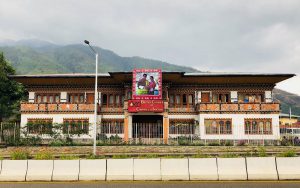
The initiative, led by the Ministry of Education and Skills Development (MoESD) in partnership with EtonHouse International Education Group, represents a significant step toward introducing internationally benchmarked learning standards while strengthening domestic capacity. The school will be established at the former Kelki School campus in Thimphu, transforming a former private education facility into a globally aligned institution. According to MoESD Secretary Tshewang Chophel Dorji, preparatory work is already underway. Phase I of redevelopment is focused on ensuring readiness for the initial opening, while Phase II—covering expansion and additional infrastructure—will follow after the soft launch. This phased approach reflects Bhutan’s broader strategy in education infrastructure development, allowing for immediate implementation while maintaining scope for long-term growth.
The project is particularly significant as Bhutan has, until now, had no full-fledged international school. The August 2026 launch therefore marks a foundational step in diversifying the country’s education landscape and aligning it with global standards.
According to the ministry, the initiative forms part of a wider reform agenda aimed at improving education governance, enhancing quality, and creating learning environments that meet international benchmarks. It is also expected to play a key role in supporting Bhutan’s evolving economic and development priorities.
Meanwhile, teacher recruitment for the school is already underway.
In collaboration with EtonHouse, the ministry has invited applications from eligible in-service teachers for secondment to the new institution. Selected candidates will be appointed for an initial period of two years, with the possibility of a one-year extension based on performance and institutional needs.
The secondment programme is designed not only to staff the school but also to strengthen national teaching capacity. By exposing Bhutanese educators to international pedagogical practices, the initiative aims to facilitate professional exchange and elevate teaching standards across the broader education system.
The Royal Government has allocated Nu 300 million as initial capital for construction and campus redevelopment. Once operational, EtonHouse will assume full responsibility for the school’s management, including academic delivery, staffing, and day-to-day administration.
Headquartered in Singapore, EtonHouse operates more than 100 schools across eight countries, serving over 25,000 students worldwide. In Singapore alone, its institutions cater to children from more than 60 nationalities. The group is widely recognized for its inquiry-based learning approach, emphasis on international-mindedness, and consistent academic outcomes, while maintaining sensitivity to local cultural contexts.
Its entry into Bhutan effectively places Thimphu on the global map of international education.
The school will offer an EtonHouse-designed curriculum aligned with the Cambridge Assessmen International Education framework, enabling students to sit for internationally recognized examinations.
This will open pathways to universities worldwide and position Bhutanese students on par with their global peers.
At the same time, national priorities will remain integral. The ministry has confirmed that Bhutanese students will be required to study Dzongkha and Bhutanese history, ensuring that cultural identity and values are preserved alongside global competencies.
The institution is expected to follow a K–12 structure, providing a continuous learning pathway from early childhood education through to pre-university level within a single system. While detailed implementation plans are still being finalized, the model is designed to offer both continuity and quality across all stages of schooling.
The school will primarily serve the children of professionals and experts engaged in major national initiatives, including the Gelephu Mindfulness City (GMC), who are expected to be based in Thimphu during the early years.
Beyond this group, the school will also cater to expatriate families currently residing in Bhutan, as well as Bhutanese parents seeking international education options domestically rather than sending their children abroad at a young age.
EtonHouse has further indicated interest in establishing a similar institution in GMC as development progresses, potentially creating a new education corridor linking Thimphu with southern Bhutan.
Meanwhile, the school in Thimphu will operate on a fee-paying basis, with a concessional structure for Bhutanese students. Admissions will prioritize children of expatriates and professionals associated with GMC projects, followed by other expatriates and Bhutanese applicants.
Nidup Lhamo, Thimphu