

Historic airborne survey reveals promising targets for copper, tungsten, and strategic minerals, opening a new chapter in Bhutan’s economic journey
For five decades, Bhutan searched for answers beneath its mountains. Now, for the first time, the country has a clearer picture of what lies beneath its geological landscape.
A landmark airborne geophysical survey covering approximately 15,410 square kilometres of the Lower Southern Belt and the Thimphu–Paro region has identified promising geological targets for copper, tungsten, rare earth elements and other base and precious metals, potentially marking a turning point in Bhutan’s understanding of its mineral wealth.
Conducted using two helicopters equipped with advanced magnetic, gravity and LiDAR sensors, the survey completed more than 43,000 line kilometres of airborne measurements, deploying some of the most advanced mineral exploration technologies available today.
The findings have generated excitement across the country, but also a measured sense of responsibility. For many Bhutanese, the discovery represents not simply the possibility of mineral wealth, but an opportunity to redefine Bhutan’s economic future while remaining firmly anchored in the principles of Gross National Happiness (GNH) and sustainable development.
As Bhutan’s Department of Geology and Mines (DGM) moves into the next phase of verification through detailed geological studies, geochemical sampling and drilling, citizens who spoke to the paper expressed optimism that Bhutan, under the leadership of His Majesty the King, will approach the opportunity with wisdom and caution.
Tandin Wangchuk, chief executive officer of a private firm in Thimphu, described the discovery as one that has come at a critical moment in Bhutan’s economic transformation.
“A country’s strength is also shaped by the wealth it possesses in terms of natural resources. This is an entirely new ballgame that could strengthen Bhutan’s relevance in the modern world while injecting the economic vigour we need as we undergo an unprecedented socio-economic transformation,” he said.
However, Tandin believes that Bhutan’s approach will remain distinct from conventional mining models.
“We do not need to worry unnecessarily. Under Bhutan’s leadership, the world has already seen our commitment to sustainable development through areas like green crypto mining. While mineral extraction is physical in nature, the same principles of responsibility and sustainability will guide us,” he said.
He said Bhutan could potentially be moving from traditional resource dependence towards a future built around strategic minerals.
“We are transforming from trade in boulders to trade in strategic critical minerals like tungsten. Beyond that, we still do not know what else we may have. These are exciting times,” he added.
For Ugyen Tshering Dukpa, a Thimphu resident who has followed Bhutan’s mineral exploration journey closely, the findings confirmed a long-held belief that the country’s geological story was far more complex than previously understood.
“Given the presence of hot springs and mineral springs across the country, it never made sense to assume that Bhutan only had granite and boulders. There had to be something more,” he said.
He also pointed to the survey’s identification of granitic intrusions and carbonatite formations—rock types associated with many of the world’s rare earth deposits—as a significant development.
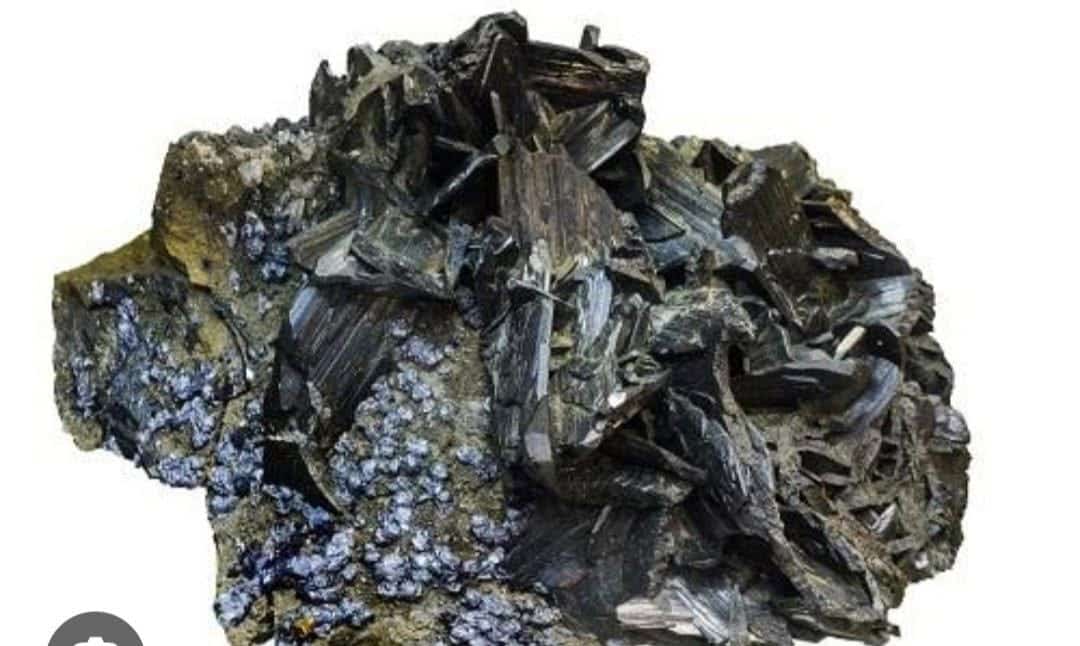
“Tungsten has been identified as a potential resource, and although further studies are required, this could be one of the biggest developments in the history of Bhutan’s mining sector,” Ugyen said.
However, he stressed that discovery must be accompanied by responsibility.
“We have to harness what is there with wisdom. Wealth, in whatever form, must be used prudently. Tungsten and other resources, if confirmed, should be leveraged wisely,” he said.
He added that the timing of the discovery is significant as Bhutan pursues ambitious national transformation initiatives, including the Gelephu Mindfulness City (GMC).
“Bhutan requires resources and capital for developmental activities. If we have resources that can contribute to this transformation, we must use them carefully and responsibly,” he said.
Businessman Dorji Nidup echoed similar sentiments, saying the discovery could enhance Bhutan’s economic relevance in an increasingly competitive world.
“Our strengths as a nation—our culture, our development philosophy and our identity—are unique. But ultimately, economic relevance also depends on what we have in concrete terms,” he said.
He said the possibility of strategic minerals such as tungsten could transform Bhutan’s trade prospects.
“Today, we are talking about potentially selling tungsten. Will we still need to go through the same difficulties we face when exporting boulders? Will we require to go out looking for buyers; the potential for transformation in all areas is there,” he said.
According to the DGM, the survey also detected granitic intrusions and carbonatite formations—rock types that host the majority of the world’s rare earth deposits. While these geological settings indicate potential for rare earth mineralization, officials clarified that airborne geophysical surveys cannot confirm the presence or concentration of rare earth elements. Such confirmation will depend on geochemical sampling, ground-based geophysical investigations and drilling, all of which are now underway.
DGM Director General Phuntsho Namgyal described the survey as a historic milestone in Bhutan’s understanding of its subsurface resources.
“For fifty years, we did not know what lay beneath us. This survey moves Bhutan from a position of searching to a position of knowing,” he said.
He added that the findings provide a reliable foundation for future exploration.
“The interpretation gives us a defensible map of where to look, which is precisely what fifty years of not looking had denied us,” he said.
Beyond minerals, the survey has also revealed deep geological structures, fault systems and zones of magnetic depletion associated with hydrothermal alteration. These features correspond with Bhutan’s known thermal springs and could provide insights into geothermal potential.
Speaking at a press briefing in Thimphu, Prime Minister Dasho Tshering Tobgay said the preliminary results provide encouraging indications of mineral potential but stressed that further scientific validation is required.
The Prime Minister reiterated that any future mineral development would be guided by GNH principles, ensuring that economic opportunities do not come at the cost of environmental protection or the well-being of future generations.
Sangay Rabten, Thimphu