

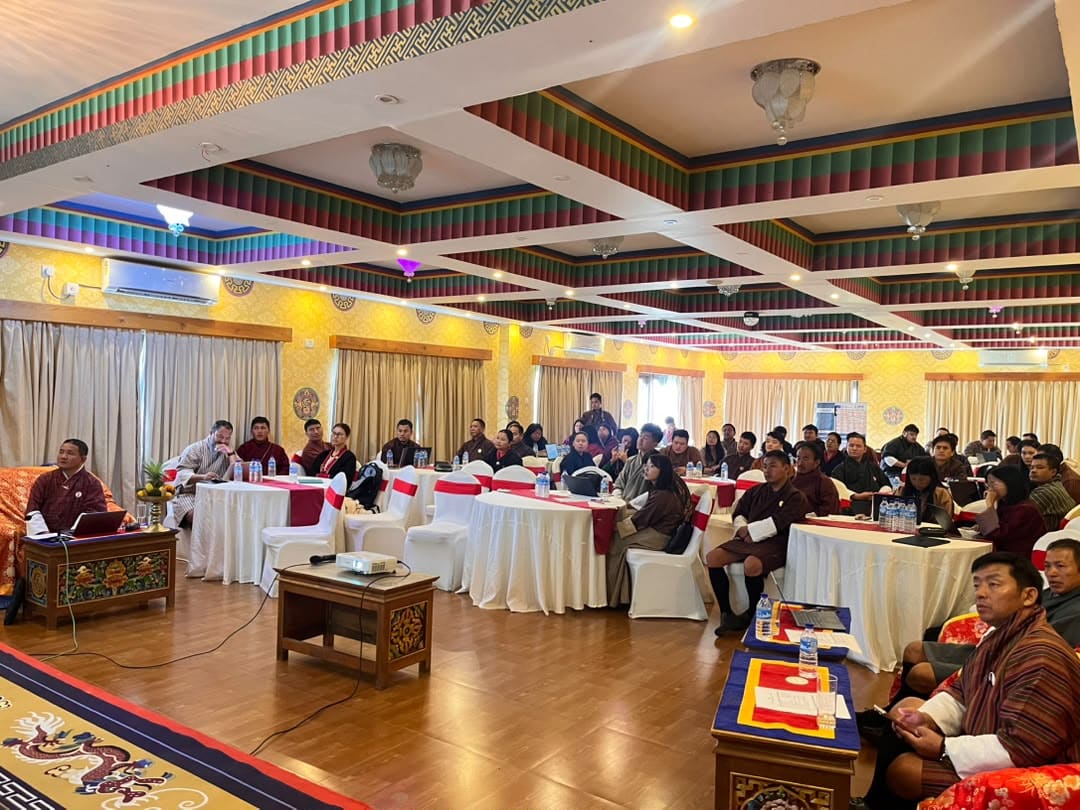
Six eastern dzongkhags are developing a regional tourism development strategy and individual Tourism Action Plans (TAPs) to unlock the region’s untapped tourism potential, attract private investment and increase visitor arrivals between September and November this year.
The initiative aims to position eastern Bhutan as a distinctive tourism destination by promoting its natural landscapes, cultural heritage, adventure experiences, wellness offerings, spiritual attractions, agritourism and culinary traditions. It also seeks to prepare the region to capture emerging opportunities from improved international connectivity, including the opening of Gelephu Mindfulness City (GMC) International Airport and other gateways to eastern Bhutan.
The Department of Tourism and the Voice for Green Change Partnership (V4GCP) project are jointly funding the development of the regional strategy and the six dzongkhag-level action plans. V4GCP is funded by the European Union and led by the Handicrafts Association of Bhutan (HAB) in partnership with other organisations for the period 2024–2026.
The plans are expected to be launched within the current financial year, after which the six dzongkhags will begin implementation. Activities will be phased over the short, medium and long term, extending to 2034.
The initiative comes as Bhutan seeks to diversify its tourism products, encourage visitors to explore less-visited destinations and spread tourism income more widely across the country. Eastern Bhutan currently receives fewer tourists than some of the country’s established destinations, despite its cultural, natural and community-based tourism resources.
The regional strategy will seek to brand eastern Bhutan as the “hidden treasure lands of Bhutan”, highlighting the distinct attractions of each dzongkhag while developing the region as a connected tourism destination.
Shifting towards market-driven tourism
A key feature of the action plans is a shift from government-led tourism development towards a market-driven approach that creates greater opportunities for private sector participation.
Under the proposed model, dzongkhags and gewogs will increasingly function as destination management organisations, coordinating tourism development, supporting businesses and providing policy and regulatory assistance rather than acting solely as developers of tourism products and services.
The approach is expected to encourage innovative business models that can attract domestic entrepreneurs, private investors and foreign direct investment. Local administrations will play a supporting role by creating an enabling environment for investment and helping coordinate tourism-related infrastructure, services and destination management.
The development process will follow a bottom-up and inclusive approach, involving gewog and dzongkhag administrations, community representatives, private businesses and tourism stakeholders. This is intended to ensure that the plans reflect local priorities, available resources and market opportunities.
The action plans will also help mainstream tourism development into local government plans, translating national policy objectives into practical activities that can be implemented and monitored at the local level.
Each dzongkhag’s TAP will identify its five-star tourism attractions, meaning the signature products and experiences that best represent its strengths as a destination. These attractions will form the basis for developing tourism packages, improving services and strengthening the identity of individual destinations within the wider eastern region.
Aligning local priorities with national policy
The initiative is aligned with three major national policy frameworks: the Bhutan 21st Century Economic Roadmap 2025, the 13th Five-Year Plan (2024–2029) and the Bhutan Integrated Tourism Master Plan (BITMP) 2025–2034.
The Economic Roadmap identifies tourism as one of the three core sectors for economic development. It calls for positioning Bhutan as a destination of choice for culture, adventure and nature tourism, while expanding into meetings, incentives, conferences and exhibitions (MICE), medical, education and agritourism.
It also emphasises diversifying source markets, improving tourism products and encouraging travel during both summer and winter to support more consistent visitor arrivals.
Similarly, the 13th Five-Year Plan identifies tourism as one of nine focus areas for economic development. Its priorities include promoting under-visited dzongkhags, improving tourism standards and services, strengthening workforce capacity and encouraging year-round arrivals. The plan also sets a target of attracting at least 300,000 tourists annually from diversified source markets.
The BITMP provides the strategic foundation for the six eastern dzongkhags’ action plans through its FUTURE PATH framework. The framework covers forward-thinking governance, unified regional growth, workforce development, sustainability, product innovation, partnerships, data-driven planning, adaptive branding, service quality and ecotourism.
The plans are also intended to support Bhutan’s “high value, low volume” tourism policy and its “Bhutan Believe” branding and marketing approach.
Improving services and building local capacity
Beyond identifying attractions, the TAPs will outline measures to improve the quality of tourism products and services, strengthen destination branding and marketing, and build the capacity of tourism stakeholders.
The plans will draw on the Department of Tourism’s TASHEL and Tourism Minimum Facility Initiatives to guide improvements in service quality and tourism facilities. They will also establish inclusive governance arrangements for decision-making, implementation monitoring and the adoption of innovative business models.
The emphasis on capacity building is expected to help local communities and tourism businesses improve their readiness to serve visitors, while stronger branding and marketing could make eastern Bhutan more visible in domestic and international markets.
By linking national tourism ambitions with local priorities, the six action plans are expected to provide a practical roadmap for developing tourism as a source of employment, enterprise and income for eastern communities.
Tashi Namgyal, Thimphu