

As climate change brings heavier rainfall, more frequent landslides, flash floods and slope failures across southern Bhutan, a new geotechnical study is helping answer a critical question facing the country’s largest commercial hub: Where is it safe to build?
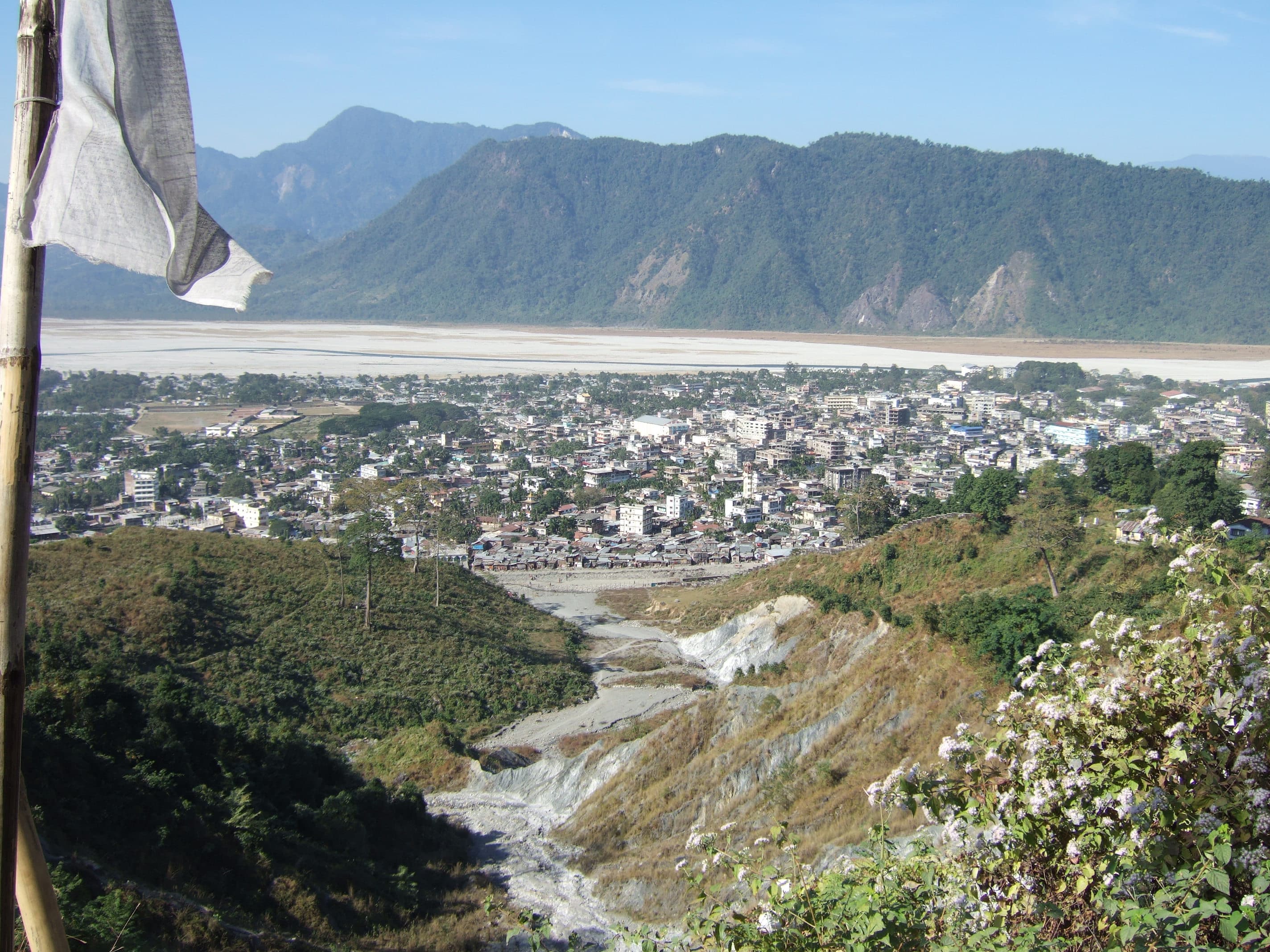
Phuentsholing, Bhutan’s principal gateway to international trade and one of its fastest-growing urban centers, has experienced increasing pressure from climate-related hazards in recent years. Extreme weather events have repeatedly damaged roads, bridges, buildings and other vital infrastructure, highlighting the need for more risk-informed urban planning.
In response, a comprehensive geotechnical study led by the Phuentsholing Thromde under the Disaster Resilient Infrastructure Project is providing scientific evidence to guide safer and more climate-resilient urban growth.
The initiative is supported by the United Nations Development Programme (UNDP) and the Coalition for Disaster Resilient Infrastructure (CDRI) through funding from CDRI’s Urban Infrastructure Resilience Program under the Infrastructure Resilience Accelerator Fund.
With an investment of approximately USD 640,000, the project aims to strengthen disaster-risk-informed planning, improve data-driven decision-making and enhance early warning systems in Phuentsholing, Thimphu and Samtse.
At the heart of the study are two strategically important development areas in Phuentsholing: Pekarshing and Ammochhu.
Pekarshing, located on steep hillside terrain, presents significant challenges for urban development. The area is prone to landslides, slope instability and drainage-related risks. Through detailed geological and geotechnical assessments, the study identifies vulnerable locations and recommends areas where slope stabilization measures, drainage improvements or stricter construction controls may be necessary.
Meanwhile, the Ammochhu Local Area Plan represents one of the city’s most ambitious future growth zones. Situated along the Amochhu River, the area offers substantial opportunities for urban expansion but also faces risks associated with flooding, ground settlement, drainage challenges and potential soil liquefaction during earthquakes.
The study provides planners with critical information on these hazards, helping ensure that future investments in housing, roads, utilities and public infrastructure are made with a clear understanding of the risks involved.
Importantly, the findings will also support the upcoming revision of the Phuentsholing Structural Plan, enabling planners to integrate hazard assessments into long-term urban development strategies.
Officials say the study represents a significant shift in how urban planning is approached. Traditionally, land is often earmarked for development before detailed investigations of soil conditions, geological hazards or climate risks are undertaken. As a result, costly engineering interventions, infrastructure damage and increased disaster risks can emerge after construction has already begun.
The Phuentsholing study reverses that approach by integrating geotechnical science and disaster risk assessments into planning from the outset. “This allows decision-makers to understand the risks before development takes place rather than reacting after problems emerge,” a project official said.
One of the study’s most transformative outcomes is the creation of a Geographic Information System (GIS)-based planning database. The digital platform enables planners to overlay hazard maps with information on roads, plots, infrastructure networks and public facilities. This allows development decisions to be guided by evidence rather than assumptions, improving both safety and investment efficiency.
The study also strengthens climate resilience planning by looking beyond historical weather patterns. Scientists involved in the project have assessed how climate change could influence future rainfall intensity, flood frequency and landslide occurrence. By incorporating projected climate scenarios into the analysis, the findings are expected to remain relevant as Phuentsholing continues to expand in the coming decades.
Urban planners say this forward-looking approach is essential as Bhutan faces increasing climate uncertainty. According to climate projections, extreme rainfall events are expected to become more frequent and intense, particularly in southern Bhutan, increasing the risks of flash floods, erosion and slope failures.
Beyond Phuentsholing, the study is being viewed as a potential model for climate-resilient urban development across the country.
Tashi Namgyal, Thimphu