

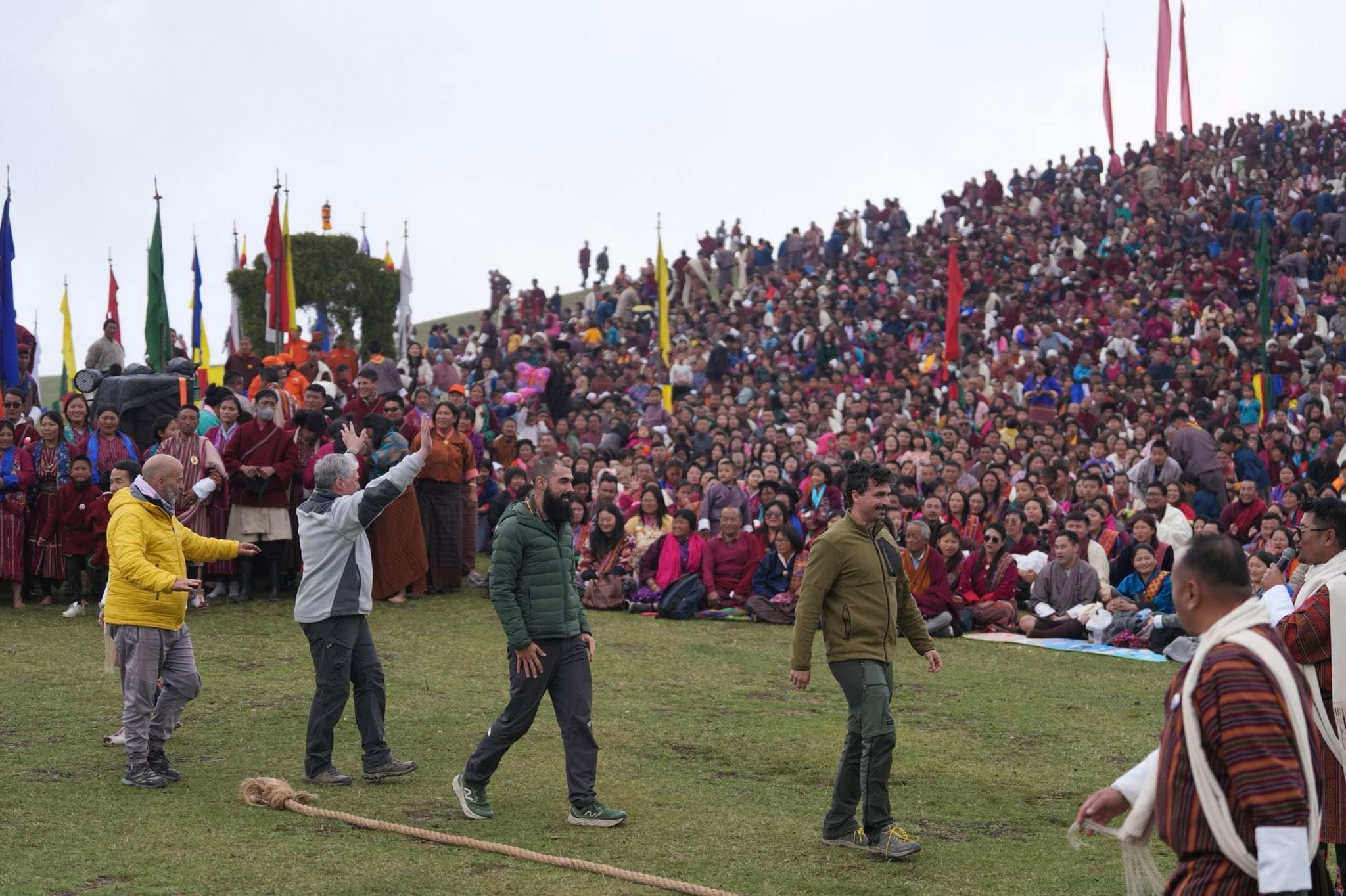
The second edition of Rhododendron Week, held in the highland community of Sheytemi under Merak Gewog, Trashigang, has blossomed into a major cultural and economic event, reaffirming its role as a driver of sustainable tourism and community-led development. With thousands of visitors traveling to the remote gewog for the festival, the week-long celebration has significantly boosted local livelihoods while highlighting the ecological and cultural richness of the region.
While the total income generated is being tabulated, the Rhododendron Week injected Nu 7.918 million for the local economy this year. Of this amount, Nu 5 million was through the Economic Stimulus Programme (ESP), Nu 1 million came from the Global Environment Facility (GEF), and Nu 1.918 million was sourced from block grants. This financial infusion has played a crucial role in stimulating local trade, supporting small businesses, and enabling communities to fully participate in the festival’s economic opportunities.
The event witnessed a remarkable turnout with 18,403 domestic tourists, alongside 66 international visitors and 14 regional tourists, reflecting the festival’s rapidly growing appeal. Domestic participation dominated the event, revealing a significant shift in local tourism trends—Bhutanese travelers are increasingly drawn to community-based festivals and unique environmental experiences within the country.
This year’s success follows the momentum built by the inaugural Rhododendron Week held from April 3–9 last year, which attracted just over a thousand visitors. The exponential growth in attendance not only underscores the event’s rising popularity but also demonstrates its potential to become one of eastern Bhutan’s signature annual attractions.
The significance of Rhododendron Week extends far beyond numbers. Merak is home to 41 of Bhutan’s 46 rhododendron species, making it one of the kingdom’s richest biodiversity zones. Visitors to the festival were treated to a landscape bursting with colour, where hillsides and forests transformed into living tapestries of reds, whites, and pinks. Many also ventured into the pristine wilderness in hopes of glimpsing the elusive red panda, a flagship species of the region’s high-altitude ecosystem.
Complementing the natural splendour was a rare opportunity to immerse in the distinctive cultural world of the Brokpa community. The highlanders of Merak, known for their unique dress, traditions, and pastoral lifestyle, welcomed guests with hospitality rooted in centuries-old customs. Local residents served as hosts, guides, and cultural ambassadors, offering storytelling sessions, demonstrations of traditional practices, and insights into how their livelihoods are deeply intertwined with nature. Their active involvement not only enriched the visitor experience but also strengthened community ownership of the festival.
The opening ceremony on April 9 was especially significant, graced by Their Majesties and members of the Royal Family. Their presence elevated the event’s national prominence and reaffirmed the importance of Bhutan’s highland communities in the country’s cultural and ecological heritage.
The festival’s 2026 theme, “Nature’s Beauty, Brokpa’s Pride,” captured its essence—a celebration of both natural splendour and the people who steward it. The event was first introduced through a partnership between the United Nations Development Programme (UNDP), the Global Environment Facility (GEF), and the Royal Government of Bhutan under the initiative Mainstreaming Biodiversity Conservation in Tourism Development. This project aims to balance tourism expansion with biodiversity conservation, ensuring that economic gains do not come at the expense of fragile ecosystems.
One of the most vibrant features of Rhododendron Week was its bustling marketplace. Local artisans, farmers, and entrepreneurs showcased a range of products—from traditional handicrafts to organic goods and innovative rhododendron-based items such as wine, brooch pins, and herbal teas. These economic activities generated direct income for households and encouraged entrepreneurial growth within the community, particularly benefiting women and youth.
Organised jointly by the Trashigang Dzongkhag Administration and the Department of Tourism (DoT), the festival is now set to become a fixture on the national tourism calendar. Plans are underway to gradually hand over full ownership to the community, ensuring long-term sustainability and empowering locals to steer the event’s evolution.
Nidup Lhamo, Thimphu