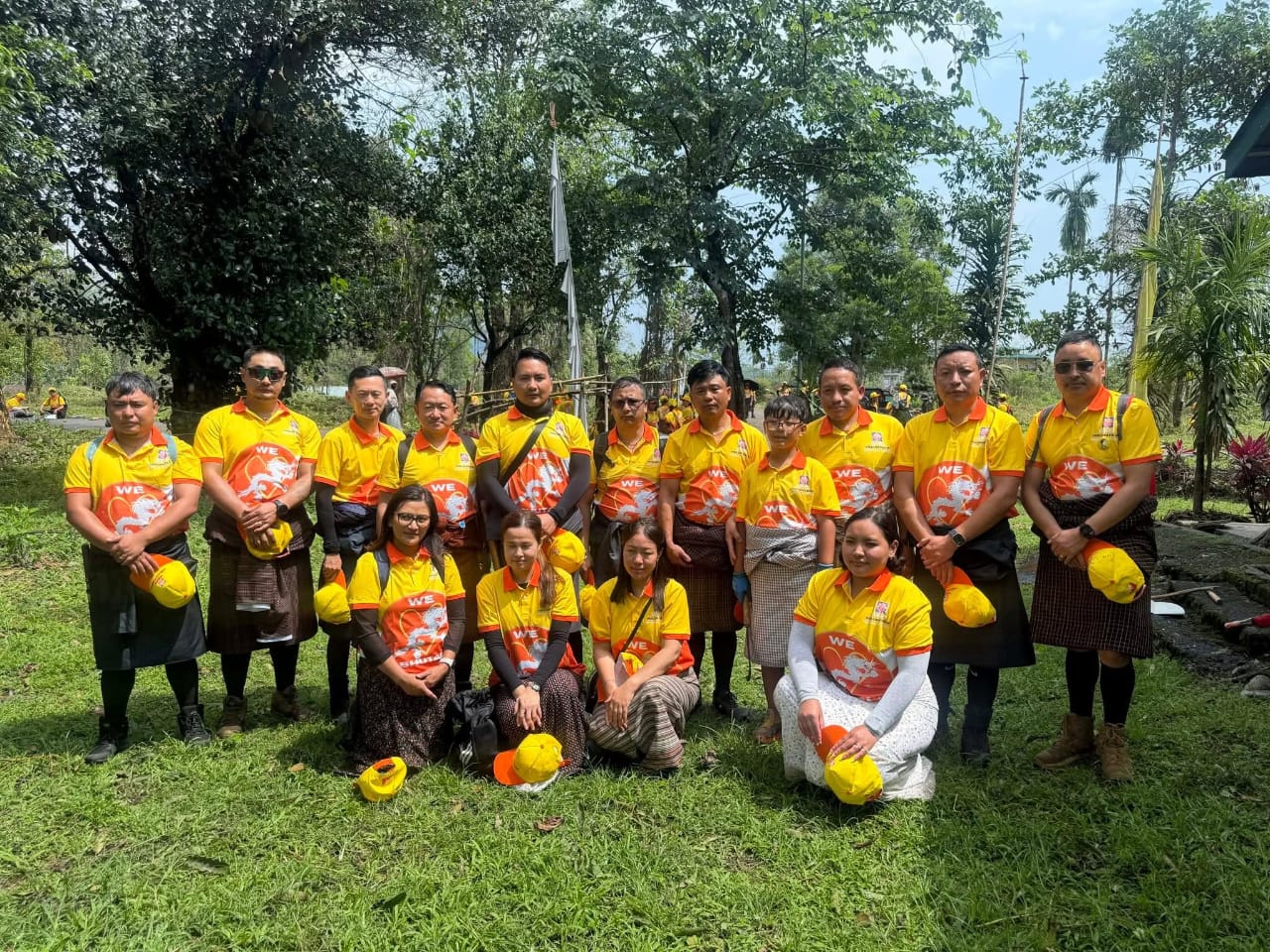
The sixth batch of the Gelephu Mindfulness City (GMC) volunteer programme, which began yesterday (April 10, 2026) has evolved into a striking demonstration of national unity and shared purpose. While thousands of residents, civil servants, and local volunteers are taking part in the initiative, it is a group of around 160 Bhutanese who travelled from Australia that has captured the imagination of the country.
Flying thousands of kilometres at their own expense, the diaspora volunteers returned home specifically to contribute physical labour to the development of GMC in Gelephu. Their arrival has been widely seen as more than just participation in a construction initiative—it is being viewed as a symbolic homecoming, reflecting enduring ties between Bhutanese abroad and their homeland.
Across the country, their gesture has sparked a wave of pride and emotional resonance, reinforcing the idea that nation-building is not limited by geography. For many observers, it represents a rare and powerful example of citizens returning voluntarily to engage directly in physical development work, driven not by obligation but by a sense of identity and purpose.
Minister for Industry, Commerce and Employment (MoICE), Namgyal Dorji, described the development as deeply moving, saying it reflects a profound sense of belonging among Bhutanese living overseas. “It is truly heartening to see this. For so many Bhutanese to come all the way from Australia, at their own cost, to offer their time and labour for the Zhabtog programme reflects a deep sense of service and belonging,” he said.
He further noted that the motivation behind such participation goes beyond material considerations. According to him, what stands out most is the emotional and national connection driving the effort. “What is most inspiring is that this is driven by nothing other than pure love and reverence for our beloved King’s noble endeavours. It shows how strongly the vision of GMC has resonated, even beyond our borders, with many contributing in their own ways,” the minister added.
He also acknowledged that contributions are not limited to physical presence, noting that many Bhutanese abroad are supporting the initiative in different forms, whether through advocacy, coordination, or other forms of engagement. This, he said, reflects a wider national consciousness that extends well beyond Bhutan’s borders and strengthens the shared aspiration of building Gelephu Mindfulness City as envisioned by His Majesty The King.
Civil society leaders have echoed similar sentiments. Tashi Namgyal, chief executive officer (CEO) of the Bhutan Kidney Foundation, said the initiative reflects an extraordinary expression of loyalty and identity. “It reflects their genuine love and loyalty to His Majesty The King, without any concern for personal cost. This is the true spirit of being Bhutanese. We are inspired,” he said.
Kezang Drukpa, Chief Counsellor at The Pema, described the participation of the diaspora as a quiet but powerful form of patriotism. He noted that the decision to leave comfortable lives abroad, travel long distances, and engage in manual work back home demonstrates a form of service that transcends material calculation. “It is a reminder that true service is not defined by where we are, but by the willingness to stand with one’s country and give back in whatever way possible,” he said. “Bhutanese have always been rooted in unity, responsibility, and love for the country. This reflects loyalty to the King, country, and people.”
For the diaspora volunteers themselves, the journey carries deep personal meaning. Kinley Tenzin, President of the Association of Bhutanese in Perth Inc. (ABPI), said the programme offered a rare and meaningful opportunity to participate directly in shaping Bhutan’s future. He explained that many participants used personal leave and self-funded travel arrangements to return home, underscoring the strength of their commitment.
“What is touching is that many people are willing to use their own leave and spend their own money just to be part of this historic journey,” he said. “Distance has not reduced our connection to Bhutan; our roots and our duty remain strong.”
He added that the experience reinforces a sense of belonging among Bhutanese living abroad. “At a deeper level, this gives many of us purpose. It reminds us that no matter where we live, Bhutan is always in our hearts, and when the nation calls, Bhutanese will always come forward.”
On the ground in Gelephu, the presence of the returning diaspora has added an emotional dimension to the ongoing volunteer effort. For local participants, working alongside fellow Bhutanese who have travelled from overseas has made the vision of GMC feel more tangible and collective.
As local volunteer Tenzin Lhamo observed, seeing compatriots return from across the world to engage in the same physical labour has reinforced a powerful sense of unity. It has transformed the GMC initiative from a national development project into something more symbolic—a shared national undertaking built not only with tools and manpower, but with identity, commitment, and belonging.
Nidup Lhamo, Thimphu