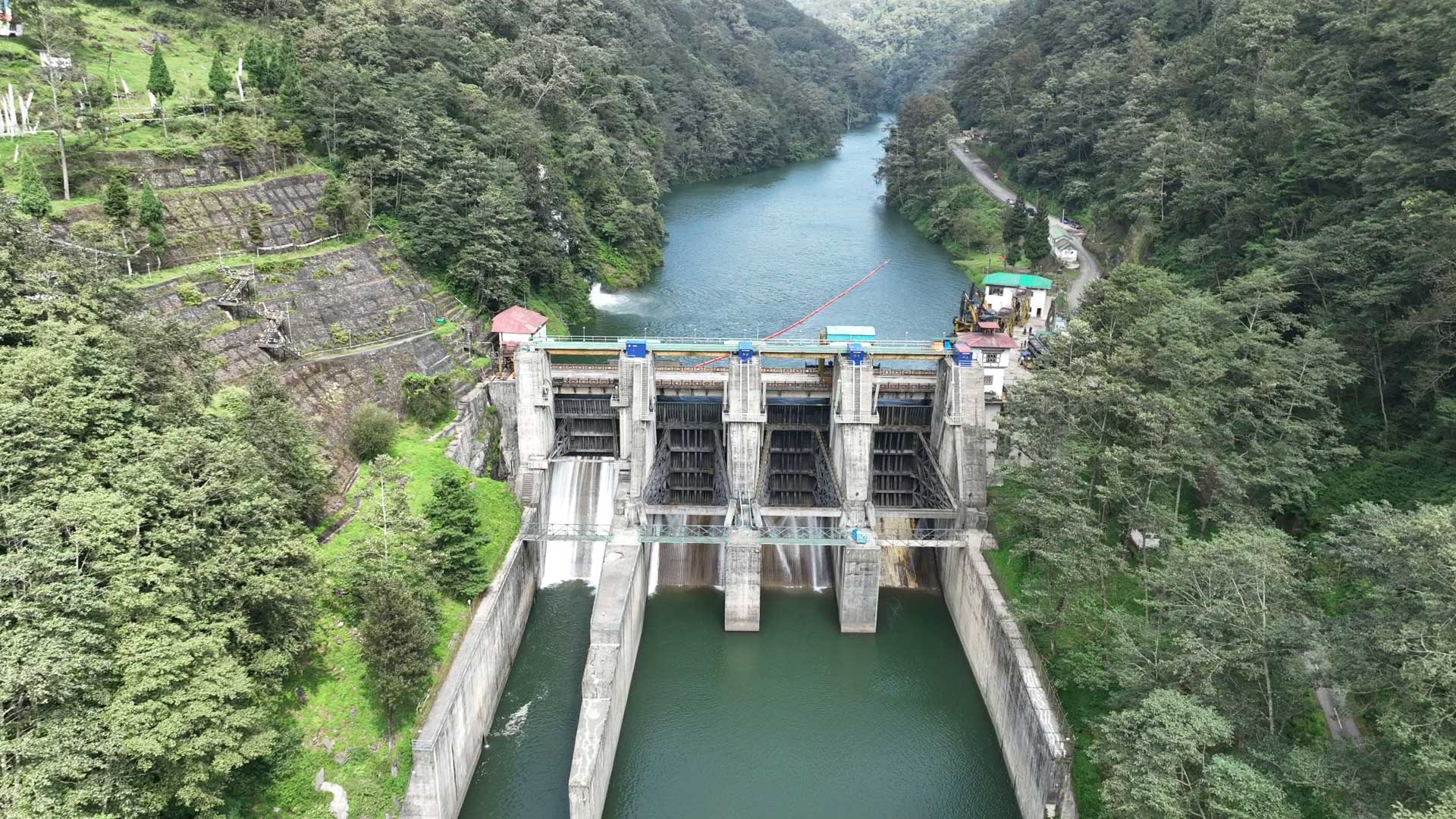
Bhutan’s hydropower sector continues to anchor the national economy, contributing significantly to growth and public revenue. However, its capacity to generate direct employment remains limited, according to a recent report by the World Bank (WB).
The report highlights that hydropower accounted for approximately 12.8 percent of Bhutan’s Gross Domestic Product (GDP) in 2024, accentuating its central role in the country’s development trajectory. Despite its economic importance, less than one percent of Bhutan’s total workforce is directly employed in the sector.
This imbalance reflects the nature of hydropower development, which is highly capital-intensive. Large-scale investments are directed toward infrastructure, machinery, and technology rather than labour. During construction phases, projects also rely heavily on imported workers and specialized equipment, further limiting employment opportunities for Bhutanese workers.
While direct job creation remains modest, the sector’s productivity is exceptionally high. According to the report, each worker in the electricity and water sector contributes an estimated Nu 3.7 million (around US$41,778) annually. This is roughly seven times higher than the national average and 23 times greater than productivity levels in agriculture.
The findings illustrate that hydropower generates substantial economic value per worker but employs relatively few people. As a result, its contribution to inclusive job creation is constrained unless supported by complementary policies.
The WB emphasizes that the true employment potential of hydropower lies in its indirect and spillover effects. Revenue generated from the sector, if effectively channeled, can stimulate growth in labour-intensive sectors such as agriculture, tourism, forestry, and green services.
The report also points to opportunities in climate-resilient hydropower and watershed management, which can create green jobs while supporting environmental sustainability. “These approaches are particularly relevant for regions with higher unemployment, where localized development initiatives can have a meaningful impact,” it stated.
As a case point, the WB referred to the upcoming Dorjilung Hydropower Project (DHPP). With a planned capacity of 1,125 megawatts, the project is expected to generate substantial economic activity during both construction and operational phases.
Between 2025 and 2031, the construction phase is projected to create around 4,000 jobs annually, although only about 250 of these will be directly tied to the project. Once operational—from 2031 to 2060—the project is expected to support approximately 5,000 jobs each year, with around 200 direct positions.
While direct employment remains limited, the project’s wider economic impact is significant. Increased demand for construction materials, logistics, maintenance services, and improved energy supply is expected to stimulate job creation across multiple sectors.
Importantly, the DHPP also integrates community development initiatives, including skills training, support for small and medium enterprises (SMEs), and entrepreneurship programmes. “These efforts aim to ensure that local communities benefit more broadly from hydropower investments, beyond direct employment,” the report reiterated.
Recognizing the limitations of hydropower-led job creation, Bhutan is pursuing a broader economic diversification strategy. The government’s “10X National Economic Vision” aims to expand the country’s GDP tenfold by 2050 by investing in high-potential sectors beyond traditional industries.
This includes efforts to build a knowledge-based digital economy and expand renewable energy sources such as wind, solar, and green hydrogen. These sectors are expected to generate more employment opportunities while complementing Bhutan’s existing strengths.
Reforms are also underway to improve the business environment. Measures such as simplifying the tax system, reducing corporate tax rates, and lowering compliance costs are designed to attract private investment and support enterprise growth.
In addition, the government has rolled out the Economic Stimulus Programme (ESP), with approximately Nu 13.5 billion disbursed to support key sectors and accelerate post-pandemic recovery. Efforts to attract Foreign Direct Investment (FDI) and external commercial borrowing have also been strengthened through regulatory reforms aimed at easing capital inflows.
The report underlines that while hydropower will remain a cornerstone of Bhutan’s economy, its long-term value depends on how effectively its revenues are leveraged to support inclusive growth.
Sherab Dorji, Thimphu