

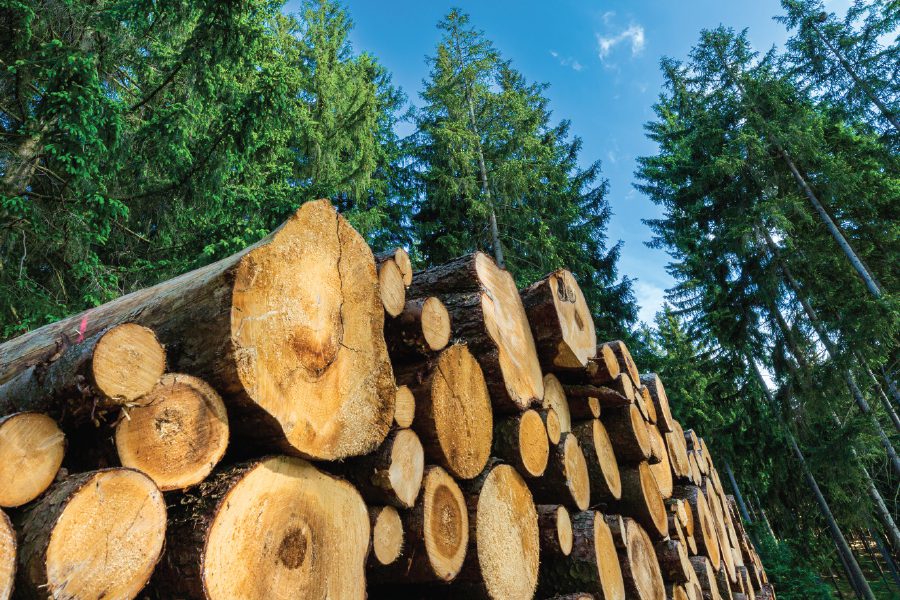
A new chapter is unfolding in the management of the country’s forestry sector with the government expanding the role of private enterprises in timber harvesting and wood processing as part of a broader strategy to develop a competitive, value-added timber industry.
The Ministry of Energy and Natural Resources (MoENR) has announced a series of reforms aimed at increasing private sector participation in timber extraction, expanding domestic timber supply and promoting investment in wood-based manufacturing. The measures form part of the ministry’s response to recommendations made by the National Council (NC) during its review of key economic sectors, where members called for greater timber availability to meet growing domestic demand and support industrial development.
The reforms represent a significant policy shift for Bhutan’s forestry sector, which has traditionally been dominated by state-owned enterprises such as the Natural Resources Development Corporation Limited (NRDCL) and Bhutan Board Products Limited (BBPL).
According to the Ministry, the move is intended to increase harvesting capacity, improve operational efficiency and stimulate private investment across the wood value chain. The government plans to continue expanding private sector participation based on operators’ technical capacity and commercial interest while introducing programmes to strengthen investment, skills development and technical expertise within the sector.
The policy shift comes as Bhutan significantly scales up timber production to meet rising demand from the construction sector and emerging wood-based industries.
Prior to 2023, annual timber allotments remained below 2.5 million cubic feet (cft). Following the introduction of scientific thinning programmes, timber allotments increased sharply to 7.25 million cft in 2024, rising further to 7.57 million cft in 2025. For 2026, the government has approved an allotment of 7.71 million cft in log form, reflecting its continued commitment to expanding domestic timber production.
Despite the substantial increase in timber allocations, actual harvesting has lagged behind. Of the 7.25 million cft allotted in 2024 to NRDCL and BBPL, only 2.24 million cft was extracted. Extraction improved to 5 million cft in 2025 but remained below planned levels.
According to the Ministry, Bhutan had targeted the extraction of approximately 32 million cft through scientific thinning programmes between 2024 and 2026. However, only around 3 million cft has been harvested under the programme so far.
MoENR attributed the shortfall to a combination of rugged terrain, scattered timber resources, inadequate harvesting infrastructure, high operational costs, limited institutional capacity and challenges in marketing timber products. “The authorized agencies have not been able to fully utilize the allocated volumes,” the Ministry has noted.
To address these constraints, the government plans to strengthen harvesting capacity while investing in forest roads, extraction infrastructure and other supporting facilities needed to improve operational efficiency.
Another priority is improving the utilization of Bhutan’s broadleaved forests. There are plans to increase scientific thinning in broadleaved forests, support the development of downstream industries such as charcoal production, veneer manufacturing and other wood-processing enterprises.
The government is also seeking to transform the country’s forestry sector from a supplier of raw logs into a producer of high-value engineered wood products, through initiatives like the establishment of Bhutan’s first Wood Science and Technology Laboratory at the Ugyen Wangchuck Institute for Forest Research and Training. The laboratory will support research, innovation and product development in advanced engineered timber products, including glue-laminated timber, cross-laminated timber, engineered flooring and decorative paneling.
The Ministry also plans to establish three new timber extraction areas in Paro, Thimphu and Bumthang by June next year, with an additional extraction area planned in Paro in 2027. To improve international competitiveness, the government is pursuing Forest Stewardship Council (FSC) certification for Bhutan’s timber production areas. Certification is expected to enhance market access and strengthen the competitiveness of Bhutanese timber products in premium international markets, including supplying sustainable construction materials for flagship developments such as the Gelephu Mindfulness City.
Further supporting private sector growth, the Ministry will introduce productive partnership programmes with financial and technical assistance from the World Bank to encourage investment in wood value addition, waste wood utilisation and circular economy initiatives.
Tashi Namgyal, Tsirang