

The government is exploring options to reduce lending rates and make credit more affordable for businesses and households amid growing concerns that high borrowing costs are constraining economic activity, increasing financial stress among borrowers, and slowing private sector growth.
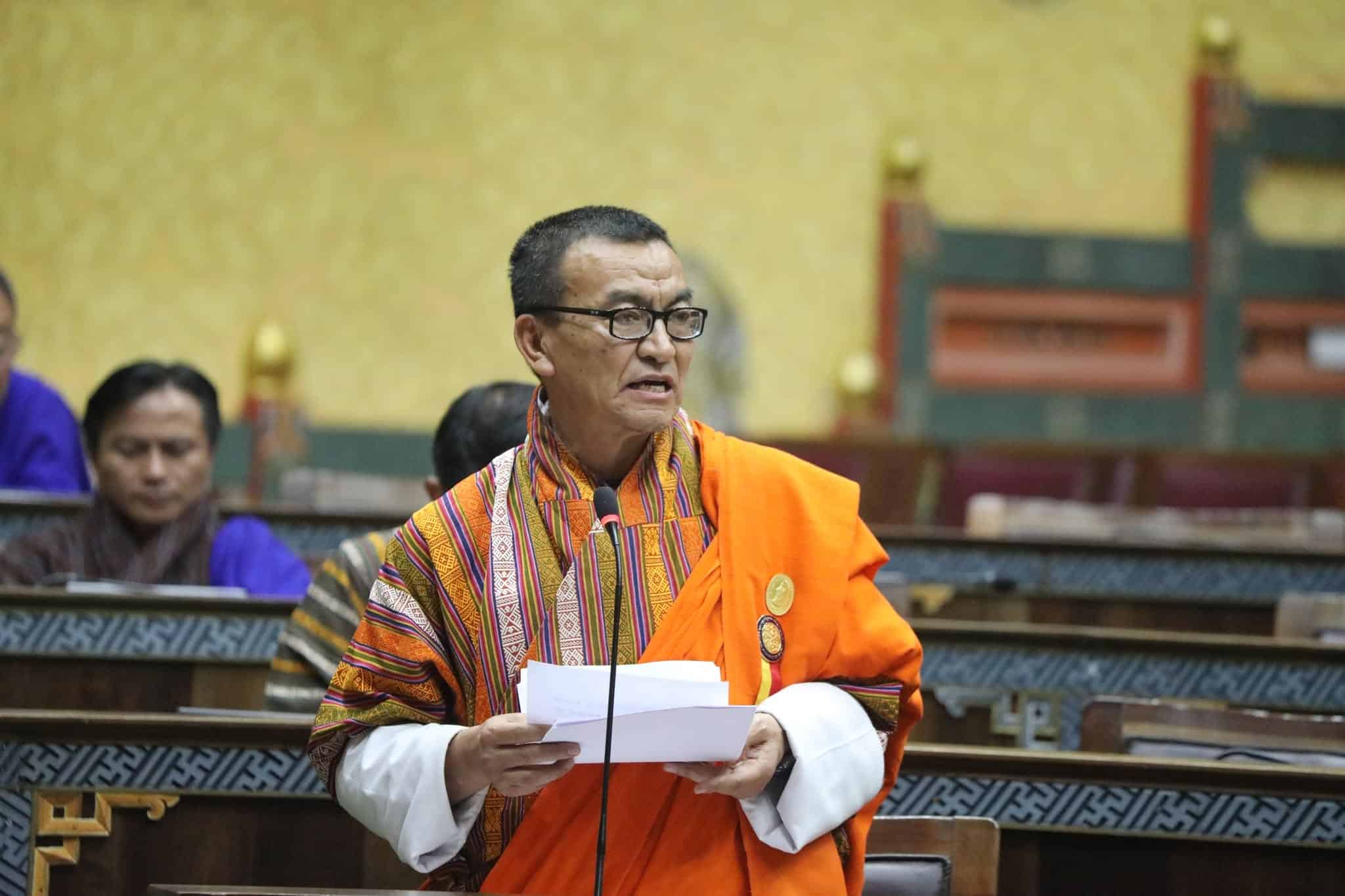
The issue was discussed during the Question Hour session of the National Assembly (NA) on June 9, 2026, where Finance Minister Lekey Dorji informed lawmakers that the government is working closely with the Royal Monetary Authority (RMA) and financial institutions to examine factors contributing to persistently high lending rates despite recent reductions in benchmark interest rates.
The discussion was initiated by the Member of Parliament (MP) for Radhi-Sakteng constituency, Tashi Tenzin, who questioned whether the government had begun reviewing lending rates in consultation with the central bank and financial institutions.
The MP pointed out that while the average lending rate in Bhutan remains around 11 percent, savings deposits earn an average interest rate of only 4.55 percent, resulting in a spread of approximately 6.45 percentage points between lending and deposit rates.
Highlighting concerns over the growing burden of debt on households and businesses, particularly in the agriculture sector, the MP reiterated that Bhutan is grappling with a significant level of non-performing loans amounting to billions of ngultrum. “More than 51 percent of these defaulted loan accounts are held by farmers. In addition, house owners are increasing rental prices largely due to the high interest rates on housing loans,” he noted.
Responding to the concerns, Lyonpo Lekey Dorji said the government recognizes the challenges posed by high borrowing costs and is actively engaging with regulators and financial institutions to better understand the underlying causes.
According to the minister, commercial banks and lending institutions factor in several elements when determining lending rates, including operating costs, credit risk premiums, funding costs, and potential loan defaults.
“During the recent Minimum Lending Rate review meeting with the RMA, we agreed to review and rationalize factors such as operating costs and credit risk premiums to explore the possibility of lowering lending rates.”
The review comes despite the RMA reducing the Minimum Lending Rate (MLR) from 6.11 percent to 5.7 percent in March this year. The MLR serves as the benchmark floor rate below which financial institutions are generally not permitted to lend.
Introduced in 2016, the MLR framework was designed to promote greater competition within Bhutan’s financial sector while ensuring transparency in loan pricing. The central bank reviews the rate every six months based on prevailing economic and financial conditions.
Despite the reduction in the benchmark rate, lending rates across financial institutions continue to range between 8 and 14 percent, with the average remaining close to 11 percent.
The persistence of relatively high lending rates has become a growing concern for businesses, particularly at a time when Bhutan is seeking to accelerate private sector-led growth under the 13th Five-Year Plan.
The Finance Minister acknowledged that any measures to reduce lending rates would require careful evaluation and consultation with stakeholders to ensure broader economic stability.
“If there are recommendations or feedback that can benefit the economy, the Speaker, the Opposition Leader, Members of Parliament and the Ministry will discuss them further with the RMA,” he said.
Economists note that access to affordable credit is a critical component of economic expansion, especially for small and medium enterprises that rely heavily on bank financing for investment, working capital, and business expansion.
Lower borrowing costs could stimulate economic activity by encouraging businesses to undertake new investments, expand production, and create employment opportunities. Reduced lending rates may also ease financial pressure on households, particularly those servicing housing loans, education loans, and business-related borrowings.
Financial experts say that lower lending rates could support entrepreneurship, improve business competitiveness, and strengthen domestic demand by increasing consumer spending.
At the same time, experts caution that reducing lending rates involves balancing several competing economic objectives. There are also concerns regarding the impact on financial institutions. Lower lending rates may compress profit margins for banks and lending institutions, potentially affecting their profitability and willingness to extend credit to higher-risk borrowers.
Additionally, increased borrowing and spending could lead to higher imports, placing additional pressure on Bhutan’s foreign exchange reserves, which remain a key macroeconomic concern.
Tashi Namgyal, Thimphu