


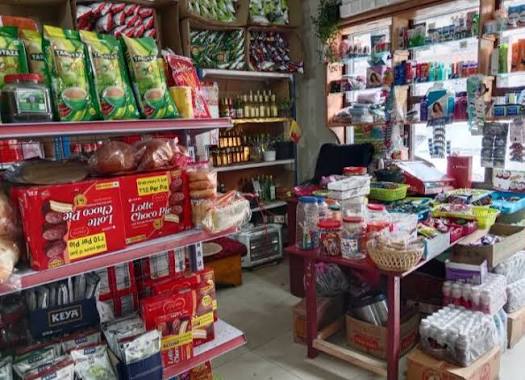
The latest trade figures have delivered a sobering reminder of one of the country’s most persistent economic vulnerabilities. In the first quarter of 2026 alone, Bhutan imported goods worth Nu 34.86 billion while exporting only Nu 14.47 billion, resulting in a trade deficit of approximately Nu 20.4 billion.
The figures reveal more than a widening gap between imports and exports. They expose Bhutan’s continuing dependence on foreign products despite years of government efforts to promote domestic production, strengthen the private sector, and build a more self-reliant economy.
The country’s import bill remains dominated by goods that are fundamental to economic activity. Machinery and electrical equipment accounted for Nu 7.33 billion, mineral fuels and petroleum products Nu 7.07 billion, iron, steel and other base metals Nu 3.93 billion, while vehicles and transport equipment contributed Nu 3.53 billion.
These imports are indispensable for hydropower projects, infrastructure development, transport and industrial expansion. However, the more worrying trend lies elsewhere.
Bhutan also continues to import large quantities of products that many believe could increasingly be produced at home. During the quarter, the country imported Nu 1.74 billion worth of vegetable products, Nu 1.55 billion in prepared food products and Nu 1.11 billion in animal products, highlighting the gap between domestic demand and local production.
The issue comes at a time when Bhutan is striving to diversify its economy, stimulate private-sector growth and reduce pressure on its foreign exchange reserves.
Industry representatives argue that the answer is not to restrict imports but to strengthen Bhutan’s productive capacity.
“Bhutan has the potential to manufacture far more goods domestically,” said a local entrepreneur. “But industries need affordable financing, reliable infrastructure, better market access and a predictable business environment before they can compete with imported products.”
The challenge extends beyond manufacturing.
For many retailers, imported products have transformed consumer preferences and intensified price competition.
A handicraft shop owner in Thimphu said sales have declined sharply because tourists increasingly compare Bhutanese products with similar items available in neighbouring countries.
“Many visitors tell us they can buy similar handicrafts in Nepal or elsewhere at two- or three-times lower prices,” the shop owner said. “Price has become a deciding factor.”
Local food producers face similar pressures.
A Bhutanese dairy manufacturer said imported dairy products continue to dominate consumer preference despite efforts to improve local quality.
“The competition is intense because many customers believe imported dairy products offer better quality,” the manufacturer said. “We carefully study customer feedback and continuously improve our products to meet those expectations.”
Economists say these challenges illustrate a broader structural issue. Bhutan’s trade imbalance cannot be corrected simply by reducing imports. Instead, the country must expand industries capable of producing goods that can compete on quality, consistency and price.
On the export side, Bhutan continues to rely heavily on a narrow basket of products.
Base metals and articles of base metal generated Nu 7.71 billion, making them the country’s largest export category during the quarter. Mineral products contributed Nu 3.65 billion, while vegetable products earned Nu 1.35 billion.
Such concentration leaves export earnings vulnerable to fluctuations in a limited number of sectors.
Business leaders say expanding manufacturing, commercial agriculture, food processing and value-added industries is essential if Bhutan hopes to narrow its structural trade imbalance.
They are calling for easier access to credit, improved industrial infrastructure, reliable electricity, lower production costs and streamlined regulations to encourage domestic investment.
The government’s focus on economic diversification, entrepreneurship and private sector-led growth is expected to play a central role in addressing these challenges. Programmes supporting cottage and small industries, promoting value addition and improving the investment climate are all intended to strengthen Bhutan’s domestic production base.
Economic analysts caution that import substitution should not be misunderstood as reducing international trade.
“Rather, they argue, it is about increasing Bhutan’s capacity to produce competitively at home, creating jobs, retaining wealth within the economy and making the country less vulnerable to global supply chain disruptions and external economic shocks,” one economist said.
According to him, with major infrastructure projects and new economic initiatives expected to accelerate over the coming years, demand for imported machinery, fuel and construction materials is unlikely to decline in the near future. “The larger question is whether Bhutanese businesses will be equipped to capture a greater share of the domestic market, or whether the country’s dependence on imports will continue to deepen. The gaps and the interventions required have been identified and if this is not done now, we will be talking about the same in the next decade, too.”
The latest trade figures suggest that while Bhutan’s economy is growing, its productive capacity is not keeping pace with its consumption, leaving the nation confronting one of its most enduring economic challenges: how to build a stronger “Made in Bhutan” economy before the import bill grows even larger.
Sherab Dorji, Thimphu











