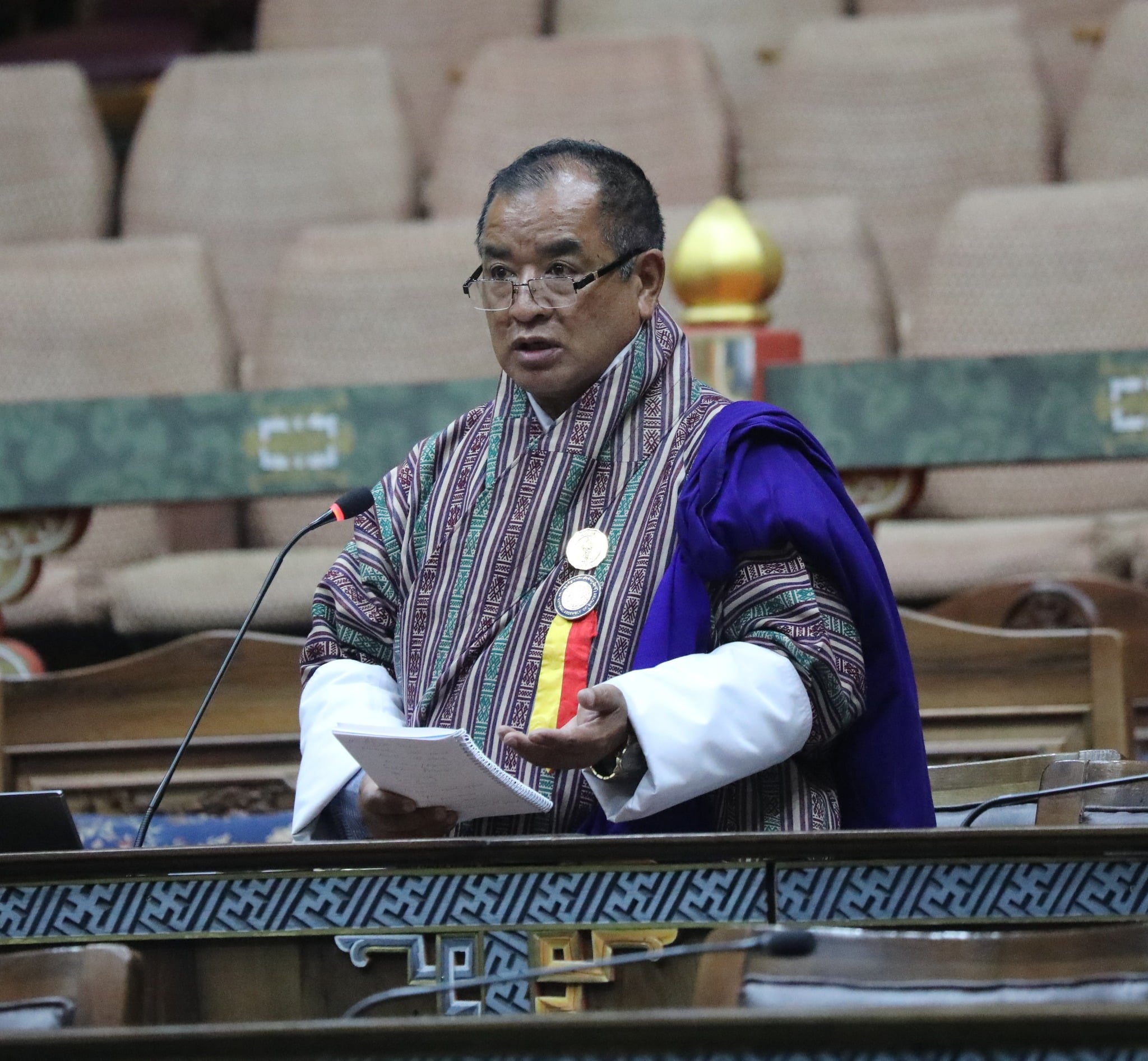
During the question-and-answer session of the Fourth Parliament, Sixth Sitting of the Fourth Session, on May 22, 2026, Member of Parliament Damchoe Tenzin of Thrimshing–Kangpar Constituency raised concerns over escalating fuel costs and their impact on public finances. He sought clarification from the Prime Minister (PM), Dasho Tshering Tobgay, on ongoing and future measures to reduce fuel dependency and improve efficiency in government transport use.
The MP highlighted that the government has already spent over Nu 1,389 million on diesel subsidies, with an additional Nu 202.55 million projected in future expenditure. He further noted that Bhutan currently operates 5,937 government fuel vehicles, including 327 in Thimphu alone.
He pointed out that civil servants in senior positions (EX-3 and above) are provided with dedicated official vehicles, contributing significantly to recurring costs. According to him, the average annual fuel and maintenance expenditure per vehicle is estimated at Nu 300,000, placing a considerable burden on the national treasury.
Damchoe Tenzin proposed a more coordinated use of the government’s existing electric vehicle (EV) fleet, currently numbering 131 units. He suggested that EVs could be assigned for official use within Thimphu, while fuel-based pool vehicles could be reserved for inter-district and long-distance travel. He also recommended greater vehicle-sharing arrangements for official meetings and conferences to reduce fuel consumption and improve efficiency.
Responding to the concerns, PM Dasho Tshering Tobgay acknowledged the issues raised and appreciated the MP’s suggestions on promoting electric mobility. “I am thankful to the MP for suggesting to use EV cars considering the current fuel prices in the country,” he said.
The PM noted that Bhutan, like many countries, continues to be affected by global fuel price volatility, but assured the House that the country has managed to avoid shortages of fuel and gas cylinders, largely due to support from India.
He also clarified that while global fuel prices have risen sharply, Bhutan has been able to maintain relatively stable domestic prices through a fuel price smoothing mechanism. “The price of fuel has been skyrocketing, but as per Royal Command, we have been instructed not to charge very high fuel prices,” he said.
On subsidy expenditure, the PM corrected earlier figures, stating that the actual diesel subsidy outlay is over Nu 1,451 million to date, higher than previously reported estimates.
Turning to electric mobility, the PM said the government is actively promoting EV adoption within public institutions. “The Ministry will use EV cars for long-distance travel, and for other travel, fuel-powered vehicles will be used as pool vehicles,” he said, adding that discussions are also ongoing with state-owned enterprises and private organisations to encourage broader EV usage for official travel.
He acknowledged, however, that current EV infrastructure remains limited. Bhutan has so far procured about 99 electric cars and 45 electric buses, which he described as insufficient to meet nationwide demand, though he reiterated the government’s continued support for expansion of the sector.
“It will not be sufficient, but we fully support the use of EVs,” the PM said.
Addressing recent government advisories on walking to work and working from home, the PM clarified that these were intended as suggestions rather than mandatory directives.
On vehicle regulation, he stated that the government does not currently see the need for strict restrictions on government vehicle use. However, he noted that such measures could be reconsidered if fuel shortages or supply disruptions arise in the future. He also confirmed that quota-based controls for private vehicles are already in place, while essential services such as emergency vehicles, public transport, taxis, and trucks will continue operating without disruption if additional measures become necessary.
The PM further highlighted the introduction of a national energy security policy aimed at reducing dependence on imported fuel and supporting alternative energy sources, including electric mobility solutions for the transport sector.
He explained that Bhutan’s fuel price stabilization system has helped align domestic prices with those in India while cushioning sudden international price shocks. “This is why we are able to keep fuel prices aligned with those in India,” he said.
Concluding his remarks, the PM assured the House that the government is closely monitoring fuel expenditure trends and is committed to implementing practical measures to reduce costs while supporting Bhutan’s gradual transition towards cleaner and more sustainable energy systems.
Sherab Dorji, Thimphu