

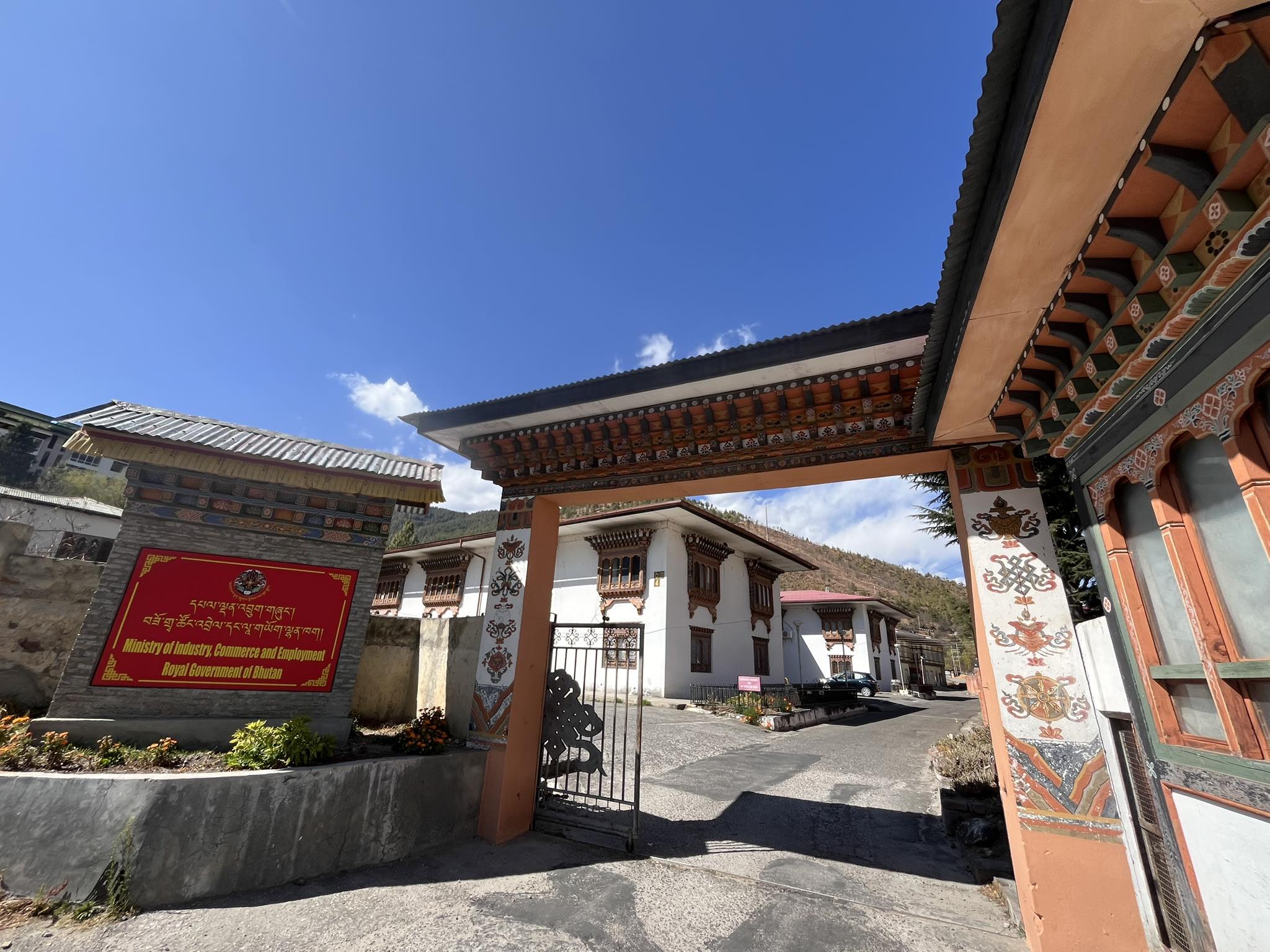
The Ministry of Industry, Commerce and Employment (MoICE) achieved a near-perfect 99.5 percent performance, delivering 192 of 193 key performance indicators in 2025–2026. The result signals strong institutional delivery and lays important groundwork for the next wave of economic activity. The real test now is whether entrepreneurs, businesses, workers and other stakeholders can turn this momentum into more enterprises, better jobs, stronger exports and a more dynamic private sector.
According to the Ministry’s Annual Report, all four agencies and six regional offices achieved 100 percent of their targets, while the six departments achieved 66 of 67 KPIs.
The single failure was intellectual property service revenue, where collections reached only Nu 12.8 million against a target of Nu 25 million.
The strongest signal is the pace of industrial establishment. The Department of Industry recorded 5,285 new industries and CSIs, more than 2.6 times the annual target of 2,000, including 5,218 CSIs and 67 medium and large industries.
The figures show a strong appetite for enterprise. The next test is turning quantity into productivity—ensuring these businesses survive, scale, create jobs and become exporters.
The Department also reported 33 industries upscaled, exceeding its target of 30, suggesting that some businesses are beginning to move beyond the startup stage.
Foreign investment also surpassed expectations. FDI approvals excluding hydropower reached Nu 4.23 billion, against a target of Nu 3.5 billion. Two hydropower projects worth Nu 162.531 billion were also approved.
The challenge now is to ensure that investment flows increasingly into sectors that diversify the economy, create skilled employment, develop domestic supply chains and generate exports.
Tourism also delivered strongly, with 258,232 arrivals against a target of 223,420, generating Nu 4.82 billion in direct revenue and 2,458 jobs, both exceeding targets.
The next challenge is to turn recovery into higher economic value per visitor through longer stays, greater spending, stronger local supply chains and wider participation by communities and businesses.
The Department of Employment and Entrepreneurship placed 5,491 jobseekers against a target of 5,750, with overseas placements affected by the Middle East conflict. It also operationalised 61 startups, against a target of 35, and conducted 471 career sessions against 174.
The figures point to a growing entrepreneurial pipeline. The real test is whether these startups can become sustainable businesses, create jobs and compete beyond Bhutan.
The completion of the Pasakha and Nganglam dry ports and identification of an Export Processing Zone at Damdhum in Samtse point to another important shift: Bhutan is trying to build the infrastructure needed to participate more actively in regional trade.
The resumption of the World Trade Organization (WTO) accession process, including preparations for the fifth Working Party meeting, adds another dimension to that effort.
Infrastructure alone, however, cannot create exports. Bhutanese businesses must have products and services capable of competing on price, quality and reliability.
The creative sector also exceeded several targets. Creative exports reached USD 202,033, while craft exports generated USD 519,441. Creative industries employed 1,703 people, above the target of 1,600, and four geographical indication products were protected. These numbers may appear modest compared with hydropower investment, but they represent precisely the kind of small, diversified and culturally rooted economic activity Bhutan needs to expand.
The four agencies and six regional offices achieved all their KPIs.
The Department of Labour reported 89.5 percent compliance with the Labour and Employment Act against a target of 70 percent and resolved 178 labour disputes within the 21-working-day timeframe. The Competition and Consumer Affairs Authority resolved 334 of 338 consumer grievances and refunded Nu 2.79 million to consumers. The Bhutan Standards Bureau developed 14 standards against a target of 10, while the Corporate Regulatory Authority reported a 10.33 percent increase in capital-market instruments, exceeding its 10 percent target.
The Ministry has succeeded in establishing businesses, attracting investment, bringing tourists, creating startups and building infrastructure. The harder task now is to ensure that these activities translate into productive firms, durable jobs, stronger exports, higher incomes and greater economic resilience.
Sherab Dorji, Thimphu