

The first phase of Bhutan’s Fourth Local Government Elections has delivered a sobering verdict on civic participation. However, beneath the disappointing turnout lies an encouraging trend that could shape the future of the country’s democracy, the relatively stronger participation of younger voters.
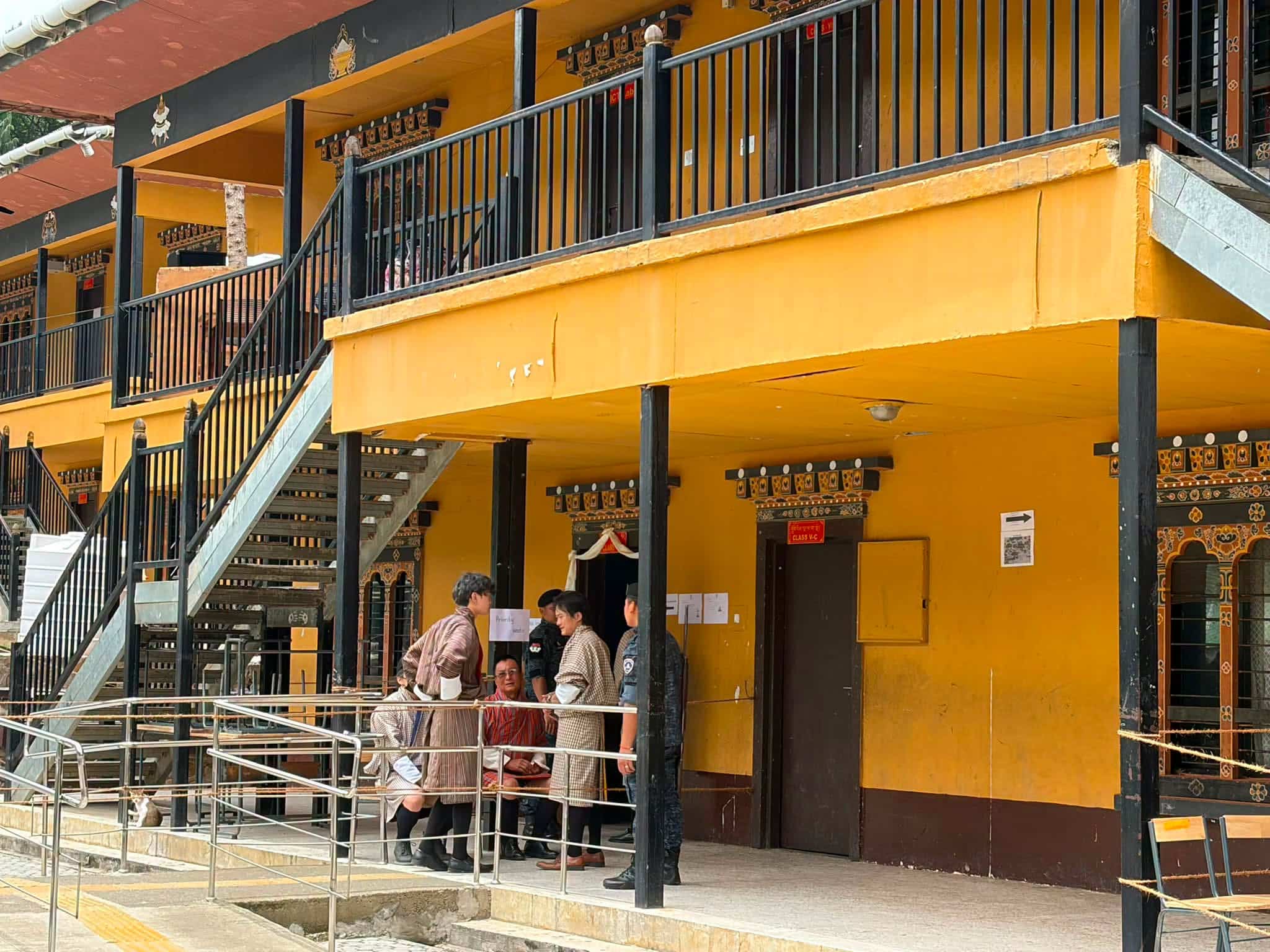
The elections, held on 15 July in Thimphu and Phuentshogling Thromdes, recorded an overall voter turnout of just 33.92 percent, with only 3,426 voters casting their ballots. The figure marks a sharp decline from 59.46 percent in 2021 and is even lower than the 37.25 percent recorded in 2016.
For Bhutan’s political capital and commercial gateway, the numbers are particularly worrying. Thimphu and Phuentshogling are home to the country’s largest concentration of educated citizens, civil servants, professionals, entrepreneurs and young people. They are also the centres where the impacts of local governance are perhaps felt most directly.
Local governments are responsible for decisions that touch citizens every day, roads, drainage, waste management, public transport, parks, street lighting, business licensing, urban planning, markets and community facilities. Yet nearly two-thirds of eligible voters chose not to participate in deciding who would lead these institutions.
The low turnout inevitably raises questions about civic responsibility, democratic participation and public confidence in local governance. During the official declaration of results, the Election Commission of Bhutan (ECB) acknowledged that local government elections have traditionally recorded lower voter participation than parliamentary elections and stressed the need to strengthen public awareness about the importance of voting.
Political observers say the reasons behind the low turnout are likely to be varied rather than singular. Unlike parliamentary elections, local government contests often receive less public attention and media coverage. Many voters may also underestimate the influence local leaders have on their daily lives, assuming that national politics has a greater impact than municipal governance.
Urban lifestyles could have contributed as well. Thimphu and Phuentshogling are home to a highly mobile population balancing work commitments, businesses, studies and family responsibilities. For many, polling day may simply have competed with professional and personal obligations.
Others point to voter complacency. Bhutan’s democratic institutions are stable and elections are conducted peacefully, which can sometimes create a false sense that individual votes are less important because the system will function regardless.
Migration may also have played a role. Many registered voters in the two thromdes may currently be living, studying or working elsewhere in the country or abroad, making participation difficult despite remaining on the electoral roll.
There is also the possibility of voter fatigue. Bhutanese have participated in several rounds of elections over the past decade, and repeated electoral cycles may have reduced the sense of urgency among some sections of the electorate, particularly where elections are perceived as less competitive or less consequential.
However, while the overall turnout paints a disappointing picture, the age profile of voters offers a reason for cautious optimism.
In both thromdes, the 25–45 years age group recorded the highest participation. In Thimphu, 1,032 voters from this age group cast their ballots, compared with 934 voters aged 46–60 and 694 voters aged 61 years and above. In Phuentshogling, 220 voters aged 25–45 voted, ahead of 153 voters aged 46–60 and 113 senior citizens.
Although the ECB has not released a finer age breakdown within the category, the figures suggest that adults in their prime productive years formed the largest voting bloc. Observers say this matter for several reasons.
The 25–45 age group represents Bhutan’s economic engine. These are citizens building careers, raising families, starting businesses, purchasing homes and contributing significantly to the country’s workforce and tax base. They are also the generation most directly affected by urban planning decisions, housing policies, transport systems, recreational facilities, childcare services and municipal infrastructure.
Their participation therefore reflects not merely electoral behaviour but active investment in the quality of urban life.
“Democracies survive not merely because institutions exist but because each generation chooses to participate,” said Tandin Wangchu, a young entrepreneur based in Thimphu who has been closely following the elections. “If younger Bhutanese are emerging as the most active voters, it provides an important foundation for the future of local democracy,” he said.
A civil servant in Thimphu who voted in the elections said the figures carry significance beyond the numbers. “I belong to this age group as well. Many of us are in our most productive years. We are working, paying taxes, raising children and planning our futures in these towns. Naturally, we care about roads, waste management, transport, schools, recreational spaces and municipal services. These are exactly the issues local governments decide on.”
He added that stronger participation from this demographic suggests an appreciation that local democracy has immediate consequences for everyday life.
Analysts say another possible reason for the stronger participation is the changing character of Bhutan’s younger generation. Compared to previous generations, younger Bhutanese are generally more educated, digitally connected and exposed to civic information through online news, government platforms and social media. They are more accustomed to discussing public issues, comparing urban services and engaging with national conversations through digital platforms.
Many also display higher expectations of governance and public service delivery. Having grown up during Bhutan’s democratic transition, they have known elections as a normal part of national life rather than a new political experience.
Unlike older generations, who may continue to place greater emphasis on national leadership, younger urban voters increasingly recognise that many of the issues affecting their daily lives are decided not in Parliament but within thromdes.
Housing affordability, traffic congestion, pedestrian safety, waste collection, parks, sports facilities, public transport, digital services and the overall livability of towns are all shaped by local governments.
For many younger citizens, voting in local elections has therefore become an opportunity to influence the quality of life in the communities where they live and work. Tshering Dendup, a resident of Phuentsholing, believes the trend deserves attention.
“The higher participation among younger voters offers more than a statistical insight,” he said. “It suggests that despite the overall voter apathy, an important segment of society either already possesses strong democratic habits or is beginning to develop them.” “There may be many reasons behind this trend, but seeing a young, energetic and economically productive section of society participating actively is encouraging. It is a positive sign for the future of democracy.”
However, observers caution against drawing sweeping conclusions. Without more detailed data, it remains unclear how many first-time voters participated, whether turnout was driven primarily by voters in their late twenties and thirties or by older adults within the same category, and whether the trend will continue in future elections.
Even so, the figures provide an important reminder that Bhutan’s democratic future will increasingly depend on younger generations. If today’s young adults continue to vote consistently throughout their lives, they will help build a culture where electoral participation becomes a civic habit rather than an occasional event. Strong democratic societies are sustained not simply through constitutional institutions but through citizens who regularly exercise their right to choose those who govern them.
The challenge now is twofold: to understand why overall participation has fallen so sharply and to build on the encouraging engagement shown by younger voters. For Bhutan’s democracy, the message from the elections is both a warning and a source of hope. The overall turnout signals that much work remains to strengthen civic participation. But the comparatively stronger presence of voters aged 25 to 45 suggests that a generation is emerging that recognises democracy is not only about electing national leaders every five years, it is equally about shaping the neighbourhoods, towns and communities where people live their everyday lives.
That generation could well become the cornerstone of Bhutan’s local democracy in the years ahead.
Highlights – The First Phase of Bhutan’s Fourth Local Government Elections
. 3,426 ballots cast: 3,339 through EVMs, and 77 through postal ballots and 10 through special early voting. Voter turnout decreased to 33.92%. In 2021, participation was 59.46%, while in 2016, it was 37.25%. Was conducted across 13 polling stations using 33 Electronic Voting Machines (EVMs).
. After the Electoral Roll was frozen on 14 June 2026, a total of 10,309 voters were initially registered. The figure later increased to 10,370 following the inclusion of 57 newly naturalized and regularized citizens in a Supplementary Electoral Roll. On polling day, four additional voters were facilitated after their names were inadvertently omitted from the voter lists at Dechencholing and Loselling polling stations. Of the total registered voters, 1,168 were in Phuentshogling Thromde and 9,202 were in Thimphu Thromde.
. Female voters accounted for 55.83 percent of the total turnout, while male voters represented 44.16 percent. A total of 1,913 women exercised their franchise.
. Highest voter participation came from the 25–45 years age group in both thromdes. In Thimphu, 1,032 voters from this age category cast their ballots, followed by 934 voters aged 46–60 and 694 voters aged 61 years and above.
. In Phuentshogling, 220 voters aged 25–45 participated, followed by 153 voters aged 46–60 and 113 senior citizens.
. A total of 95 voters registered to vote through postal ballots. Of these, 82 postal ballots were received by the Returning Officers. The ECB accepted 77 postal ballots and rejected five, resulting in a rejection rate of 6.09 percent. The rejected ballots included three without the required Identification Declaration Certificate (IDC) and two with either no witness signature or an incorrect Citizenship Identity Card (CID) number of the witness.
. Four candidates; three men and one woman—contested the elections for the post of Thrompon. For Thromde Tshogpa, 14 candidates; eight men and six women—contested across the two thromdes. 12 candidates were elected, comprising eight men and four women.
. Many first-time voters, participated, including the youngest eligible voter, Jimmy Norbu Dorji (18) from Jungshina–Kawajangsa.
. Oldest voter, Phurba, 95, Jungshina_Kawajangsa exercised his franchise alongside many other senior citizen voters.
. Eligible Persons with Disabilities (PwD) voters were able to exercise their democratic right. They were facilitated through early voting arrangements and assisted voting services.
Sangay Rabten, Thimphu