

Owning a home is becoming an increasingly distant aspiration for ordinary Bhutanese, particularly in urban areas, where soaring land prices, rising construction costs and high rents are making it harder for households to save enough to buy or build a house.
The decline in homeownership is stark. Only 53.2 percent of Bhutanese households owned homes in 2025, down from 71.9 percent in 2010, according to the Household Consumption and Expenditure Survey 2025. The urban-rural divide is even more pronounced: homeownership stands at 75.8 percent in rural areas but just 16 percent in urban centres.
The figures expose a growing housing affordability crisis. For an increasing number of urban families, renting is no longer a temporary arrangement but a long-term reality, often at the expense of their ability to accumulate savings and build financial security.
In Thimphu, tenants spend approximately 42 percent of household income on rent, well above the 30 percent affordability threshold set by the National Housing Policy 2020. When such a large share of income goes towards securing a roof over one’s head, saving for land, construction and the down payment on a housing loan becomes an uphill struggle.
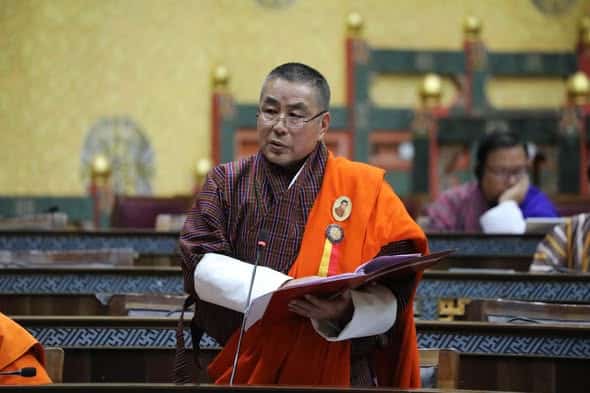
The issue came under scrutiny during the National Assembly’s Question Hour on November 24, when Member of Parliament Tashi Tenzin of Radhi-Sakteng Constituency questioned the government’s progress in fulfilling its commitments to promote homeownership.
The government had pledged to introduce a Rent-to-Own programme, provide four percent interest rates for first-time homebuyers and support rural households in constructing their first homes. However, these commitments have yet to translate into fully operational programmes.
Responding to the concerns, Minister for Infrastructure and Transport Chandra Bahadur Gurung said the government was exploring alternative financing mechanisms to make homeownership more accessible, particularly for low- and middle-income households.
One proposal is a special priority home loan scheme for first-time buyers. “The Ministry of Finance has submitted a written proposal to the Royal Monetary Authority for consideration,” the Minister said.
The proposed scheme includes concessional interest rates, flexible repayment arrangements, reasonable down payment requirements and targeted financial support. If implemented effectively, it could ease some of the barriers facing households with regular incomes but insufficient savings to meet existing loan requirements.
However, the proposal is still awaiting consideration. For households struggling with rent and rising living costs, another financing proposal offers little immediate relief. The challenge is not simply to announce cheaper loans but to ensure that the cost of housing itself is within reach.
The government is also finalising a National Housing Strategy with support from the Asian Development Bank, while a revised National Housing Policy is expected to be presented to Parliament in the next session.
A multi-sector task force formed under the Prime Minister’s direction has submitted three recommendations: introducing a Rent-to-Own scheme, developing affordable housing financing initiatives and exploring housing options linked to retirement schemes.
Rent-to-Own could allow households to occupy a house while making regular payments towards eventual ownership, reducing the burden of a large upfront payment. But its success will depend on whether monthly payments are genuinely affordable, how ownership is transferred, and whether the programme is designed to protect households from excessive financial commitments.
Similarly, linking housing to retirement schemes may offer an alternative financing avenue, but the details, eligibility and risks of such arrangements remain unclear.
More troubling is the fate of the Nu 1.5 billion initially allocated for the Homeownership Programme under the Economic Stimulus Programme. The allocation has since been redirected to other sectors, prompting MPs to question how seriously the government is pursuing its homeownership commitments.
MPs Tashi Tenzin of Radhi-Sakteng, Tshering Penjor of Dewathang-Gomdar and Lamdra Wangdi of Nanglam pressed the government for progress, emphasising the need for concrete action rather than further plans and committees.
In response, the Minister said the government would pursue long-term investment in housing, stressing that the redirection of the allocation did not mean homeownership was being neglected.
But the explanation leaves an important question unanswered: if homeownership is a government priority, what resources and timelines have been committed to making it a reality? Redirecting the initial allocation without a clear alternative financing arrangement risks widening the gap between policy promises and delivery.
The decline in homeownership is not merely a housing-sector concern. It has implications for household savings, financial stability, social mobility and the ability of younger Bhutanese to establish secure lives in the towns and cities where jobs and opportunities are concentrated.
The government is right to explore new financing models and develop a long-term housing strategy. But Bhutanese families cannot live in policy documents, task force recommendations or proposals awaiting approval. They need homes they can afford, financing they can access and programmes that move beyond announcements.
The real test of the government’s housing agenda will not be how many strategies it produces, but how many ordinary households it helps become homeowners.
Sherab Dorji, Thimphu