

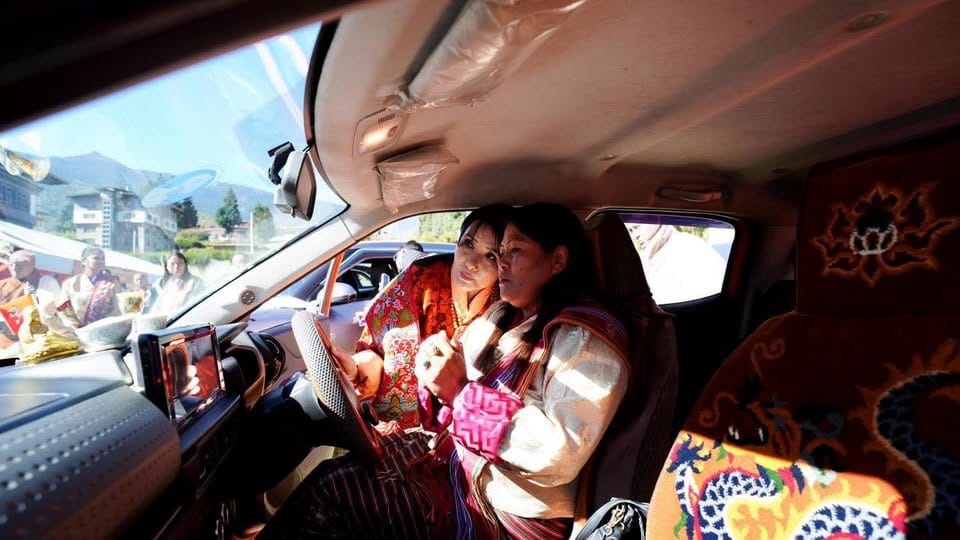
Thirty women-driven taxis in Thimphu have been equipped with dashboard cameras to improve the safety and security of women drivers and address harassment and other risks they face while working.
Her Majesty Queen Mother Sangay Choden Wangchuck launched the initiative, coinciding with the International Day for the Elimination of Violence Against Women, observed annually on November 25.
The initiative comes amid growing concerns over the safety of women working in the taxi service, particularly during night hours and when dealing with intoxicated or aggressive passengers.
A recent assessment conducted by RENEW found that 113 of the 135 women taxi drivers surveyed expressed concerns about their safety at night. Drunk passengers were identified as a major concern by 99 respondents, while 69 reported dealing with aggressive passengers. The assessment also found that 61 women had experienced verbal harassment and 48 had faced unwanted touching.
Executive Director of the Taxi Association, Tshering Penjor, during his address on International Day for the Elimination of Violence Against Womensaid the newly installed cameras would be monitored by the Royal Bhutan Police (RBP).
“With the installation of these dash cameras in all the taxis, it will be monitored by the Royal Bhutan Police,” he said.
More than 200 women taxi drivers are currently registered with the association across the country.
RENEW Director Dr Meenakshi Rai said the safety concerns came to light during a three-day programme attended by 152 women taxi drivers.
Beyond physical safety, the assessment highlighted several social and economic challenges faced by women taxi drivers. These include limited support from spouses and parents, social stigma associated with working in a male-dominated profession and a lack of recognition and understanding of their contributions.
Women drivers also face difficulties balancing long working hours with household responsibilities, childcare and family commitments. For single mothers, the pressure is particularly challenging, with financial responsibilities, emotional stress and limited time to spend with their children.
The programme also provided women taxi drivers with opportunities to discuss gender equality, their rights and available support mechanisms.
Damcho Zangmo from Thimphu said the discussions had helped her better understand where to report harassment and seek assistance.
“We often encounter harassment, discrimination, and unsafe situations while working. I now know where I can report incidents, and who I can turn to for help. This knowledge has made me feel more confident and reassured that I do not have to face these challenges alone,” she said.
Similarly, Yeshey Yuden from Trashiyangtse said being the only female taxi driver in her area sometimes made her feel different from others. However, the discussions on gender equality and women’s roles encouraged her to recognise the value of her work and believe in herself.
“The discussions on gender equality and women’s roles helped me understand the importance of believing in myself and valuing the work I do,” she said.
The assessment recommends strengthening safety and protection measures through confidential reporting and referral mechanisms, dashboard cameras, CCTV surveillance, GPS tracking systems and improved access to emergency support. It also calls for stronger protection against harassment and exploitation.
In addition, RENEW emphasizes the importance of family and community support, including sensitizationprogrammes to address social stigma and encourage greater recognition of women’s contributions.
Other recommendations include promoting better work-life balance through shared household responsibilities, family cooperation and self-care, as well as strengthening access to childcare, parenting programmes and psychosocial support, particularly for single mothers and caregivers.
The installation of dashboard cameras marks a step towards creating a safer working environment for women taxi drivers. With more than 200 women registered with the Taxi Association nationwide, the initiative also highlights the need for broader measures to ensure their safety, dignity and equal participation in the transport sector.
Sangay Rabten, Thimphu