

The government is expected to recruit another 111 Bhutanese nurses by December 3, as it moves to address staffing shortages in health facilities while creating employment opportunities for locally trained nursing graduates.
Health Minister Tandin Wangchuk said the Ministry of Health had requested the Royal Civil Service Commission (RCSC) to expedite recruitment. While 100 nurses have already been recruited, another 111 are expected to be absorbed by December 3. The remaining 155 positions are awaiting recruitment, and the ministry has urged the commission to speed up the process.
The development comes amid concerns over the employment prospects of Bhutanese nursing graduates, particularly after the government recruited foreign nurses to address shortages in the health system.
The minister said the government had also informed its Indian counterparts that Bhutan now had an adequate number of nurses and proposed that the contracts of Indian nurses currently serving in the country not be renewed.
There are currently 99 Indian nurses working in Bhutan on temporary contracts, with their salaries covered by the Government of India.
Explaining the circumstances that led to their recruitment, Lyonpo Tandin Wangchuk said Bhutan had lost a significant number of nurses between 2021 and 2025. A total of 699 nurses retired during the period, creating vacancies that required the government to bring in nurses from India to maintain healthcare services.
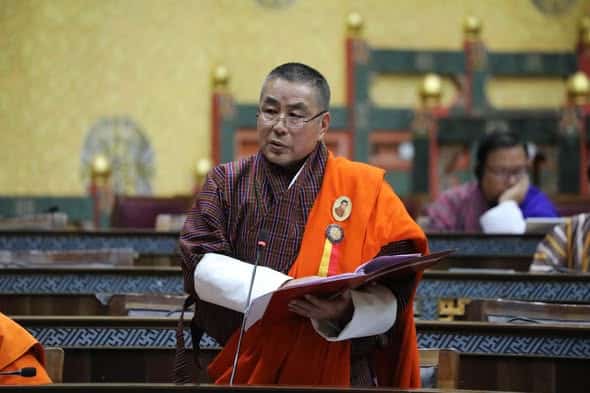
The issue was raised by Wamrong Member of Parliament Lam Dorji during the question-and-answer session in the National Assembly. The MP questioned why the government initially planned to recruit only 100 nurses when the reported shortage stood at 366, raising concerns about the gap between nursing education and actual employment opportunities.
He said the situation pointed to a disconnect between the government’s efforts to expand nursing education and its recruitment plans, particularly when private institutes had been encouraged to offer nursing programmes to meet the country’s healthcare needs.
“These are young Bhutanese who have invested years in professional education, with many taking loans to finance their studies, believing that nursing would give them the opportunity to serve the country while securing their livelihoods,” the MP said.
He also questioned whether the Ministry of Health and the RCSC had conducted a comprehensive assessment of the number of nursing graduates before foreign nurses were recruited. He sought clarity on what support would be available to graduates who remained unemployed.
Responding, Lyonpo clarified that the shortage figure of 366 nurses was reported by the RCSC and not by the Ministry of Health. He explained that the ministry assesses the country’s nursing requirements and submits its estimates to the commission, which determines recruitment in accordance with its mandate.
The minister said the ministry was working with the RCSC to align future nursing student intake with actual workforce requirements. The objective, he said, was to prevent a mismatch between the number of graduates produced by training institutions and the employment opportunities available in the health sector.
He assured the Assembly that the current employment situation was temporary and that definite opportunities would emerge for nursing graduates in the near future.
However, the MP sought further clarity on the government’s long-term workforce plan for graduates from the country’s four nursing institutes, particularly given the limited capacity of the private healthcare sector to absorb additional professionals.
The debate highlights a broader policy challenge for Bhutan’s health sector: ensuring that investment in training produces meaningful employment while meeting the staffing needs of hospitals and other health facilities.
Expanding nursing education without a corresponding recruitment strategy risks leaving qualified Bhutanese graduates unemployed, even as the health system continues to require skilled personnel. Conversely, shortages in essential health services cannot be addressed simply by producing more graduates unless recruitment, deployment and workforce planning are properly coordinated.
The immediate recruitment of 111 nurses is therefore an important step, but the larger question remains whether the government can establish a predictable system that links nursing education, workforce demand and public service recruitment. For young Bhutanese who have invested time and money in professional training, clarity on that pathway is as important as the promise of future employment.
Sherab Dorji, Thimphu