

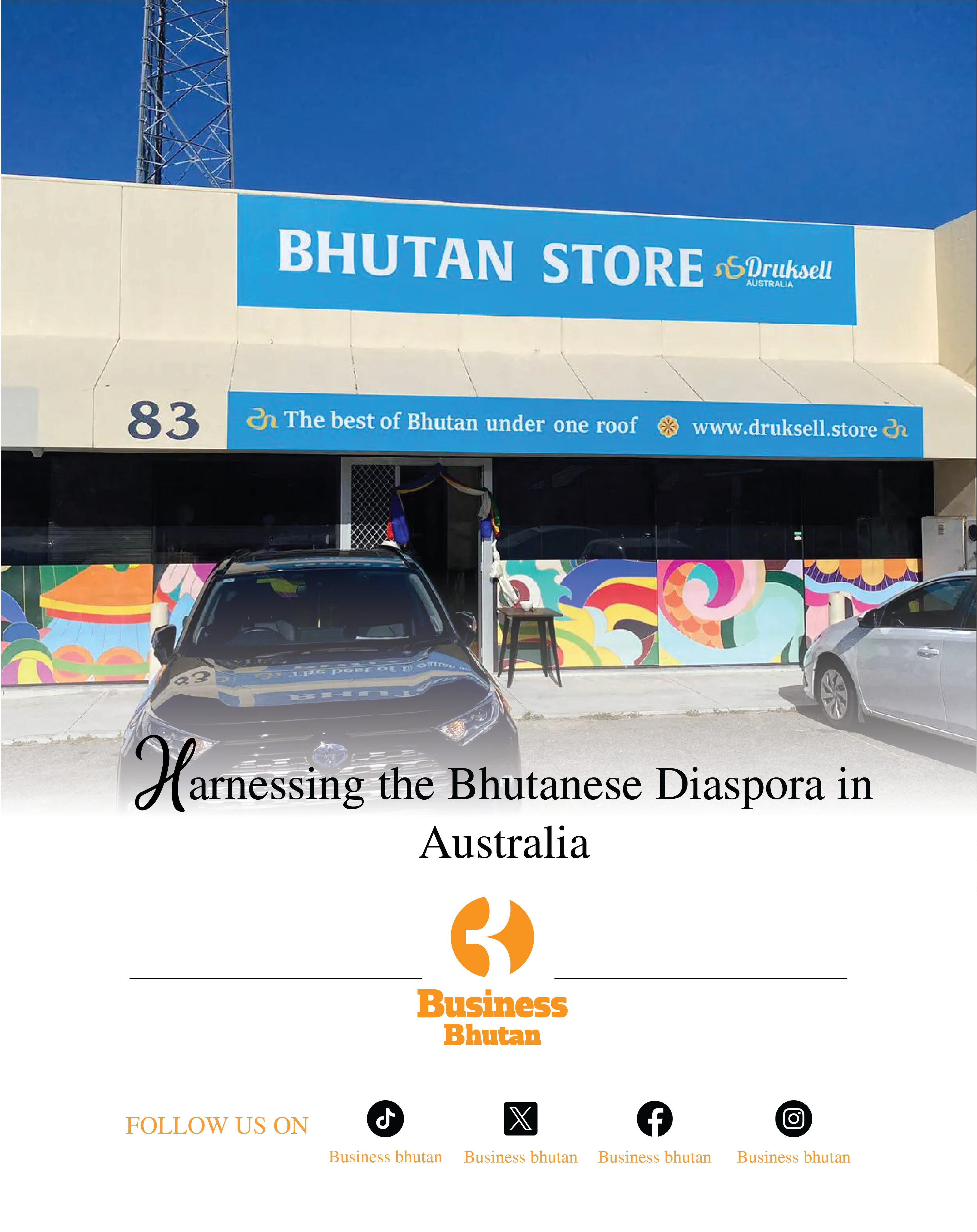
Thousands of Bhutanese are now living and working in Australia. While emigration is often seen as a challenge, the diaspora can become a powerful economic force for Bhutan—beyond just remittances.
For decades, remittances have been the most visible way Bhutanese abroad support families at home. Funds sent from Australia help cover household expenses, education, healthcare, and even small business ventures. Unlike aid, remittances are direct, reliable, and often have a multiplier effect. Families frequently invest these funds locally, stimulating microeconomic growth that would not exist otherwise.
However, relying solely on remittances is limiting. The Bhutanese community in Australia represents a much broader potential for economic impact. As the diaspora grows, their influence can extend into investment, entrepreneurship, trade, and knowledge transfer, turning emigration into a strategic advantage for Bhutan.
Diaspora Investment and Entrepreneurship
An increasing number of Bhutanese in Australia have ventured into business, opening shops, cafes, and tech startups. These entrepreneurs gain skills, experience, and capital that can benefit Bhutan if strategically mobilized. Investment from the diaspora could take the form of direct funding for Bhutanese companies, partnerships in tourism and green energy projects, or collaborative ventures that modernize Bhutan’s economy.
The experience gained by diaspora entrepreneurs is equally valuable. Exposure to global business practices, market trends, and customer expectations equips them with knowledge that can be transferred back home. Mentorship programs, business incubators, and consultancy partnerships could formalize this exchange, allowing Bhutanese entrepreneurs in Australia to act as bridges between the two economies.
Skill Transfer and Human Capital
Many young Bhutanese in Australia pursue higher education and professional careers in fields such as IT, engineering, and finance. These individuals represent a reservoir of expertise Bhutan can strategically engage. Rather than seeing emigration as a permanent loss, the country can focus on circular migration, temporary assignments, and knowledge-sharing programs. Professionals could return for short-term projects, workshops, or advisory roles, contributing to institutional capacity building and innovation. Even remote collaboration can ensure their expertise remains linked to Bhutan’s development.
This approach ensures that while Bhutanese work abroad, they maintain a strong intellectual and professional connection to their homeland. Loyalty and engagement are critical not only in an emotional sense but also as a framework for long-term economic collaboration.
Boosting Tourism and Cultural Presence
Bhutanese living in Australia serve as natural ambassadors for their homeland. By promoting Bhutanese culture, festivals, and tourism opportunities, they encourage Australians to visit the Himalayan kingdom, creating a steady flow of high-value tourists. Beyond direct revenue, such engagement strengthens bilateral cultural and trade relations and enhances Bhutan’s visibility on the international stage. Diaspora networks can also facilitate cultural exchanges, trade delegations, and educational partnerships, indirectly supporting local businesses and creative industries.
Trade and Market Linkages
The diaspora can play a critical role in connecting Bhutanese producers with global markets. Understanding both Bhutanese and Australian markets, they can help export handicrafts, organic foods, and specialty products. Institutionalizing these connections through trade councils or diaspora chambers would allow Bhutanese abroad to act collectively rather than individually, amplifying their economic impact. By linking local businesses to Australian and international consumers, the diaspora can create sustainable revenue streams, foster economic diversification, and strengthen Bhutan’s global trade presence.
Loyalty, Connection and a Strategic Diaspora Policy
All of these benefits—remittances, investment, skill transfer, and trade facilitation—ultimately hinge on one critical factor: a strong, unwavering connection and loyalty to Bhutan. It is not enough for Bhutanese abroad to simply send money home or invest in business ventures; the true transformative power of the diaspora emerges when these actions are driven by a heartfelt commitment to the homeland. Loyalty, in this context, is a dynamic force. It is the invisible thread that links success abroad to progress at home, turning individual achievements into collective national gain. Maintaining cultural identity, actively participating in national initiatives, and engaging meaningfully in diaspora networks are the tangible ways this bond is nurtured. Every festival celebrated abroad, every Bhutanese association meeting, every mentorship of young professionals in Bhutan is an act of reinforcement, ensuring that the diaspora does not drift into detachment but remains anchored to the nation’s vision.
The Bhutanese government has a central role to play in transforming this loyalty into structured, impactful engagement. By establishing clear platforms for involvement, the government can ensure that contributions from abroad are recognized, coordinated, and effectively channeled. Transparent avenues for participation—whether through investment schemes, advisory boards, or collaborative programs—allow Bhutanese living abroad to see themselves as integral stakeholders in the nation’s development. This is not about limiting freedom of movement or imposing obligations; rather, it is about creating opportunities for diaspora members to translate their global experiences, financial resources, and professional expertise into concrete benefits for Bhutan. When loyalty is institutionalized in this way, the diaspora’s sense of purpose deepens, motivating them to act as partners rather than observers in the country’s progress.
Looking ahead, Bhutan stands to gain enormously from a strategic diaspora policy, one that moves beyond ad hoc engagement to a comprehensive, forward-looking framework. Such a strategy would embrace financial incentives, enabling Bhutanese abroad to invest with confidence and clarity, while simplifying the legal and bureaucratic processes that often hinder cross-border ventures. Skill and knowledge programs could facilitate the return of expertise, either temporarily or virtually, in sectors ranging from healthcare and education to technology and sustainable development. Trade facilitation initiatives, supported by diaspora networks, could open global markets for Bhutanese goods, while cultural promotion efforts amplify Bhutan’s visibility on the international stage, strengthening tourism and international goodwill. Formal engagement structures, such as advisory councils, mentorship platforms, and diaspora forums, would institutionalize these efforts, ensuring that contributions are not scattered but strategically aligned with national priorities.
When implemented effectively, such a policy transforms the narrative of emigration. What is often perceived as a “brain drain” or loss of human capital becomes a remarkable opportunity for Bhutan. The diaspora is no longer simply a source of remittances; it evolves into a powerhouse of innovation, investment, and global influence. Their experiences, networks, and resources become a springboard for Bhutan’s development, bridging domestic aspirations with international opportunities. Every Bhutanese professional mentoring a startup, every entrepreneur investing in a local enterprise, and every community leader advocating for Bhutanese culture abroad becomes a catalyst for progress at home.
The growing Bhutanese community in Australia is far more than a migration trend. It represents a vast, largely untapped reservoir of economic, social, and cultural potential. With sustained loyalty, structured engagement, and strategic policies, the diaspora can actively shape the country’s future, making a measurable difference in national prosperity. Bhutanese in Australia are not just working for themselves; they are investing in the nation’s future, ensuring that Bhutan thrives in an interconnected, globalized world. This is the dawn of a new era where distance does not diminish commitment, and where the achievements of Bhutanese abroad resonate deeply in the valleys and cities of their homeland, transforming lives and the economy alike.
Ugyen Tenzin
From Thimphu