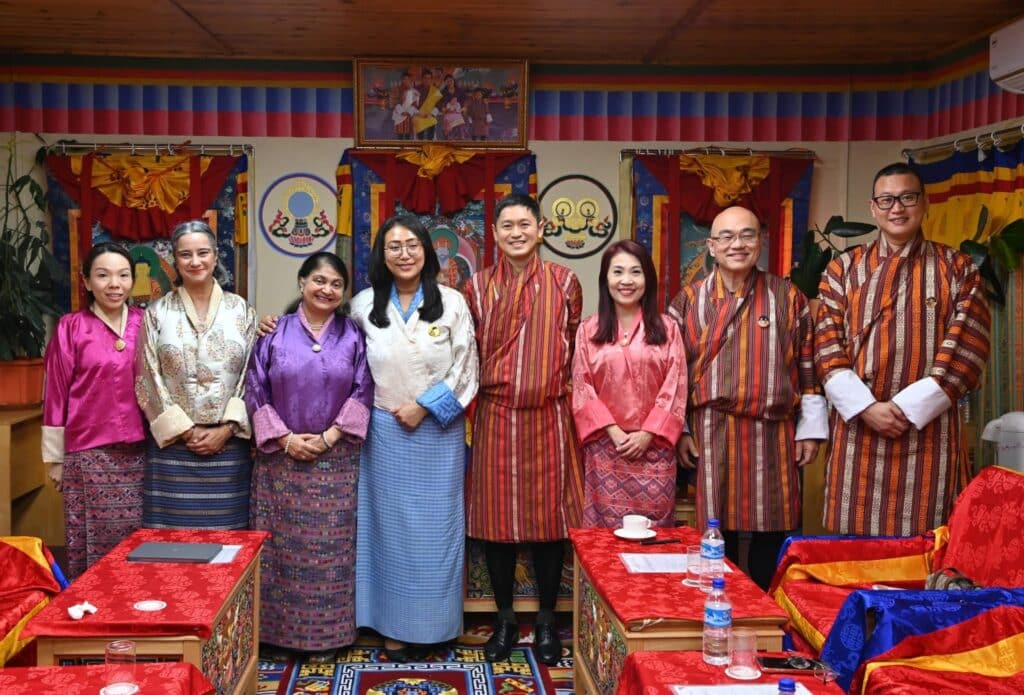
Bhutan’s first international K–XII school, EtonHouse Bhutan International School, will begin enrolling its inaugural cohort in August, initially opening admissions for children aged between 3 and 11 years.
The initiative, a partnership between the Ministry of Education and Skills Development (MoESD) and the EtonHouse International Education Group, aims to introduce internationally benchmarked learning in Bhutan while maintaining strong integration of national values, culture, and language. The school is being developed in phases and is designed for a long-term capacity of around 500 students, as additional grade levels are introduced over time.
MoESD Secretary Tshewang Chophel Dorji said the project goes beyond establishing a conventional school. “This initiative is not simply about establishing another educational institution,” he said. “It is about creating a high-quality learning environment that nurtures academic excellence, creativity, innovation, critical thinking, and holistic child development.” The institution is expected to serve as a centre of educational excellence aligned with international standards, while also informing broader reforms in curriculum development, teacher training, and education innovation across Bhutan.
Director of School Education Tashi Namgyal said the collaboration will benefit not only enrolled students but also the wider education system. He noted that good practices from the school will be shared to support improvements in both public and private schools.
The initiative is also closely linked to Bhutan’s broader human capital development goals and its ambition to position itself as a destination for international investment and skilled professionals.
In particular, officials highlighted that credible international schooling will be an important factor for expatriate families considering long-term assignments in Bhutan, including those associated with the Gelephu Mindfulness City (GMC) project, where education for staff families will be essential.
Founded in Singapore, EtonHouse operates schools across several countries and is known for its inquiry-led and play-based learning approach. The Bhutan campus will offer a K–12 pathway in phases, beginning with early years and primary levels. The first intake in August will therefore focus on nursery and primary-age learners, with higher grades to be introduced gradually as facilities and staffing expand.
The curriculum will integrate internationally recognised frameworks, including alignment with models such as the Cambridge curriculum, while ensuring that Bhutanese subjects, including Dzongkha and Bhutan History, remain compulsory for Bhutanese students.
The director said this approach is designed to balance global academic standards with strong cultural grounding, in line with Bhutan’s philosophy of Gross National Happiness.
Both MoESD and EtonHouse emphasised that the school will operate within Bhutan’s values system, including wellbeing, environmental stewardship, and holistic child development.
Ng Yi-Xian, Group CEO of EtonHouse International Education Group, said the partnership with Bhutan evolved from a long-standing engagement rather than a purely commercial intention.
“Long before this school journey started, we had already been influenced by Bhutan. We did not begin this relationship with the intention of setting up a school, but with the intention of supporting Bhutan’s journey in human capital development in whatever way we could,” he said. He added that the school is intended to serve as a bridge between Bhutan and the wider world, enabling students to engage globally while remaining grounded in their identity.
“International education should not make children less rooted in who they are; it must strengthen Bhutanese identity and values,” he said. “For us, international education in Bhutan means respecting language, culture, community, environmental stewardship, and the philosophy of Gross National Happiness.”
To improve accessibility, the partnership will introduce a differentiated fee structure for Bhutanese and expatriate families, with Bhutanese students receiving significant subsidies compared to international students. In addition, a scholarship programme will provide full tuition support for selected Bhutanese students. The initiative aims to ensure that financial barriers do not limit access and that the school contributes to national talent development.
EtonHouse and MoESD plan joint work in areas such as classroom practice, leadership development, and curriculum design, with the expectation that learning from the school will help inform improvements in the broader education system. On staffing, the school will adopt a blended teaching model, with a 50–50 balance between international teachers experienced in the EtonHouse system and Bhutanese teachers seconded from the Ministry.
The school is expected to enrol a diverse student body, including Bhutanese, international, and bridge students. Detailed admission procedures and criteria will be announced by the ministry and the school through official channels in the coming weeks.
Nidup Lhamo, Thimphu