

Bhutan’s latest National Education Assessment (NEA) 2024 has revealed a worrying trend: Dzongkha reading literacy among Grade III students has stagnated, even as students show steady gains in English and Mathematics.
According to the report, the mean score for Dzongkha reading literacy has not improved since 2021, while the proportion of students achieving minimum proficiency slipped from 88% in 2021 to 86% in 2024.
In contrast, English reading literacy saw the strongest improvement, with 96% of students meeting the minimum standard, up from 93% in 2021. Mathematical literacy also rose, with 95% of students achieving proficiency compared to 93% three years ago.
The results highlight a growing divergence between Bhutan’s national language and English, reflecting both structural and social factors. Students in Thimphu and Samdrupjongkhar Thromdes, for example, excelled in English reading and Mathematics but lagged in Dzongkha. Conversely, districts like Lhuentse, Trashiyangtse, and Zhemgang showed stronger performance in Dzongkha but weaker results in English.
Private school students, urban students, and those who spoke English at home consistently outperformed peers in English and Mathematics—but underperformed in Dzongkha compared to public school students and those speaking Dzongkha or other local languages at home.
“This finding underscores the challenge of balancing proficiency in Dzongkha while also meeting global competencies,” the report noted.
Socio-economic disparities also shaped outcomes. Children from higher-income families and those with college-educated parents scored higher across domains. Students with ECCD participation consistently outperformed those without it.
It is reported that gender differences also persisted, where girls outperformed boys in Dzongkha reading, while boys performed better in Mathematics. Students with disabilities lagged behind their peers across all domains, though the gap was statistically significant only in Mathematics.
The Ministry of Education and Skills Development (MoESD) acknowledged the urgent need to strengthen Dzongkha instruction, particularly in private schools, and to promote its use beyond classrooms. Policy reviews and targeted teacher training are among the recommended steps.
“Dzongkha is central to Bhutanese identity and culture,” the Ministry emphasized, “and improving literacy in the national language is essential for preserving heritage while preparing students for a globalized future.”
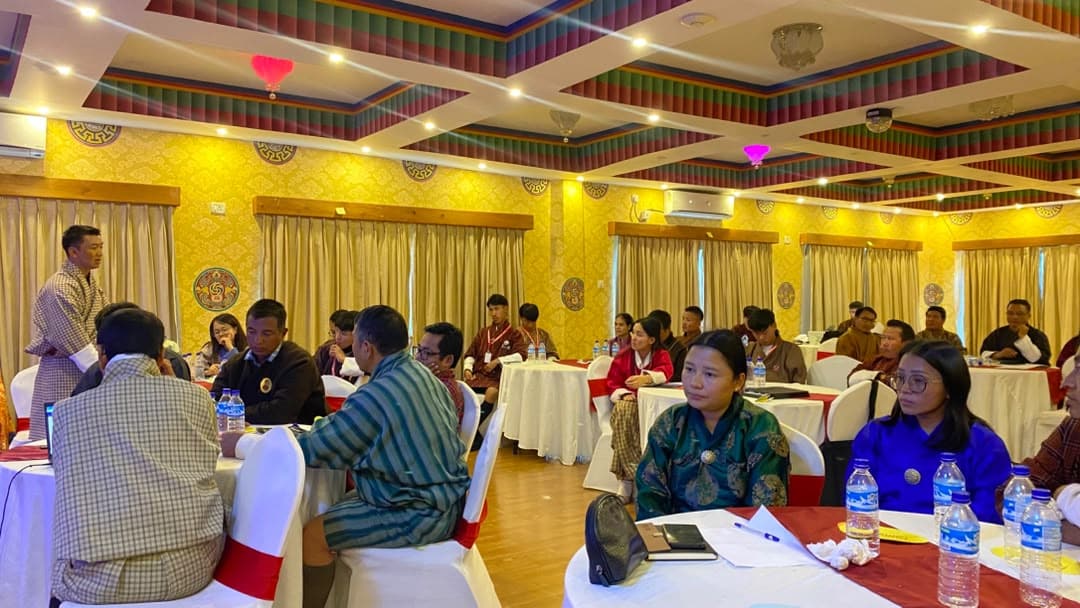
Launched in 2021, the NEA is Bhutan’s first large-scale, triennial learning assessment, funded by the Global Partnership for Education (Nu 35 million). The 2024 cycle expanded coverage to include both Grade III and Grade VI students, with over 9,400 students from 381 schools participating nationwide.
Speaking at the launch, MoESD Minister Yeezang D. Thapa said the results provide “crucial evidence to support policy-making, monitor standards, and guide interventions to improve learning, ensuring that no student is left behind.”
The NEA also ensures inclusivity by offering special accommodations for children with disabilities, reaffirming Bhutan’s commitment to equitable education.
As Bhutan’s education reforms continue, the stagnation in Dzongkha reading literacy serves as a timely reminder. “While English and Mathematics prepare students for global competitiveness, sustaining and strengthening Dzongkha literacy is vital to ensuring Bhutan’s cultural continuity and national identity,” a Dzongkha teacher reiterated.
By Nidup Lhamo from Phuentsholing