Bhutan’s flagship climate resilience initiative, supported by the Adaptation Fund, is emerging as a model for community-based climate action as it reaches its mid-term implementation phase. With a grant of USD 9.951 million, the five-year project – “Adaptation to Climate-Induced Water Stresses through Integrated Landscape Management” – is being led by the Bhutan Trust Fund for Environmental Conservation (BTFEC), the country’s only National Implementing Entity accredited by the Fund.
Launched in July 2023 and set to conclude in June 2028, the project focuses on building resilience in water-stressed communities across Paro, Dagana, Tsirang, and Monggar. It directly targets 13 gewogs identified as highly vulnerable under Bhutan’s Water Flagship Programme. The initiative aims to benefit more than 36,000 people while restoring over 21,000 hectares of fragile ecosystems.
At its core, the project combines ecosystem restoration, climate-smart water infrastructure, early warning systems, and inclusive governance. It also places a strong emphasis on social equity, particularly gender inclusion, ensuring that adaptation benefits are shared fairly among vulnerable groups.
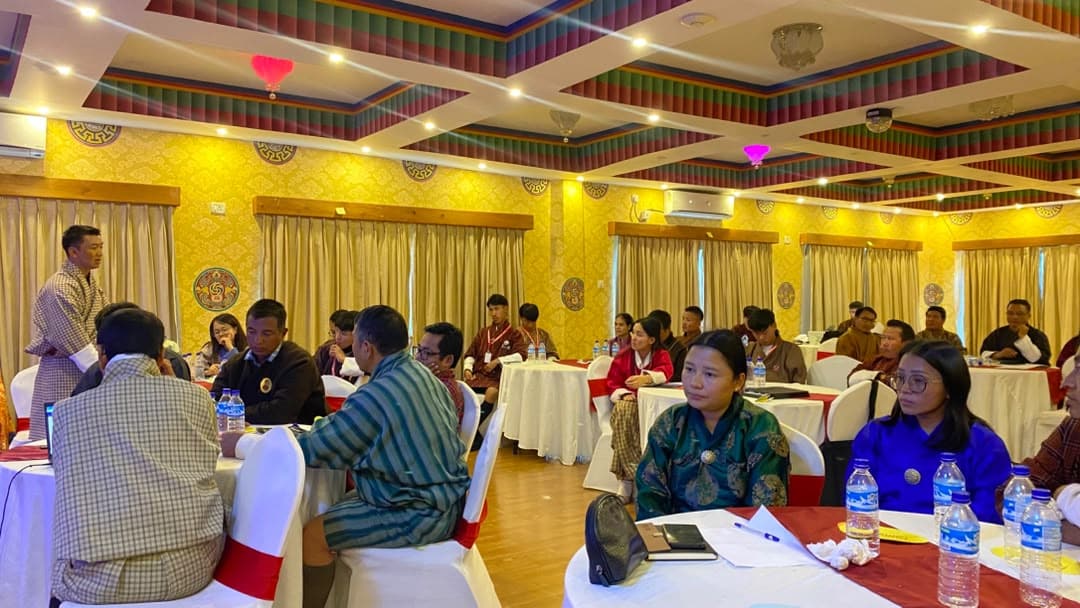
Currently, a mid-term Project Monitoring Mission (PMM) is being conducted by the Adaptation Fund Secretariat. The mission includes field visits, consultations, and knowledge-sharing sessions with local officials, communities, and project partners to assess progress and share lessons learned.
Since inception, nearly 12,919 hectares of watershed areas have been mapped, with more than 600 hectares already restored. Two degraded watersheds are now earmarked for intensive rehabilitation. Under sustainable land management practices, 174 hectares are currently under improved use, with a target to scale up to 2,022 hectares by project completion.
Climate-resilient infrastructure is also taking shape. Three major drinking water schemes are under construction, now between 58 and 74 percent complete. Two irrigation systems are nearing final stages, promising farmers more reliable access to water for cultivation.
One notable innovation has been the introduction of a locally developed “ridge machine” that enables the laying of pipelines across rugged mountain terrain with minimal environmental disturbance—a climate-smart technology that could be replicated in other mountainous regions.
Capacity building remains central to the project’s strategy. To date, 32 engineers and technicians have been trained, 34 percent of whom are women. While this is below the 50 percent gender target, efforts are underway to increase female participation. Training at the community level has also strengthened the skills of farmers, water user groups, and local officials, fostering greater ownership of adaptation initiatives.
The project has also strengthened Bhutan’s climate services. Weather advisories are now disseminated during key agricultural periods, and groundwork has been laid for a Payment for Ecosystem Services (PES) scheme, set to roll out later this year.
Dr. Justice Musah, Climate Change Specialist at the Adaptation Fund Secretariat, expressed confidence in Bhutan’s progress. “The country’s commitment and innovation are remarkable. This project is becoming a potential model for other nations confronting climate-induced water challenges,” he noted.
Dr. Karma Tshering, Managing Director of BTFEC, emphasized Bhutan’s leadership role:
“The Adaptation Fund was founded on the principle that those most vulnerable to climate change cannot wait for promises. Bhutan’s NIE status is not just technical recognition—it reflects our national capacity to lead. These projects represent investments in resilience and hope for our people.”
Government partners echoed this sentiment. Namgyel Dorji of the Ministry of Finance highlighted the mission as “a valuable opportunity to reflect on progress and lessons learned,” while Rinchen Namgay of the Ministry of Energy and Natural Resources noted that in just three years, Bhutan has already seen progress from watershed restoration to irrigation and community empowerment.
From the Adaptation Fund Innovation Unit, Nawoki Uzawa encouraged Bhutan to continue testing and sharing new ideas. “Bhutan is the only country to access both small and large innovation grants from the Adaptation Fund. Your innovations are lessons for the region.”
In the coming years, the project will focus on completing major infrastructure, scaling up land and watershed restoration, and formalizing local climate governance structures. Water user groups will be strengthened to ensure long-term sustainability, while inclusive participation will remain a central priority.
Established under the Kyoto Protocol, the Adaptation Fund supports developing countries in implementing tangible climate adaptation solutions. Bhutan’s initiative is a testament to this mandate—delivering integrated, community-driven, and scalable responses to the pressing challenge of climate-induced water stress.
Nidup Lhamo from Thimphu