

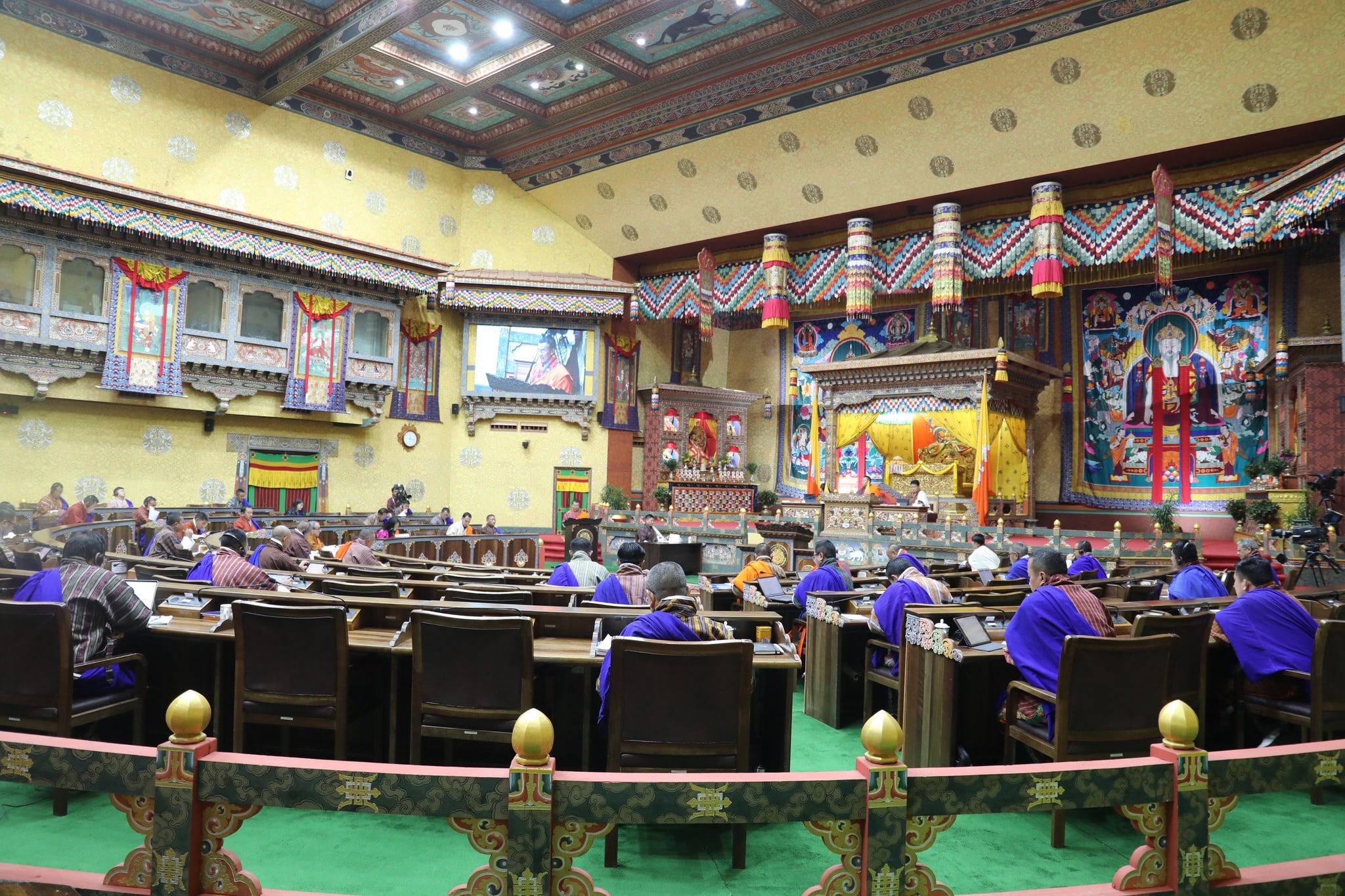
Proposed revisions to Bhutan’s electricity tariffs have sparked a detailed debate in Parliament, with Members of Parliament (MPs) raising concerns over fairness, timing, and the impact on households and industries. The government, however, defended the adjustment as a necessary structural reform aimed at aligning electricity prices with actual supply costs under a cost-reflective tariff framework.
The revision is being developed by the Electricity Regulatory Authority (ERA) in line with the Tariff Determination Regulation, the Electricity Act of Bhutan, 2001, and the National Energy Policy. Officials said the framework is designed to ensure that electricity tariffs reflect the real cost of generation, transmission, and distribution across different consumer categories, rather than applying uniform pricing that does not account for differences in consumption and system usage.
Under the proposed structure, Low Voltage (LV) tariffs are expected to rise from Nu 2.66 to Nu 5.63 per unit, a change that has drawn significant attention in Parliament. LV consumers account for approximately 99.96 percent of electricity customers in Bhutan, yet they consume only about 10 percent of total electricity. This indicates that while the vast majority of users are households and small consumers, their contribution to overall consumption remains relatively low.
In contrast, a small number of High Voltage (HV) consumers account for nearly 88 percent of total electricity consumption, reflecting the dominance of energy-intensive industries such as ferro-alloy production, digital operations, and large-scale manufacturing.
The proposed revision prompted MPs to question whether the adjustment reflects a genuine correction of cost imbalances or a shift in the financial burden onto households and small consumers.
The MP from Khamdang–Ramjar constituency, Trashiyangtse, Namgay Dorji, questioned whether Bhutan’s hydropower resources should translate into more affordable electricity for citizens, in line with long-standing policy expectations. He raised concerns that increasing LV tariffs could disproportionately affect households, especially since they are highly sensitive to changes in essential utility costs despite their low overall consumption share.
He also raised concerns about timing, noting that households are already facing inflationary pressures following Goods and Services Tax (GST) implementation, along with broader global economic uncertainty that continues to influence living costs.
Similarly, the MP from Kengkhar–Weringla constituency, Dorji Wangmo, highlighted potential ripple effects of higher electricity tariffs on household expenses, production costs, employment, and industrial competitiveness. She said that increased electricity costs could raise operating expenses for businesses, which may ultimately be passed on to consumers or reduce job creation.
Responding to the concerns, Minister for Energy and Natural Resources Gyem Tshering said Bhutan continues to maintain strong domestic hydropower generation capacity and remains committed to expanding renewable energy resources. He noted that the government’s long-term energy vision, targeting 20,000 MW of hydropower and 5,000 MW of solar power by 2040, is based on structured planning, investment needs, and system sustainability.
The minister clarified that electricity tariffs are governed under the Electricity Act of Bhutan, 2001, under which utilities may submit tariff revision proposals every three years. However, he emphasised that while tariffs are not directly set by the government, subsidy levels determined by the state play a key role in determining final consumer prices.
He added that although unit tariffs are increasing, households continue to be protected through targeted subsidy mechanisms. The first 100 units of electricity remain heavily subsidised for rural households, while highland households receive subsidies for up to 200 units. For urban consumers, the first 100 units are charged at Nu 1.28 per unit, with higher consumption slabs increasing progressively up to the revised LV rate.
According to the minister, this tiered structure ensures affordability for essential household consumption while allowing cost recovery from higher usage levels, particularly from industrial and commercial consumers.
He further explained that HV consumers bear additional system costs, including investments in substations, transmission infrastructure, and demand-based charges. These industries require stable bulk power supply, which involves significant capital investment in generation, grid expansion, and maintenance.
Meanwhile, HV industries consumed approximately 7,972 million units (MU) of electricity in 2025, accounting for roughly 88 to 90 percent of total domestic consumption, while medium voltage industries consumed about 151 MU.
As of December 2025, Bhutan had 29 HV industries and 75 MV industries, mainly concentrated in energy-intensive sectors such as ferro-alloy production and digital operations.
Electricity supply costs in Bhutan include both generation and transmission components, with generation handled by the Druk Green Power Corporation (DGPC) and transmission and distribution managed by the Bhutan Power Corporation (BPC), together forming the basis of the country’s tariff structure.
Officials also said higher Low Voltage (LV) tariffs are partly due to Bhutan’s scattered settlements and difficult terrain, which require extensive grid infrastructure to supply remote households, raising per-unit delivery costs compared to bulk industrial consumers.
Bhutan also imports electricity from India during winter through market-based trading on the Indian Energy Exchange, where prices vary based on demand. These import costs are generally passed on to High Voltage (HV) consumers and are not subsidised, influencing industrial electricity tariffs.
The proposed tariff changes will undergo further regulatory review and stakeholder consultation before final approval, with authorities expected to refine the structure based on feedback from consumers, industries, and policymakers.
Nidup Lhamo, Thimphu