

The government is pursuing major reforms to modernize border infrastructure and trade management systems, with plans to introduce advanced automation technologies, develop a National Single Window system, and establish new Integrated Check Posts (ICPs) to ease congestion and improve security at key entry points.
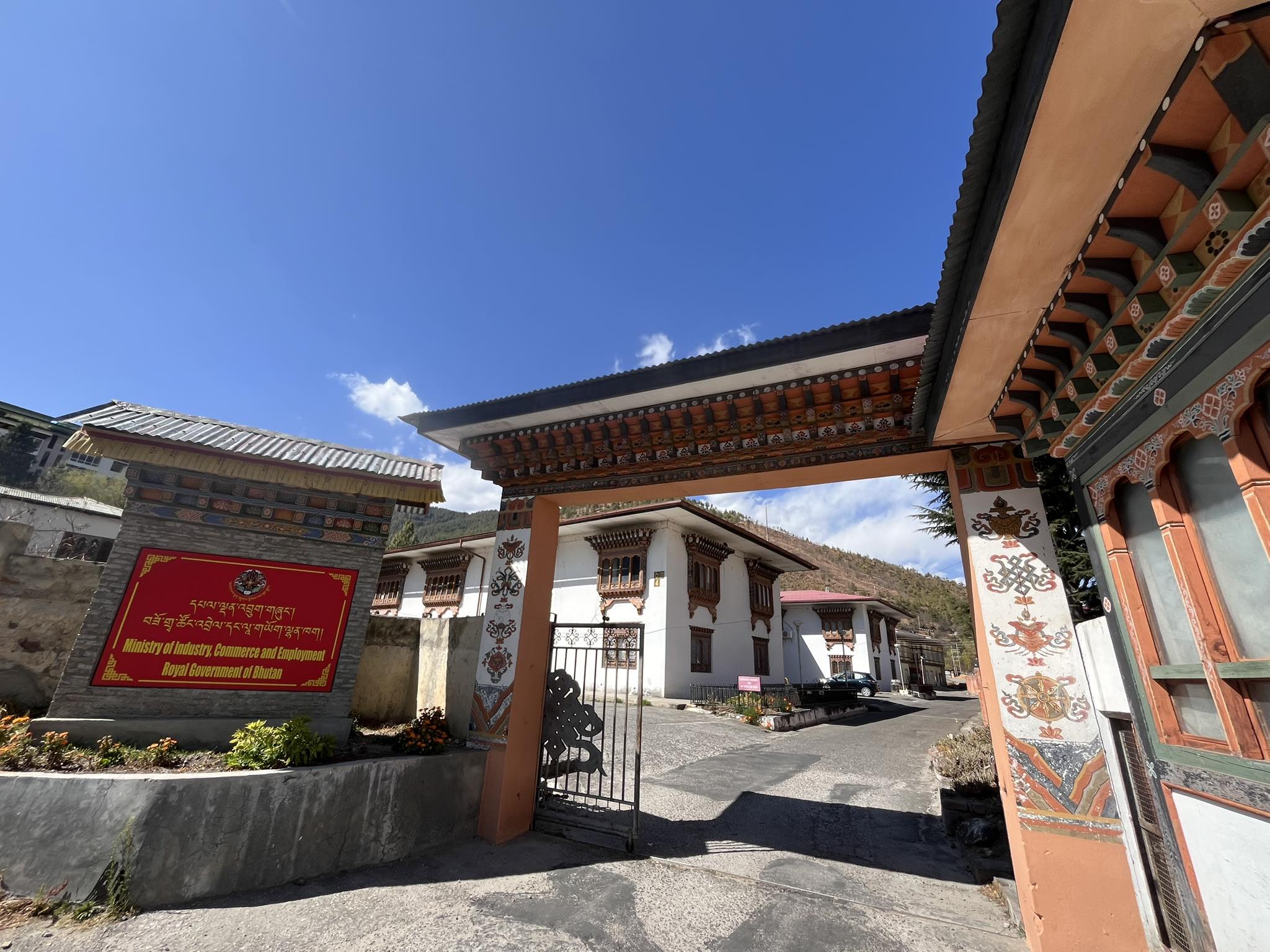
The developments were highlighted in responses submitted by the Ministry of Industry, Commerce and Employment (MoICE) and the Ministry of Home Affairs (MoHA) to recommendations made by the National Council (NC) during its 36th Session, which included upgrading facilities at Integrated Check Posts (ICPs), Mini Dry Ports (MDPs), and Land Customs Stations (LCSs) using modern technologies such as biometrics, iris scanning, facial recognition systems, thermal imaging, and thermal sensors to improve operational efficiency and border security.
In their joint response, the ministries stated that Bhutan has already initiated automation efforts through the Automated Immigration Clearance System (AICS), currently operational at Paro International Airport and the Phuentsholing Pedestrian Terminal.
According to the government, the AICS has significantly improved immigration processing by integrating biometric verification and digital systems that reduce congestion and enhance security at border points.
The ministries said the system minimizes human error, standardizes verification procedures, and facilitates smoother movement of passengers through ports of entry and exit, however, acknowledging that expanding such automation across the country’s border infrastructure would require substantial investment and major upgrades to existing facilities.
“In order to undertake full automation as recommended by the National Council, Bhutan would first need to upgrade existing terminals and ICP infrastructure or construct new facilities at strategic locations,” the response noted.
As part of efforts to improve trade infrastructure, the government also confirmed that two major dry ports located at Pasakha in Chhukha and Nganglam in PemaGatshel are nearing completion and are expected to become operational during the 2026–27 fiscal year.
The facilities will include container yards, export-import warehousing facilities, cold storage systems, and heavy cargo handling machinery aimed at improving logistics efficiency and trade facilitation.
Alongside physical infrastructure upgrades, Bhutan is also working toward digitizing and integrating cross-border trade systems through the development of a National Single Window (NSW) platform.
The NC had recommended establishing a unified system to integrate the multiple operating systems currently used at ICPs and MDPs to facilitate smoother movement of people, vehicles, and goods.
The GovTech Agency is spearheading the World Bank-funded NSW project and is expected to integrate trade-related services into a centralized digital platform, reducing duplication, improving coordination, and streamlining border procedures.
It would to a large extent, address the issue of multiple operating systems for cross-border trade. The pilot phase of the system is expected to be ready within two years, beginning in 2026, although movement of people may not initially fall within the project’s scope.
Several services under MoICE are expected to be among the first to be integrated and pilot-tested through the platform.
The government said the project is currently in the procurement phase, with international vendors bidding for the development of the system.
Regarding the NC’s concerns on growing traffic congestion and disaster-related vulnerabilities at border points, particularly in areas such as Samtse and Phuentsholing, the ministries acknowledged that land scarcity near existing ICPs remains a major challenge in expanding or relocating border infrastructure.
“There is no available land near some of the existing ICPs, such as the Samtse-Chamurchi land customs station, that would help mitigate congestion,” the response stated.
To explore practical solutions the government has engaged with the Bhutan Chamber of Commerce and Industry (BCCI) and the Association of Bhutanese Industries (ABI) to identify alternatives.
One long-term solution being explored is railway connectivity in the Samtse region. Another immediate option under discussion is securing approval from the Government of India to allow Bhutan to use the Haldibari railway network from Samtse, although the matter remains pending despite repeated diplomatic engagements.
The ministries also highlighted alternative trade routes through Loksan (Bhimtar) and Nagarkata (Jitti) in Samtse as possible measures to reduce pressure on the Chamurchi route.
However, road networks and customs infrastructure along these alternative corridors would need substantial upgrades before they can accommodate higher trade volumes.
At the same time, the MoHA is exploring the establishment of additional ICPs and border entry points in Phuentsholing, Samdrup Jongkhar, and Samtse.
One of the key proposals includes the development of a new ICP at the Amochu-Phuentsholing-Goabari border area between Bhutan and India. The proposal is being pursued through ongoing diplomatic engagement with Indian counterparts.
Tashi Namgyal, Thimphu