Across the mountains and valleys of Bhutan, something extraordinary is taking place. It is not merely about the construction of a monument, or the gathering of donations. What is unfolding today is a collective act of faith and as Bhutanese respond to a call that resonates deep within the human heart, the 108 Jangchub Chortens are becoming vessels of memory, gratitude, devotion, hope and purpose. They are bringing together people from every walk of life, each carrying a story, each offering a piece of themselves to a project that is rapidly becoming one of the most meaningful collective undertakings in Bhutanese history.
For one Bhutanese family living in Australia, their contribution is a tribute to a beloved son who passed away far too soon. Though physically absent, they believe he will forever remain present in the chortens. Their offering is not merely financial. It is an expression of remembrance, a bridge between loss and hope, and a way of ensuring that love continues to endure beyond mortality.
Others are contributing out of gratitude. A guide and his family speak of a King who listened to their concerns, understood their struggles and extended support when it was most needed. For them, participation in the 108 Jangchub Chortens is an opportunity to express heartfelt appreciation in a manner that words alone could never capture.
There are also stories that reveal how purpose can emerge from the most unexpected places. What once seemed like an ordinary hobby, collecting coins over many years, has suddenly acquired profound meaning. Savings accumulated little by little now have a destination. Small acts of discipline have transformed into an offering toward a project that promises to inspire generations.
Then there are the educators. For the Ministry of Education and Skills Development family, participation carries a deeper significance. Teachers are entrusted with shaping minds and nurturing values. They understand that leadership is often demonstrated not through speeches but through action.
As one teacher from Trashigang observed, educators are expected to set examples for the young. How could teachers stand before their students and speak of citizenship, responsibility and service if they themselves remained spectators to such a historic undertaking?
Her words reflect a truth that extends beyond classrooms. The 108 Jangchub Chortens have become an opportunity for Bhutanese people to demonstrate what collective responsibility looks like in practice. It is a chance not only to speak about values but to live them.
Perhaps this is why the movement continues to grow.
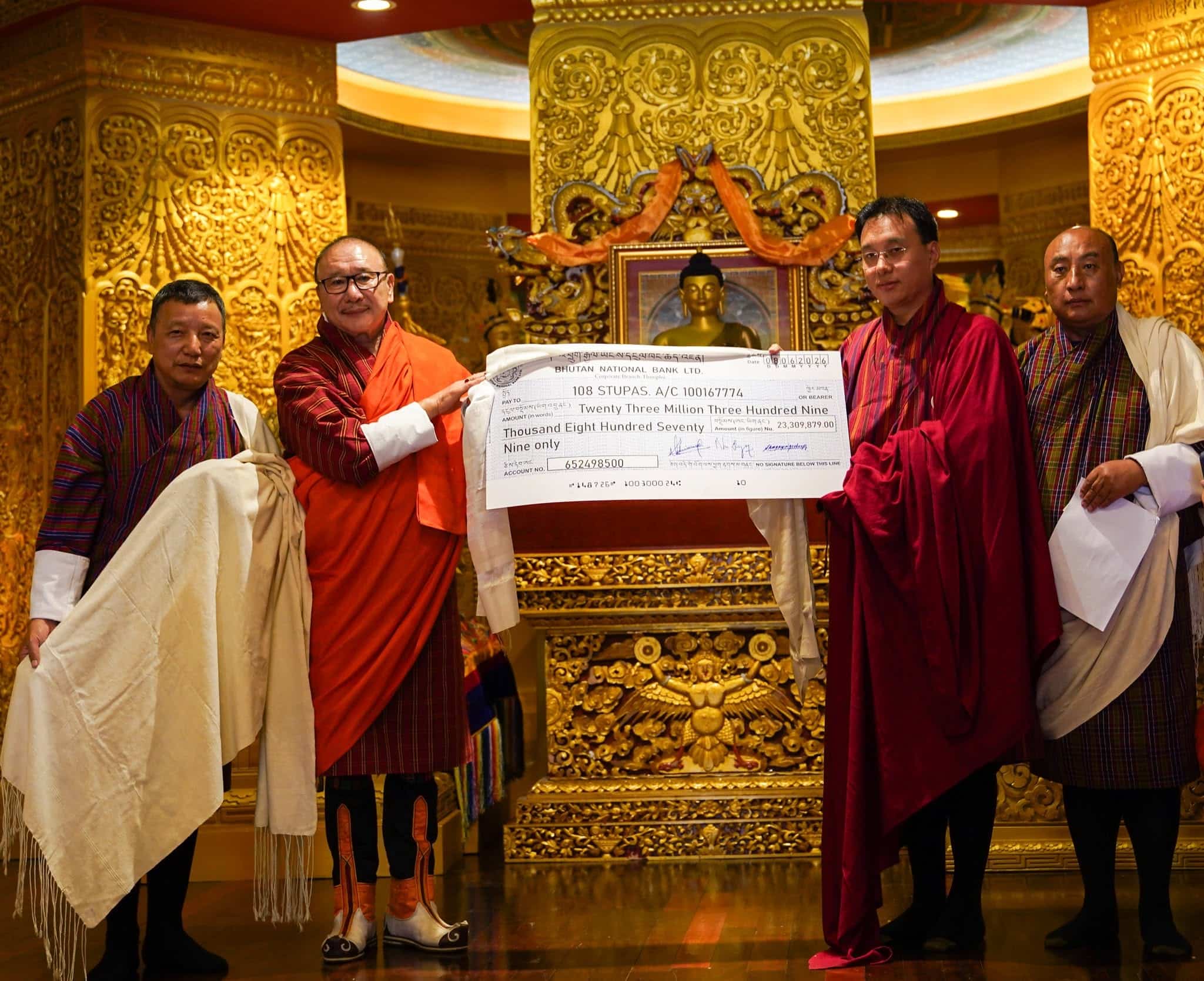
Eminent Buddhist masters have joined. Respected business leaders have stepped forward. Civil servants, entrepreneurs, farmers, students, retirees and members of the Bhutanese diaspora are all finding ways to participate. No one wishes to be left behind.
A Bhutanese student currently pursuing studies in Japan described his feelings with touching honesty. Being physically absent from Bhutan during such a significant moment feels like missing a once-in-a-lifetime opportunity. But he finds comfort in knowing that even a humble contribution allows him to stand alongside his fellow citizens and become part of the story.
His sentiment echoes across oceans and continents. For Bhutanese living abroad, Gelephu Mindfulness City and the 108 Jangchub Chortens represent a connection to home, identity and belonging. They may live thousands of kilometres away, but through participation they remain linked to a vision unfolding in the land they love.
And what makes the project particularly beautiful is its inclusiveness. It does not measure participation by the size of one’s contribution. The value lies in the intention. A wealthy entrepreneur and a child offering a few saved notes stand equally within the spirit of the undertaking.
This truth is perhaps best expressed by a 90-year-old who recently made what she described as the most meaningful offering of her life. She spoke of how even the accumulation of merit requires opportunity. In her eyes, the vision of the 108 Jangchub Chortens has provided precisely that opportunity.
For some, the project transcends Bhutan itself.
A businessman from eastern Bhutan sees the 108 Jangchub Chortens not simply as a national initiative but as a message to humanity. He imagines future generations reading about this moment much as people today read about great kings and civilizations of the past. In an age often marked by division, conflict and uncertainty, he views the project as a lotus emerging from troubled waters, a symbol of goodness, compassion and wisdom.
His reflection is especially poignant.
Why build 108 chortens in a single day? Many see practical challenges. Others see a deeper message. Perhaps the urgency itself is symbolic. Perhaps it reflects the urgency of our times, the need for greater compassion, understanding and peace in a world that often seems to be moving in the opposite direction.
Through this lens, the project becomes more than architecture. It becomes a statement. A declaration that even a small nation can inspire the world, a reminder that progress need not come at the expense of spirituality and a demonstration that compassion remains one of humanity’s greatest strengths.
And this message is already travelling far beyond Bhutan’s borders. From Thailand to Vietnam and elsewhere, friends of Bhutan and followers of Buddhist teachings are finding inspiration in the vision. They recognize something universal within it: the desire to contribute to a cause rooted in wisdom, kindness and collective wellbeing.
Meanwhile, many continue to wait for an auspicious moment to make their offerings. For some, June 24, the sacred birth anniversary of Guru Padmasambhava, carries special significance.
A civil servant plans to donate the profits earned from his first-ever investment, the dividends received from bonds purchased for the Gelephu airport project. For him, there is deep satisfaction in knowing that the fruits of his first business venture will support a cause dedicated to spiritual and societal benefit.
Children, too, are participating. One young Bhutanese who recently turned eighteen has decided to contribute the cash received as birthday gifts.
It is a simple gesture. Perhaps, that is precisely why it matters. When young people willingly choose contribution over consumption, service over self-interest, and purpose over possession, it signals something profound about the values being passed to the next generation.
And so the stories continue. Different people; different circumstances, different motivations, but all connected by a common thread.
They are united by a desire to stand beside their King, united by a belief in a vision greater than themselves, united by a longing to contribute to something meaningful.
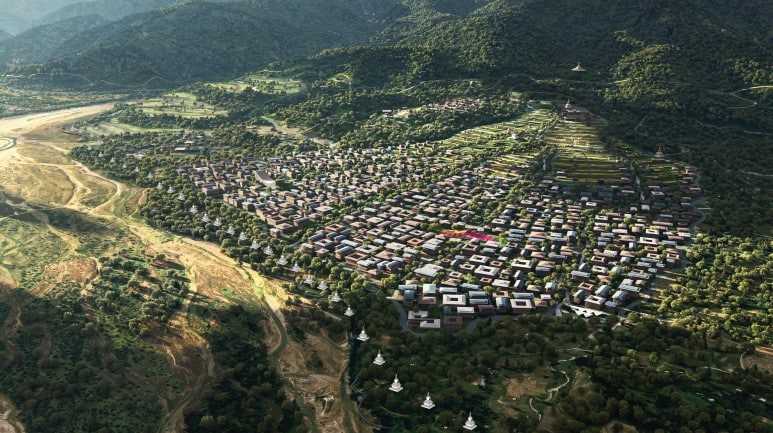
The 108 Jangchub Chortens will one day rise from the plains of Gelephu as enduring symbols of enlightenment and aspiration.
But long before the first stones are laid, another monument is already taking shape.
It is being built in the hearts of people. It is a monument made of faith, gratitude, devotion and hope. And it is reminding Bhutan, and perhaps the world, that when a noble vision emerges, an entire nation can rise together, not merely to witness history, but to become part of it.
Tashi Namgyal, Thimphu